
Choosing the right battery platform for your brushless cordless tools can feel overwhelming. Voltage ratings like 18V, 20V Max, and 36V often confuse even experienced users. In reality, 18V and 20V Max are the same nominal voltage—just marketed differently—while 36V offers a genuine power jump for heavy-duty tasks.
Brushless motors make these platforms even more efficient. They convert more electrical energy into mechanical work, meaning longer runtime per charge and more torque in a compact package. Understanding how voltage, amp-hours, and battery cells interact is critical to building a cost-effective One-battery Ecosystem Strategy: Building a Cordless Shop Around Brushless Motor Tools and Shared Packs.
Let’s break down each platform so you can make a smart, future-proof investment.
What Do 18V, 20V Max, and 36V Actually Mean?
Nominal voltage (18V) is the average voltage under load. “20V Max” is a marketing term—it refers to the peak voltage of a fully charged battery pack. Inside that pack, five lithium‑ion cells wired in series produce a nominal 18V (3.6V each) and a peak of 20V when fully charged (4.0V per cell). So 20V Max and 18V are electrically identical.
36V systems use ten cells in series, doubling the nominal voltage. That extra voltage allows higher power output without drawing excessive current, which reduces heat and improves efficiency. For a deeper look at how cells and amp-hours affect runtime, see our guide on How Battery Amp-hours, Cells, and Voltage Affect Runtime on Cordless Power Tools with Brushless Motors?.
| Platform | Nominal Voltage | Peak Voltage | Typical Applications |
|---|---|---|---|
| 18V / 20V Max | 18V | 20V | Drills, impact drivers, circular saws, oscillating tools |
| 36V | 36V | 40V+ | Large mowers, chainsaws, heavy‑duty saws |
Brushless Motors and Voltage: Why the Pairing Matters
Brushless motors are more efficient than brushed ones because they eliminate friction‑causing brushes and use electronics to control commutation. This means:
- More torque per watt
- Longer runtime (up to 50% longer on the same battery)
- Greater durability (no brushes to wear out)
When paired with a higher voltage platform, brushless motors can deliver even more power without overheating. For example, a 36V brushless chainsaw can rip through thick limbs that would stall a 20V Max model. However, for most home DIY and light professional use, 20V Max brushless tools offer an excellent balance of power and portability.
To keep your batteries performing well, pay attention to charging practices. Read our article on Fast Charging, Heat, and Battery Life: Managing Chargers for Cordless Power Tools with Brushless Motors.
Ecosystem Strategy: Stick with One Platform
One of the smartest moves you can make is to choose a single battery platform and stick with it. When all your tools share the same batteries and chargers, you reduce cost, clutter, and downtime.
Benefits of a unified platform:
- Fewer batteries to buy
- Chargers work for every tool
- Easy swapping on the job site
- Reduced weight in your tool bag
For most DIYers and tradespeople, a 20V Max (18V nominal) platform like DEWALT’s 20V MAX system covers everything from drills to saws. If you also need high‑power outdoor equipment, consider a 36V family such as DEWALT’s FLEXVOLT, which also accepts 20V Max batteries.
If you work in cold weather or under heavy loads, check out our tips in Cold Weather and Heavy Loads: Maximizing Runtime of Cordless Power Tools with Brushless Motors on Tough Jobs.
Performance Comparison: 18V/20V Max vs 36V
Brushless tools at 20V Max can match or exceed the power of many corded tools. For example, the DEWALT 20V MAX Cordless Drill Driver Set (DCD777D1) delivers 340‑360 unit watts out (UWO) of torque—enough for most drilling and fastening tasks.

When you need sustained high power—like cutting thick lumber or running a large miter saw—36V shines. The extra voltage allows the motor to run cooler and draw less current, which translates to longer runtime per amp‑hour.
Torque and runtime comparison (representative examples):
| Parameter | 20V Max Brushless Drill | 36V Brushless Drill |
|---|---|---|
| Max Torque | ~340‑700 in‑lbs | ~800‑1200 in‑lbs |
| Runtime (similar Ah) | Good | Excellent (higher voltage, same energy) |
| Weight | Light (~3‑4 lbs with battery) | Heavier (~5‑7 lbs) |
| Best for | General use, tight spaces | Heavy‑duty, all‑day use |
For lighter tasks, a 12V brushless platform (like Dremel’s 12V rotary tool) offers great precision and portability. The Dremel 8250-5 12V Cordless Rotary Tool is a favorite for detail work, while the Dremel 8150 8V Rotary Tool is even more compact and USB‑C rechargeable.

Product Recommendations Across Voltage Platforms
Here are some top‑rated brushless tools that fit each voltage tier. All are from our selected list and highly reviewed.
20V Max (18V nominal) – The All‑around Champion
The DEWALT 20V MAX system is the most popular cordless platform in North America. Its brushless tools offer excellent runtime and power.
- DEWALT 20V MAX Cordless Drill Driver Set (DCD777D1) – $99.00, 4.7 stars. Perfect starter drill.
- DEWALT 20V MAX Drill and Impact Driver Combo (DCK277D2) – $169.00, 4.8 stars. Includes two batteries and a bag.
- DEWALT 20V MAX XR Oscillating Multi‑Tool (DCS356B) – Tool Only – $104.99, 4.8 stars. Brushless, variable speed.
- DEWALT 20V MAX XR Oscillating Multi‑Tool Kit (DCS356C1) – $124.50, 4.8 stars. Includes battery and charger.
- DEWALT 20V MAX XR Jig Saw (DCS334B) – Tool Only – $132.00, 4.8 stars. 3,200 SPM, LED light.

8V – 12V – Ultra‑Portable for Detail Work
If you do a lot of cutting, grinding, or polishing in tight spaces, a lower‑voltage brushless rotary tool is a smart addition.
- Dremel 8150 8V Cordless Rotary Tool – $79.99, 4.6 stars. USB‑C rechargeable, 5,000‑30,000 RPM.
- Dremel 8250-5 12V Cordless Rotary Tool – $149.00, 4.7 stars. Includes 3Ah battery, charger, and 5 accessories.

36V – Heavy‑Duty Muscle
While there are no 36V products in our selected list, platforms like DEWALT FLEXVOLT (which runs 54V/36V) are ideal for mowers, chain saws, and large saws. The batteries are backward‑compatible with 20V Max tools—a huge ecosystem advantage.
Comparison Table: Top Brushless Tools Across Voltages
| Product | Price | Rating | Voltage | Key Features | Link |
|---|---|---|---|---|---|
| DEWALT 20V MAX Drill Driver |
$99.00 | 4.7 | 20V Max (18V nom.) | Brushless, 1/2″ chuck, 2‑speed, LED light | Buy at Amazon |
| DEWALT 20V MAX Drill/Impact Combo |
$169.00 | 4.8 | 20V Max (18V nom.) | Brushless, 2 batteries, charger, bag | Buy at Amazon |
| Dremel 8V Rotary Tool |
$79.99 | 4.6 | 8V | Brushless, USB‑C, 20 accessories | Buy at Amazon |
| Dremel 12V Rotary Tool |
$149.00 | 4.7 | 12V | Brushless, 3Ah battery, charger, bag | Buy at Amazon |
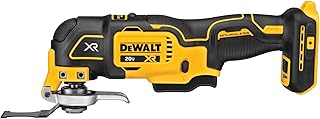 DEWALT 20V XR Oscillating Tool DEWALT 20V XR Oscillating Tool |
$104.99 | 4.8 | 20V Max (18V nom.) | Brushless, variable speed, tool only | Buy at Amazon |
Frequently Asked Questions
Is 20V Max really better than 18V?
No. They are the same nominal voltage. “20V Max” is a marketing term for the peak output of a fully charged 18V battery pack. Tools from different brands that run on 18V or 20V Max are not interchangeable.
Should I buy 36V tools for home use?
Only if you need sustained high power for tasks like cutting large timber or running a heavy‑duty miter saw. For most DIY work, 20V Max brushless tools offer plenty of power and are lighter and cheaper.
Can I use 20V Max batteries in 36V tools?
Not directly. However, some brands (like DEWALT FLEXVOLT) allow 20V Max batteries to power 36V tools, but the tool will run at reduced voltage and power. Always check compatibility.
What is the advantage of brushless motors on lower voltage tools?
Brushless motors improve efficiency and runtime even on 8V or 12V platforms. They produce more torque per watt and last longer, making them ideal for compact rotary tools.
How do amps (Ah) affect runtime?
Amp‑hours measure the battery’s energy capacity. A higher Ah battery (e.g., 4.0Ah vs 2.0Ah) will give longer runtime on the same tool. Voltage determines the power ceiling, while Ah determines how long you can stay at that power level.
Conclusion
Choosing between 18V, 20V Max, and 36V comes down to your specific needs. For most users, a 20V Max (18V nominal) brushless platform is the sweet spot—plenty of power for drilling, driving, and cutting, with excellent battery compatibility and lightweight ergonomics.
If you do heavy‑duty work regularly, invest in a 36V system or a FLEXVOLT‑compatible platform that gives you the best of both worlds. For precision work, a 12V brushless rotary tool is a perfect companion.
Remember: building your tool collection around a single battery ecosystem saves money and reduces hassle. Start with a reliable drill like the DEWALT 20V MAX DCD777D1, then expand into saws and oscillating tools that share the same batteries.