

Drill drivers are incredibly versatile tools, but when it comes to masonry and renovation, they have clear limits. Many homeowners and DIY enthusiasts wonder if their standard drill driver can handle brick, block, or concrete. The short answer is yes—for light tasks. But for serious masonry work, you need the right tool.
Understanding exactly when a drill driver excels and when it fails will save you time, money, and frustration. In this guide, we’ll break down the capabilities of modern drill drivers like the DEWALT 20V Max Cordless Drill Driver Set (DCD771C2) and show you which tasks are realistic for your next renovation project.
When a Drill Driver Works for Masonry
A standard drill driver can handle certain masonry materials if you use the right technique and bits. Let’s look at the best-case scenarios.
Drilling into Brick or Soft Stone
Soft brick, limestone, or mortar joints are manageable with a drill driver. You’ll want to use a carbide-tipped masonry bit and set your driver to a low speed with moderate pressure. The clutch helps prevent over-torquing.
For small holes (up to ¼ inch) in brick, a cordless drill driver like the PULITUO 20V Cordless Drill/Driver works surprisingly well. Its 30Nm torque provides enough power for light anchor installations.
- Use sharp masonry bits designed for rotary drilling.
- Apply steady pressure—not too much, not too little.
- Keep the drill speed low to avoid burning out the bit.
Driving Screws into Masonry Anchors
This is where drill drivers truly shine. Once you’ve pre-drilled a pilot hole using a hammer drill (or a drill driver for soft materials), a drill driver can easily drive screws into plastic anchors or expansion anchors. The variable speed clutch allows precise control.
For renovation projects like installing shelf brackets or wall-mounted cabinets, a driver like the DEWALT 20V MAX Cordless Drill Driver Set (DCD777D1) gives you consistent power and a built-in LED to illuminate your work area.
Mixing Small Batches of Mortar or Thin-Set
Yes, a drill driver can double as a low-speed mixer—if you have a mixing paddle attachment. This works only for small batches (up to a few quarts). Your drill must have a side handle and decent torque.
The brushless motor in the DEWALT DCD777D1 offers longer runtime and less heat buildup, making it a better choice for mixing than a brushed model.
Important: Mixing thick materials like thin-set can quickly overload a drill driver. Use a dedicated mixing drill for heavy-duty jobs.
When a Drill Driver Does NOT Work for Masonry
Knowing the limitations is just as important as knowing the capabilities. Attempting the wrong task can damage your tool or create unsafe conditions.
Drilling into Reinforced Concrete
Concrete with rebar or hard aggregate is a job for a rotary hammer or SDS drill. A drill driver lacks the hammer action needed to pulverize the stone. The result? Slow progress, overheated bits, and possible gear damage.
If you need to drill into concrete foundation walls or driveways, use a dedicated hammer drill or impact driver with hammer mode. The CRAFTSMAN V20 MAX Cordless Drill Driver and Impact Driver Set (CMCK200C2) provides both a drill driver and an impact driver, but even the impact driver isn’t designed for masonry—it’s best for driving fasteners into wood or metal.
Large Diameter Holes (Over ½ Inch)
Drilling a ¾-inch hole through brick with a drill driver is extremely demanding. The torque required can stall the motor or twist the tool out of your hands. For larger holes, step up to a rotary hammer with a core bit.
- Stick to holes ¼ inch or smaller for standard drill drivers.
- For anchor holes up to ½ inch, a mid-range drill driver may cope with softer materials.
- Always use a side handle when drilling larger holes.
Continuous Heavy-Duty Drilling
Drill drivers are designed for intermittent use. Running them continuously for several minutes to drill multiple holes in concrete will overheat the motor. This is especially true with compact, entry-level drivers like the Power Drill Cordless: DEKOPRO 20V. While affordable, it lacks the thermal management for prolonged masonry work.
Pro tip: If you find yourself drilling more than a dozen holes in masonry, rent or buy a proper hammer drill. It will save your wrists and your driver.
Recommended Drill Drivers for Light Masonry Tasks
Not all drill drivers are created equal. Below are three excellent options for light masonry drilling and anchor driving. They balance power, price, and ergonomics.
Comparison Table: Top Drill Drivers for Masonry & Renovation
| Product | Price | Rating | Key Features | Buy Now |
|---|---|---|---|---|
 |
$89.10 | 4.8 | 2-speed, high performance motor, 2 batteries, contractor bag | Buy at Amazon |
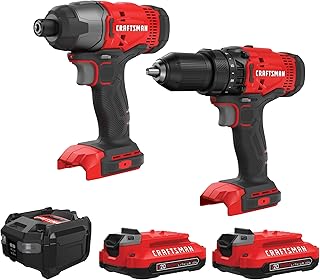 |
$99.00 | 4.8 | V20 MAX, includes drill driver + impact driver, 2 batteries, bag | Buy at Amazon |
 |
$35.99 | 4.5 | 30Nm, 21+1 torque, 2 speed, 2 batteries, LED light | Buy at Amazon |
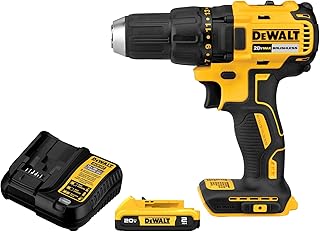 |
$89.10 | 4.7 | Brushless motor, 2 speed, LED light, 2.0 Ah battery | Buy at Amazon |
Which one to choose? For heavy renovation work, the CRAFTSMAN combo set gives you both a drill driver and an impact driver, covering most fastening needs. For budget-conscious DIYers, the PULITUO offers surprising value for light masonry jobs. The DEWALT DCD771C2 remains a trusted workhorse with excellent reliability.
Tips for Using a Drill Driver in Masonry
To get the best results and extend tool life, follow these guidelines:
- Always use carbide-tipped masonry bits. Ordinary HSS bits dull instantly on brick.
- Start with a pilot hole. For screws, drill a smaller guide hole first to reduce stress.
- Use the clutch setting. Set the torque ring to a low number when driving anchors to prevent overtightening.
- Keep the tool cool. Stop every 30 seconds to let the motor rest, especially in warm weather.
- Wear safety gear — eye protection and a dust mask are non‑negotiable when drilling masonry.
For additional context on where drill drivers truly excel, explore our guide on Best Drill Driver Uses in Woodworking, Cabinetry, and Finish Work. Likewise, if you work with metal, check out Using Drill Drivers for Metalworking: Settings, Bits, and Best Practices.
Final Verdict
Drill drivers are fantastic for renovation tasks like driving anchors, mixing small batches of mortar, and drilling into soft brick. However, they simply cannot replace a hammer drill or rotary hammer for reinforced concrete, large holes, or continuous heavy drilling.
Choose a quality drill driver like the DEWALT 20V Max DCD771C2 or the CRAFTSMAN V20 MAX CMCK200C2 for light-duty masonry. For tougher jobs, invest in a dedicated hammer drill. Your tools will last longer, and your projects will come out better.