

Choosing the right air compressor can feel overwhelming. You walk into a store or browse online and see models with one stage, two stages, different tank sizes, and wildly different price tags. The biggest fork in the road is deciding between a single-stage and a two-stage air compressor.
This guide breaks down how each type works, where they shine, and which one fits your specific needs. We’ll also highlight some top-rated models—like the Klutch 29-Gallon Air Compressor and the ECOMAX 6-Gallon Pancake—to help you make a confident buying decision.
What Is a Single-Stage Air Compressor?
A single-stage compressor uses one piston to compress air in a single stroke. The air is drawn into the cylinder, compressed, and then pushed directly into the storage tank. Most home-center compressors—like pancake, hot dog, and small vertical tanks—are single-stage.
Best for: DIYers, hobbyists, light construction, inflating tires, brad nailers, and spray guns.
Pros:
- Lower upfront cost
- Lighter and more portable
- Easier maintenance (oil-free models available)
- Runs on standard 120V household power
Cons:
- Lower maximum pressure (typically 125–150 PSI)
- Less efficient for continuous high-demand use
- Heats up faster under heavy loads
What Is a Two-Stage Air Compressor?
A two-stage compressor compresses air twice. The first stage pulls air into a low-pressure cylinder, then sends it through an intercooler to a second, smaller cylinder that compresses it again to final pressure. This system delivers higher PSI and better efficiency.
Best for: Professional workshops, auto body shops, sandblasting, production lines, and tools requiring high CFM (like impact wrenches and grinders).
Pros:
- Higher pressure output (175–200 PSI typical)
- Better duty cycle—runs cooler and longer
- More efficient for continuous use
- Longer lifespan due to lower internal temperatures
Cons:
- More expensive (often $500+)
- Heavier and less portable
- Usually requires 230V power
- Higher maintenance (oil-lubricated pumps)
Key Differences at a Glance
| Feature | Single-Stage | Two-Stage |
|---|---|---|
| Compression strokes | One | Two (with intercooler) |
| Max pressure | 125–150 PSI | 175–200+ PSI |
| CFM at 90 PSI | 2–6 CFM typical | 5–15+ CFM |
| Duty cycle | ~50% | 75–100% |
| Motor power | 1–3 HP (120V) | 3–10 HP (230V) |
| Price range | $100 – $400 | $400 – $2,000+ |
| Typical noise level | 70–85 dB | 70–85 dB (similar) |
| Portability | Very portable | Stationary or cart-mounted |
For a deeper look at how these machines are built, see our article on Piston Air Compressors Explained for Beginners.
Which One Should You Choose?
Your decision should hinge on three factors: intended use, frequency of use, and budget.
- Occasional DIY / home use – A single-stage, oil-free model like the ECOMAX 6-Gallon or the CRAFTSMAN 2-Gallon is plenty for nail guns, tire inflation, and small painting projects.
- Semi-professional / weekend warrior – A larger single-stage unit such as the Klutch 20-Gallon Air Compressor offers a good balance of power and portability for framing nailers and air ratchets.
- Continuous heavy use / commercial – Step up to a two-stage compressor. Though not in our selected product list, brands like Ingersoll Rand or Quincy dominate this category. If you need high CFM for hours each day, two-stage is the only way to go.
If you’re still unsure about portability needs, read our comparison of Portable vs Stationary Air Compressors.
Top Single-Stage Air Compressors for Home and Workshop
All the products below are proven performers. We’ve selected three that cover different budgets and use cases.
Klutch 29-Gallon, 2.5 HP, 175 PSI – A powerful vertical tank for serious workshop use. Its 175 PSI and 2.5 HP motor drive impact wrenches and die grinders. Rated 4.4 stars by hundreds of buyers.
ECOMAX 6-Gallon Pancake (150 PSI) – Ultra-light, oil-free, and includes a 10-piece accessory kit. Perfect for trim work and inflating tires. 4.7 stars with over 240 ratings.
DEWALT DWFP55126 6-Gallon, 165 PSI – A legendary pancake compressor with high output and durability. Features a cast-iron pump and low-oil design. 4.6 stars from over 7,000 reviews.
Comparison Table
| Product | Price | Rating | Key Features | Buy at Amazon |
|---|---|---|---|---|
 |
$329.99 | 4.4 | 29 Gal, 2.5 HP, 175 PSI, Oil-Free | Buy Now |
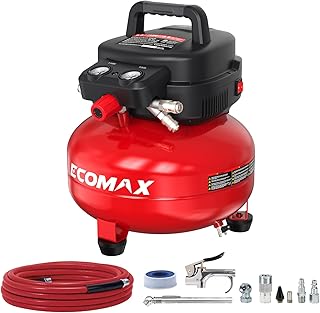 |
$169.99 | 4.7 | 6 Gal, 150 PSI, Oil-Free, 10-Pc Kit | Buy Now |
 |
$204.99 | 4.6 | 6 Gal, 165 PSI, Cast-Iron Pump | Buy Now |
These compressors are all single-stage. If you need something quieter for indoor use, check out the MZB 6.4 Gallon Ultra Quiet Air Compressor at just 70 dB.
Final Verdict: Single-Stage vs Two-Stage
For most home users and small shops, a single-stage air compressor is the right call. It’s affordable, portable, and handles 90% of common tasks. But if you run air sanders, blast cabinets, or multiple tools simultaneously, invest in a two-stage model. The higher CFM and pressure will save you time and extend tool life.
Remember to match the compressor to your duty cycle. A single-stage can run 30–50% of the time; a two-stage runs up to 100%. Overworking a single-stage in a commercial environment leads to overheating and premature failure.
Want to learn more about the fundamentals? Read How an Air Compressor Works: Pump, Motor, and Tank Basics or explore the full umbrella of Air Compressor Types Explained: Piston, Rotary Screw, and More.
Still have questions? Drop a comment below or check out the PORTER-CABLE 6-Gallon Pancake (C2002-ECOM)—another excellent single-stage choice trusted by pros and DIYers alike.