

If you’ve ever picked up an angle grinder, you know it’s a powerhouse for cutting, grinding, and polishing. But have you ever wondered what keeps that spinning wheel firmly attached? The answer lies in a small but mighty component: the arbor. Understanding what the arbor does and why it matters can help you choose the right grinder, use it safely, and get better results on every job. Let’s dive into the details.
Understanding the Arbor and Its Function
The arbor is the threaded shaft that protrudes from the angle grinder’s spindle. It’s the part where you mount your grinding wheel, cutting disc, or wire brush. Without the arbor, the abrasive disc would have no way to rotate at high speed or stay securely in place. In essence, the arbor transfers the motor’s rotational power directly to the wheel, allowing the grinder to perform its core tasks.
Most angle grinders use a 5/8‑inch‑11 UNC threaded arbor (for 4‑1/2‑inch and 5‑inch wheels) or an M14 metric thread (common in many European models). The arbor’s threads match the threaded hole in the center of the wheel, and a flange nut or locking nut tightens everything down. This design ensures the wheel spins true and doesn’t slip during operation.
To understand how the arbor fits into the bigger picture, check out our detailed guide on Angle Grinder Parts Explained: Motor, Spindle, Guard, and Disc. It breaks down every component from motor to guard.
How the Arbor Transfers Power
The arbor is directly connected to the grinder’s gearbox and motor shaft. When you pull the trigger, the motor spins a pinion gear, which rotates a bevel gear that turns the spindle. The spindle then drives the arbor. Because the arbor is threaded, it can spin at speeds up to 11,000 RPM or more. The torque generated by the motor is what allows the grinding wheel to remove material quickly.
The arbor’s threading also creates a self‑tightening effect. As the wheel rotates, friction between the wheel and the arbor flange actually tightens the nut, preventing accidental loosening. That’s why you always need to ensure the wheel is mounted in the correct direction of rotation. If you’d like a beginner‑friendly walkthrough of the entire power flow, read How Angle Grinders Work: a Beginner-friendly Explanation.
Arbor Sizes and Compatibility
Not all arbors are the same. The two most common sizes are:
- 5/8‑inch‑11 UNC – Standard on most North American angle grinders (4‑1/2″ and 5″ models).
- M14 (metric 14mm) – Common on many European and Asian grinders.
- 7/8‑inch – Used on larger grinders (7″ or 9″ wheels) and some specialty discs.
Always check the arbor size before buying replacement wheels or accessories. Using the wrong size can lead to poor fit, vibration, and dangerous wobbling. Many quality grinders come with a wrench or pin spanner to help you change wheels quickly.
Safety Considerations Around the Arbor
The arbor is a high‑stress point. Here are critical safety tips:
- Never force a wheel onto the arbor. If the hole is too small, don’t enlarge it — buy the correct wheel.
- Always use the proper flange. The inner flange supports the wheel from behind; the outer locking nut holds it in place.
- Tighten the nut securely, but don’t overtighten. Most manufacturers recommend a snug fit using the supplied wrench.
- Inspect the arbor threads regularly for damage or wear. A stripped arbor can cause the wheel to fly off at high speed.
- Use only wheels rated for your grinder’s RPM. The arbor transfers that speed directly; exceeding the wheel’s limit can cause shattering.
For a complete overview of how each part contributes to safe operation, see Inside an Angle Grinder: How Power Turns into Cutting and Grinding.
Choosing the Right Angle Grinder Based on Arbor Features
While the arbor may seem like a simple threaded shaft, its design influences:
- Ease of wheel changes – Some grinders have a spindle‑lock button that locks the arbor so you can unscrew the nut with one hand. This is a huge time‑saver.
- Arbor length – A longer arbor can accommodate thicker wheels or multiple accessories.
- Thread type – If you already own accessories with 5/8″‑11 threads, stick with that standard to avoid adapters.
When shopping for a grinder, pay attention to the arbor’s quality. Look for models with hardened steel arbors and smooth threads. A well‑made arbor reduces vibration and extends the life of both the grinder and your discs.
Comparison Table of Top Angle Grinders
The following table compares eight popular angle grinders that feature reliable arbors and excellent build quality. Each model is well‑suited for cutting, grinding, and polishing tasks.
| Product | Image | Price | Rating | Arbor Size | Key Features | Buy at Amazon |
|---|---|---|---|---|---|---|
| DEWALT DWE402 |  |
$94.00 | 4.8 | 5/8″-11 UNC | 11 Amp motor, 11,000 RPM, paddle switch, compact design | Buy Now |
| DEWALT DWE4011 |  |
$69.00 | 4.7 | 5/8″-11 UNC | 8.5 Amp motor, one-touch guard, slim grip | Buy Now |
| Bosch GWS8-45 |  |
$62.10 | 4.6 | 5/8″-11 UNC | 7.5 Amp motor, 11,000 RPM, flathead housing, dust protection | Buy Now |
| DEWALT DCG413B |  |
$155.99 | 4.8 | 5/8″-11 UNC | 20V MAX* brushless, kickback brake, paddle switch, tool only | Buy Now |
| CRAFTSMAN CMCG400B |  |
$53.10 | 4.7 | 5/8″-11 UNC | V20* cordless, compact, brushless motor, tool only | Buy Now |
| Metabo HPT G12SR4 |  |
$59.00 | 4.6 | 5/8″-11 UNC | 6.2 Amp motor, includes 5 wheels & hard case, lightweight | Buy Now |
| DEWALT DWE402W |  |
$99.00 | 4.7 | 5/8″-11 UNC | 11 Amp motor, dust ejection system, paddle switch | Buy Now |
| AOBEN Cordless Grinder Kit | 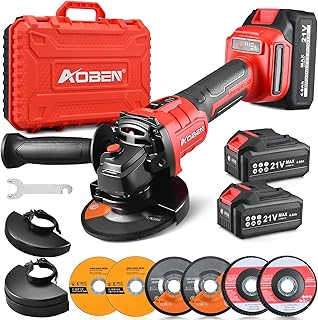 |
$58.48 | 4.5 | 5/8″-11 UNC | 21V brushless, 2×4.0Ah batteries, charger included | Buy Now |
Each of these grinders features a high‑quality arbor that delivers reliable performance. Whether you choose a corded powerhouse like the DEWALT DWE402 or a portable cordless option like the AOBEN kit, the arbor is built to handle demanding tasks.
Additional Tips for Arbor Maintenance
To keep your angle grinder running safely:
- Clean the arbor threads after each use. Dust and debris can interfere with the nut’s grip.
- Apply a small amount of anti‑seize compound to the arbor threads (optional) to prevent the nut from seizing.
- Store the grinder with the nut loosened if you’re not using it for a while, to reduce stress on the threads.
- Replace the arbor if it becomes damaged. A bent or stripped arbor is dangerous.
For a broader look at the anatomy of an angle grinder, including the side handle, guard, and anti‑vibration features, read Angle Grinder Anatomy: a Simple Guide to the Main Components. And if you want to know more about how the side handle and guard contribute to control and safety, visit Side Handle, Guard, and Anti-vibration Features: What They Do.
Final Thoughts
The arbor may be a simple threaded shaft, but it’s the unsung hero of every angle grinder. It holds your wheel securely, transfers the motor’s power efficiently, and determines which accessories you can use. By understanding its role, choosing a grinder with a quality arbor, and maintaining it properly, you’ll get safer, more precise cuts and longer tool life.
Next time you swap a disc or squeeze the trigger, take a moment to appreciate that little piece of steel doing big work. For more in‑depth guides on angle grinder components and best practices, explore our full content pillar on how angle grinders work.