
Choosing the right cordless power tool goes beyond just picking a brand. The battery system—amp-hours, voltage, and cell configuration—directly determines how long your tool runs and how much power it delivers. Brushless motors make this even more critical, as they convert battery energy into torque and speed more efficiently than brushed designs.
Understanding these specs helps you avoid the frustration of a dying battery mid-cut or the extra cost of overbuying capacity you don’t need. Whether you’re a weekend DIYer or a professional on a job site, knowing the interplay between amp-hours, voltage, and cells lets you optimize your 18V vs 20V Max vs 36V ecosystem strategy.
In this guide, we’ll break down each factor, show real product examples like the DEWALT 20V MAX Cordless Drill Driver Set, and give you the tools to calculate runtime for any brushless tool.
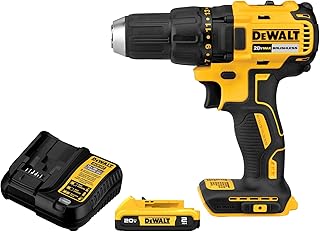
What Are Amp-Hours (Ah) and Why Do They Matter?
Amp-hours measure the capacity of a battery—how much charge it can hold. Think of it as the fuel tank size: a higher Ah pack stores more energy and runs your tool longer before needing a recharge.
- 2.0Ah battery = smaller tank, lighter weight, shorter runtime.
- 5.0Ah battery = larger tank, heavier, but significantly more runtime.
- Brushless motors draw current more efficiently, so a 2.0Ah pack on a brushless tool often matches the runtime of a 3.0Ah pack on a brushed tool.
For example, the DEWALT 20V MAX XR Oscillating Multi-Tool (DCS356B) is a bare tool designed for use with your existing DEWALT batteries. If you pair it with a 2.0Ah pack, you get moderate runtime for light sanding. Upgrade to a 5.0Ah pack, and you can cut through drywall or hardwood for much longer without stopping.
The Role of Voltage in Power Delivery
Voltage determines the potential energy available to the motor. Higher voltage generally means more power and the ability to drive larger bits or cut through thicker materials. Standard cordless tool voltages are 12V, 18V, 20V Max, and 36V.
- 12V (like the Dremel 8150 8V Cordless Rotary Tool Kit): Light-duty, precision work. The 8V here is a lower voltage, but its brushless motor makes it ideal for detailed engraving and polishing.
- 20V Max (DEWALT’s platform): The most common for mid-to-heavy DIY and professional use. “20V Max” measures the peak voltage, while nominal is 18V. This ecosystem spans drills, saws, oscillating tools, and more.
- 36V (or 2x18V systems): For high-demand tools like large miter saws or concrete grinders. Voltage doubles without changing cell type.
Understanding voltage helps you decide which platform to commit to. Read more in our guide on 18V vs 20V Max vs 36V: Choosing the Right Battery Platform for Cordless Power Tools with Brushless Motors.
How Cells Inside the Battery Affect Runtime
Lithium-ion battery packs are made of individual cells, each typically 3.6V nominal. The way these cells are arranged (series and parallel) determines voltage and capacity.
- Series (S) increases voltage. A 20V Max pack usually has 5 cells in series (5S).
- Parallel (P) increases amp-hours. A 2.0Ah pack might use 2.0Ah cells in a 5S1P configuration. A 4.0Ah pack uses the same cells in 5S2P (two parallel groups), doubling capacity.
More cells in parallel mean longer runtime and often better current delivery under heavy loads. Brushless motors benefit because they can draw high current without overheating the pack as quickly.
The DEWALT 20V MAX XR Jig Saw (DCS334B) is a bare tool that shines when paired with a high-capacity pack like the 6.0Ah or 9.0Ah FlexVolt batteries. The additional parallel cells keep the voltage stable during intricate cuts, giving you smoother performance.
Why Brushless Motors Change the Equation
Brushless motors use an electronic controller to energize the windings, eliminating brushes and reducing friction. This yields three runtime benefits:
- Higher efficiency – Up to 50% more runtime per charge compared to brushed motors.
- Less heat – Heat is wasted energy. Brushless motors run cooler, so more battery power goes into mechanical work.
- Better torque control – The controller can match power delivery to load, avoiding wasted current.
For example, the Dremel 8250-5 12V Rotary Tool uses a brushless motor that extends its 3.0Ah battery runtime significantly over older brushed models. That means you can finish a routing project without swapping batteries halfway.
Calculating Runtime: A Practical Formula
You can estimate runtime with a simple formula: Runtime (hours) = Battery Capacity (Ah) × Voltage (V) / Power Draw (W).
But because brushless tools vary in power draw based on load, use an average. A typical 20V brushless drill at moderate load draws about 150–250W. For a 2.0Ah battery (20V, 40Wh total), runtime would be:
- 40Wh / 200W = 0.2 hours ≈ 12 minutes of continuous heavy drilling.
- Lighter tasks like driving screws might draw only 50–100W, giving 24–48 minutes.
Higher Ah packs scale linearly: a 5.0Ah battery (100Wh) would give 30 minutes of heavy drilling or 1–2 hours of light work.
This is why the DEWALT 20V MAX XR Oscillating Tool Kit (DCS356C1) comes with a battery and charger. The included pack (likely 2.0Ah) is enough for most tasks, but pros often upgrade to a 5.0Ah for longer sanding sessions.
Building a Cohesive Battery Ecosystem
Committing to one voltage platform saves money and hassle. Shared batteries mean you can buy a bare tool like the DEWALT 20V MAX Cordless Drill and Impact Driver Combo Kit (DCK277D2) and use its batteries across your entire DEWALD lineup.
For a complete one-battery ecosystem strategy, consider:
- High-capacity packs (4.0Ah–6.0Ah) for saws and grinders.
- Compact 1.5Ah or 2.0Ah packs for drills and drivers to reduce weight.
- Fast chargers to minimize downtime, as discussed in Fast Charging, Heat, and Battery Life.
Product Comparison: Top Brushless Tools with Different Battery Configurations
To help you choose, here’s a comparison of the selected brushless tools, covering voltage, Ah, and estimated runtime.
| Product | Price | Rating | Key Specs | Buy at Amazon |
|---|---|---|---|---|
| DEWALT 20V MAX Drill Driver DCD777D1 | $99.00 | 4.7 | 20V, 2.0Ah battery, brushless, 1/2″ chuck | |
| DEWALT 20V MAX Drill & Impact Combo DCK277D2 | $169.00 | 4.8 | 20V, 2 batteries (2.0Ah each), brushless |  |
| DEWALT 20V MAX XR Oscillating Tool DCS356B (tool only) | $104.99 | 4.8 | 20V, brushless, variable speed |  |
| DEWALT 20V MAX XR Oscillating Kit DCS356C1 | $124.50 | 4.8 | 20V, includes battery & charger, 3-speed |  |
| DEWALT 20V MAX XR Jig Saw DCS334B (tool only) | $132.00 | 4.8 | 20V, brushless, 3,200 SPM |  |
| Dremel 8150 8V Rotary Tool Kit | $79.99 | 4.6 | 8V brushless, USB-C, 20 accessories |  |
| Dremel 8250-5 12V Rotary Tool Kit | $149.00 | 4.7 | 12V, 3.0Ah battery, brushless, 5 accessories |  |
Cold Weather and Heavy Loads: Real-World Runtime Impacts
Battery performance drops in cold weather because chemical reactions slow down. Brushless motors help by drawing current more efficiently, but you’ll still see 20–40% less runtime below freezing. Using a higher Ah pack (e.g., 5.0Ah instead of 2.0Ah) compensates somewhat. For tough jobs, also consider warming the battery to room temperature before use, as covered in Cold Weather and Heavy Loads: Maximizing Runtime of Cordless Power Tools with Brushless Motors on Tough Jobs.
FAQ: Battery Amp-Hours, Cells, and Voltage
Does a higher Ah battery provide more power (torque)?
No. Amp-hours only affect runtime, not power output. Voltage determines power. A 20V tool will deliver the same torque with a 2.0Ah or 5.0Ah battery, but the larger pack will last longer.
Can I use a 6.0Ah battery on a tool rated for 2.0Ah?
Yes, as long as the voltage matches (e.g., both 20V). The tool will draw only the current it needs. Higher Ah packs may be physically larger but are fully compatible.
What’s the difference between 18V and 20V Max?
They are essentially the same. “20V Max” is a marketing term that refers to the peak voltage; the nominal voltage is 18V. Tools and batteries within the same brand (like DEWALT) are interchangeable.
How many cells are in a typical 20V brushless battery?
A 20V Max pack usually has 5 cells in series (5S). For higher Ah, cells are added in parallel: 5S2P for 4.0Ah, 5S3P for 6.0Ah, etc.
Why do brushless tools run longer on the same battery?
Brushless motors are more efficient (up to 85% vs 70-75% for brushed). Less energy is wasted as heat, so more goes into turning the motor.