
Imagine a workshop where every tool—from your drill to your jigsaw—runs on the same battery. No scrambling for the right charger, no piles of mismatched packs. This is the power of a one-battery ecosystem. By investing in cordless power tools with brushless motors and a shared battery platform, you save money, reduce clutter, and boost productivity. Whether you are a weekend DIYer or a pro contractor, building a cordless shop around a unified voltage family (like 18V/20V MAX or 12V/36V) is the smartest move you can make.
This strategy only works when you choose tools with brushless motors, because they extract more runtime and torque from every battery charge. Combined with a shared pack system, you can buy “tool only” versions and keep a few high‑capacity batteries in rotation. Let’s explore how to build your perfect cordless shop.
Why a One‑Battery Ecosystem Makes Sense
A single battery platform means fewer chargers, less wasted money, and simpler logistics. When you stick to one voltage family (for example, DEWALT 20V MAX or Milwaukee M18), every new tool you buy—drill, oscillating multi‑tool, jigsaw, rotary tool—runs on the same packs. This is the core of the one‑battery ecosystem strategy.
Key benefits include:
- Cost savings – Buy bare tools (tool only) and use existing batteries.
- Less downtime – One spare battery keeps all your tools alive.
- Lightweight logistics – One charger, one set of packs for the whole shop.
- Scalability – Add new tools without investing in new batteries.
To get the most out of shared packs, you need tools that are efficient. Brushless motors deliver up to 50% more runtime than brushed motors, making them the perfect partner for a shared ecosystem.
Why Brushless Motors Are Essential
Brushless motors use electronics to control power delivery, eliminating friction‑causing brushes. This gives you:
- Higher efficiency – Less energy lost as heat.
- More torque per pound – Compact tools with serious power.
- Longer tool life – No brushes to replace.
- Better runtime – Squeeze every drop from your battery.
Every tool in a one‑battery shop should be brushless. Let’s see how the most popular tools fit into this strategy.
Building Your Cordless Shop Around Shared Packs
1. The Foundation: A High‑Performance Drill and Driver
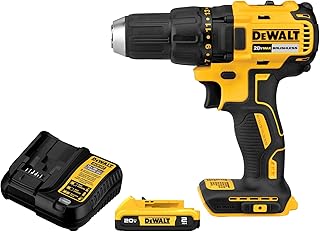
Every shop starts with a drill and impact driver. The DEWALT 20V MAX Cordless Drill Driver Set (DCD777D1) is a fantastic entry point. It’s brushless, ½‑inch, two‑speed, and comes with a 2.0 Ah battery and charger—perfect for building your battery stock. Priced at $99.00 with a 4.7 rating, it’s a reliable workhorse.
For a more powerful combo, the DEWALT 20V MAX Cordless Drill and Impact Driver 2‑Tool Combo Kit (DCK277D2) gives you both tools plus two batteries and a bag—$169.00 (rating 4.8). It’s the ultimate starter kit for a one‑battery shop.

2. Versatile Cutting: Oscillating Multi‑Tool
An oscillating multi‑tool solves countless jobs—trimming, sanding, scraping. The DEWALT 20V MAX XR Oscillating Multi‑Tool (DCS356B) (tool only, $104.99, 4.8) is brushless with variable speed and LED. Buy it bare and pair with your existing 20V MAX batteries.
If you prefer a kit with battery and charger, the DEWALT 20V MAX XR Oscillating Tool Kit (DCS356C1) ($124.50, 4.8) includes blades and a 2.0 Ah battery. Both are excellent additions to your ecosystem.

3. Precision Sawing: Cordless Jigsaw
For curved cuts and detailed work, a brushless jigsaw is essential. The DEWALT 20V MAX XR Jig Saw (DCS334B) (tool only, $132.00, 4.8) offers 3,200 blade speed, LED, and excellent bevel capacity. It shares the same platform as your drill and oscillating tool—true ecosystem harmony.

4. Detail Work: Compact Rotary Tools
Not all tasks need 20V. For engraving, polishing, and fine sanding, a compact rotary tool like the Dremel 8150 8V Cordless Rotary Tool Kit ($79.99, 4.6) is brilliant. It’s brushless, USB‑C rechargeable, and comes with 20 accessories. While it uses a different battery, it fits the “small tool” tier—still a one‑battery concept within a secondary voltage.

For more power, the Dremel 8250‑5 12V Cordless Rotary Tool Kit ($149.00, 4.7) includes a 3.0 Ah battery, charger, and bag. It’s a full ecosystem in a smaller voltage class—perfect for hobbyists who also own a 20V system.

5. Other Must‑Have Additions
To round out your cordless shop, consider a brushless angle grinder or a power washer that shares your battery platform. Many brands offer “tool only” versions, which is exactly how you grow an ecosystem without overspending.
Comparison Table: Top Tools for a One‑Battery Ecosystem
| Product | Price | Rating | Battery Included? | Key Feature | Buy at Amazon |
|---|---|---|---|---|---|
| DEWALT 20V MAX Drill |
$99.00 | 4.7 | Yes (2.0 Ah) | Brushless, ½″ chuck | Buy |
| DEWALT 2‑Tool Combo |
$169.00 | 4.8 | Yes (2 × 2.0 Ah) | Drill + Impact Driver | Buy |
| DEWALT Oscillating Tool (Bare) |
$104.99 | 4.8 | No | Variable speed, LED | Buy |
 DEWALT Oscillating Kit DEWALT Oscillating Kit |
$124.50 | 4.8 | Yes (2.0 Ah) | Kit with blades | Buy |
| DEWALT Jigsaw (Bare) |
$132.00 | 4.8 | No | 3,200 SPM, LED | Buy |
| Dremel 8150 8V Rotary |
$79.99 | 4.6 | Yes (internal) | USB‑C rechargeable | Buy |
| Dremel 8250 12V Rotary |
$149.00 | 4.7 | Yes (3.0 Ah) | Variable speed, bag | Buy |
How to Choose the Right Battery Voltage
Deciding between 12V, 18V, 20V MAX, and 36V depends on your workload. For a deeper dive, read our guide on 18V vs 20V Max vs 36V: Choosing the Right Battery Platform. Remember that 20V MAX (18V nominal) is the most common ecosystem for drills and saws, while 12V suits detail work. Stick with one primary voltage; for secondary needs, a smaller platform like Dremel 12V complements without breaking the ecosystem.
Maximizing Runtime with Brushless Motors
Even with shared packs, runtime matters. Brushless motors already help, but you can optimise further by understanding How Battery Amp‑hours, Cells, and Voltage Affect Runtime on our detailed article: How Battery Amp-hours, Cells, and Voltage Affect Runtime. Pair high‑capacity packs (4.0 Ah or 5.0 Ah) with your heavy‑duty tools and keep smaller packs for drills and multitools.
Managing Chargers and Battery Life
Fast charging generates heat, which shortens battery life. Learn the best practices in Fast Charging, Heat, and Battery Life: Managing Chargers. Let batteries cool before recharging, and always use the manufacturer’s charger for your voltage family.
Cold Weather and Heavy Loads
Working in cold weather or on tough jobs can drain batteries faster. For tips on keeping your ecosystem running, check Cold Weather and Heavy Loads: Maximizing Runtime. Store packs indoors, warm them before use, and avoid full discharge under load.
FAQ: One‑Battery Ecosystem and Brushless Motors
What is a one‑battery ecosystem for power tools?
It means all your cordless tools share the same battery platform (e.g., DEWALT 20V MAX or Milwaukee M18). You buy “tool only” versions and use a few interchangeable batteries, saving money and charging space.
Why are brushless motors better for a shared battery system?
Brushless motors are more efficient—they convert more battery energy into work. This gives you longer runtime per charge, so a single battery pack works harder across multiple tools.
Can I mix batteries of different amp‑hours in one ecosystem?
Yes. Higher Ah packs (e.g., 5.0 Ah) provide longer runtime; lower Ah (2.0 Ah) save weight. As long as they are the same voltage (e.g., 20V MAX), they work interchangeably.
Should I buy kits or bare tools for a one‑battery shop?
Start with one or two kits to get batteries and charger. Then buy bare tools for everything else. This builds your ecosystem cost‑effectively.
Is a 12V rotary tool like Dremel part of an 18V/20V ecosystem?
Not directly, but it can be a secondary system. Many users pair a 20V DEWALT ecosystem with a 12V Dremel for detail work. Keep it simple—one primary voltage, one secondary for specialty tools.
Build Your Cordless Shop Today
The one‑battery ecosystem strategy transforms your workflow. Choose a trusted brand, invest in brushless tools, and gradually fill your shop with bare‑tool additions. Start with core tools like the DEWALT 20V MAX Drill Driver Set and expand into oscillating multitools, jigsaws, and rotary kits. Your wallet—and your workshop—will thank you.