

If you work with metal—whether fabricating a gate, repairing a trailer, or building custom furniture—getting a clean, flat surface after welding is non-negotiable. The humble angle grinder is your best friend for this job. With the right technique and a quality tool like the DEWALT Angle Grinder, 4.5 Inch, 11 Amp, 11,000 rpm, With Paddle Switch (DWE402), you can turn rough, spattered welds into smooth, presentation-ready metal. This guide covers the essential techniques for grinding welds and smoothing metal like a pro.

Safety First: Gear You Must Wear
Angle grinders spin at up to 11,000 RPM. A slip or a shattered disc can cause serious injury. Always wear:
- Full-face shield or safety glasses with side shields
- Heavy-duty work gloves
- Hearing protection (grinders are loud)
- Long sleeves and closed-toe boots
Never remove wheel guards—they deflect debris away from your body. Work in a well-ventilated area to avoid inhaling metal dust.
Choosing the Right Disc for the Job
The disc you pick determines the finish. For grinding welds and smoothing metal, you’ll use two main types:
- Grinding discs (also called depressed-center wheels) – Aggressive, for removing high weld beads and heavy stock quickly.
- Flap discs – Use multiple layers of abrasive cloth. They grind and finish in one step, leaving a smooth surface.
For general weld grinding, start with a 36- or 40-grit grinding disc, then switch to an 80-grit flap disc for blending.
Step-by-Step Techniques for Grinding Welds
1. Set the Right Angle
Hold the grinder so the disc contacts the weld at a 10- to 15-degree angle. A flatter angle removes more material but can gouge the base metal. A steeper angle reduces control and increases the chance of kickback.
2. Use Light, Even Pressure
Let the weight of the grinder do the work. Pushing harder only loads down the motor and wears the disc faster. Move the grinder in a side-to-side sweeping motion across the weld bead.
3. Work with the Grain (If Possible)
For long welds, move along the length of the bead rather than across it. This prevents deep grooves and helps maintain a flat surface.
4. Blend the Start and Stop Points
Weld craters at the start and end are often higher. Use short, controlled passes to level these areas before grinding the rest of the bead.
Smoothing Metal After Welding
Once the weld is flush, switch to a flap disc to blend the repair with the parent metal. Here’s how:
- Use an 80-grit flap disc for initial smoothing.
- Follow with 120-grit for a near-mirror finish.
- Keep the grinder moving constantly to avoid overheating the metal, which can cause discoloration.
For large flat surfaces, consider using a surface conditioning wheel (like a Scotch-Brite pad) for a uniform satin finish.
Pro Tips for a Professional Finish
- Clean the weld area first. Remove slag and spatter with a chipping hammer or wire brush before grinding. This prevents clogging your disc.
- Use a backer pad. When smoothing thin sheet metal, place a piece of wood behind the work area to prevent distortion.
- Work in cross-hatch patterns. Alternate between horizontal and vertical passes to eliminate directional scratches.
- Check your progress frequently. Stop every few seconds to wipe the dust and inspect the surface.
Best Angle Grinders for Weld Grinding and Metal Smoothing
The tool you choose affects both comfort and results. Here are top-rated models that excel in metalwork:
| Product | Price | Rating | Key Features | Buy Now |
|---|---|---|---|---|
|
$94.00 | 4.8 ★ | 11 Amp, 11,000 RPM, paddle switch, ergonomic grip | Buy at Amazon |
 |
$69.00 | 4.7 ★ | One-touch guard, 4-1/2″, compact, 6.5 Amp | Buy at Amazon |
 |
$62.10 | 4.6 ★ | 7.5 Amp, slim barrel grip, low vibration | Buy at Amazon |
 |
$155.99 | 4.8 ★ | Cordless brushless, 20V MAX, kickback brake | Buy at Amazon |
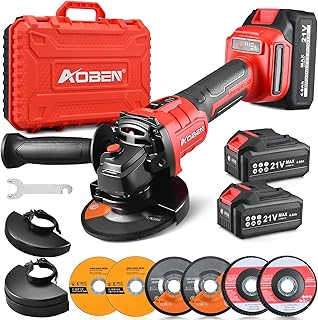 |
$58.48 | 4.5 ★ | 21V brushless, 2×4.0Ah batteries, kit | Buy at Amazon |
The DEWALT DWE402 is a corded workhorse with ample power for continuous weld grinding. For portability, the DEWALT DCG413B cordless model offers brushless efficiency and a kickback brake. Budget-conscious DIYers will appreciate the Bosch GWS8-45—it’s lightweight and comfortable for extended use.
Common Mistakes to Avoid
- Grinding too long in one spot – Creates a depression and overheats the metal. Keep the grinder moving.
- Using a cutting disc for grinding – Cutting discs are thin and can shatter under sideways pressure. Always use a grinding or flap disc.
- Neglecting the edge of the weld – The toes of the weld (where it meets the base metal) need gentle passes to avoid undercutting.
- Skipping the final blend – A flap disc pass at 120 grit removes the deep scratches left by a grinding disc and gives a professional appearance.
Related Techniques for Your Next Project
Mastering weld grinding is just one skill in your angle grinder arsenal. To expand your metalworking abilities, check out:
- How to Cut Metal with an Angle Grinder Cleanly and Safely?
- Automotive Angle Grinder Uses: Rust Removal, Body Prep, and Surface Finishing
If you’re working on other materials, these guides will also help:
- Using an Angle Grinder on Masonry: Cutting Brick, Block, and Concrete
- Can You Use an Angle Grinder on Wood? What to Know before Trying?
- Angle Grinder Tile Cutting Tips for Cleaner Edges and Less Chipping
Final Thoughts
Grinding welds and smoothing metal with an angle grinder is a routine task, but doing it well requires the right discs, proper technique, and a reliable tool. Whether you choose the DEWALT DWE402 for its raw power or the Bosch GWS8-45 for its lightweight control, investing in a quality grinder pays off in speed and finish. Practice on scrap pieces first, and soon you’ll be laying down glass-smooth surfaces that need little filler.
Now grab your grinder, pop on a fresh flap disc, and turn those ugly welds into art.