

Cutting metal with an angle grinder is one of the most versatile skills in any workshop. Whether you’re trimming rebar, slicing through steel plates, or shaping custom brackets, the right technique turns a noisy power tool into a precision instrument. The key? Choosing the right grinder, using the proper disc, and following a few safety rules.
In this guide, you’ll learn exactly how to get clean, straight cuts without burning out the motor or leaving jagged edges. We’ll also cover the best angle grinders for the job—from budget picks to professional cordless beasts.
Choosing the Right Angle Grinder for Metal Cutting
Not all angle grinders are created equal. For cutting metal, you need sufficient power, a comfortable grip, and ideally a paddle switch for instant control. The DEWALT DWE402 is a top contender—an 11-amp workhorse with 11,000 rpm and a compact design that makes long cuts less fatiguing. If you prefer a cordless option, the DEWALT 20V MAX DCG413B delivers brushless performance and a kickback brake for added safety.
For hobbyists on a budget, the Bosch GWS8-45 offers excellent value at just over $60, while the AOBEN Cordless Angle Grinder (21V, brushless) is a fantastic choice if you want total portability without sacrificing power.
What to Look For
- Amperage / Voltage: For corded models, 6–11 amps. For cordless, 18V–20V.
- RPM: 10,000–12,000 is ideal for cutting discs.
- Switch Type: Paddle switch (safer) vs. slide switch.
- Spindle Lock: Makes disc changes faster.
- Ergonomics: Grips with rubber overmold reduce vibration.
Product Comparison Table
| Product | Price | Rating | Key Features | Buy at Amazon |
|---|---|---|---|---|
 |
$94.00 | 4.8 | 11 Amp, 11,000 rpm, paddle switch, dust ejection | Buy Now |
 |
$69.00 | 4.7 | One-touch guard, 8.5 Amp, slim grip | Buy Now |
 |
$62.10 | 4.6 | 8.5 Amp, 11,000 rpm, flat head profile | Buy Now |
 |
$155.99 | 4.8 | Brushless motor, kickback brake, 20V MAX | Buy Now |
 |
$53.10 | 4.7 | V20 cordless, 3-position handle, tool only | Buy Now |
 |
$59.00 | 4.6 | 6.2 Amp, includes 5 grinding wheels, hard case | Buy Now |
 |
$99.00 | 4.7 | Dust ejection system, 11 Amp, paddle switch | Buy Now |
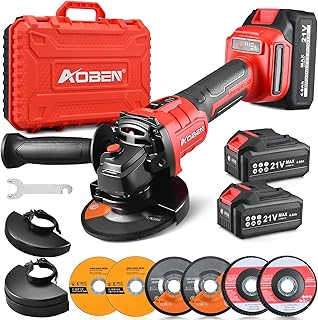 |
$58.48 | 4.5 | 21V brushless, 2×4.0Ah batteries, compact | Buy Now |
Essential Safety Gear and Preparations
Before you touch the trigger, equip yourself properly. Angle grinders spin at over 10,000 rpm – a slip can cause serious injury.
- Safety glasses – impact-resistant, with side shields.
- Hearing protection – grinders are loud (90+ dB).
- Heavy-duty gloves – leather or Kevlar, not loose fabric.
- Long sleeves – cotton or flame-resistant, no synthetics that melt.
- Steel-toed boots – falling metal pieces are heavy.
Secure your workpiece with clamps or a vise. Never hold metal by hand – vibration and kickback can turn the grinder into a weapon. Always disconnect power when changing discs.
Selecting the Correct Cutting Disc
The right disc makes the difference between a clean cut and a mess. For ferrous metals (steel, iron), use 1mm or 1.6mm thin cutting wheels labelled for metal. Thicker wheels are for grinding – don’t use them for cutting.
Abrasive type:
- Aluminum oxide – best for steel and carbon steel.
- Zirconia alumina – lasts longer on stainless steel.
- Diamond blades – for cutting through rebar or hardened steel, but require a grinder with enough torque.
Never exceed the disc’s maximum RPM rating printed on the wheel. Check your grinder’s speed before mounting.
Step-by-Step Guide to Cutting Metal Cleanly
Follow these steps for a straight, burr-free cut every time.
1. Mark Your Cut Line
Use a sharpie or a scribe. For long cuts, clamp a straight edge or angle iron as a guide. The disc should ride against the guide, not your hand.
2. Position the Grinder
Hold the grinder with both hands – one on the body grip, one on the auxiliary handle. Approach the metal so the disc spins away from your body (the “right” direction depends on your grip – test without power).
3. Start the Cut
With the grinder at full speed, gently lower the disc onto the metal. Use light pressure – let the disc do the work. Pushing hard loads the motor and causes the disc to glaze, slowing the cut.
4. Maintain a Steady Motion
Move the grinder along the cut line in a straight, smooth pass. For thick metal (1/4 inch or more), make a shallow score first, then deepen it in a second pass. This prevents the disc from binding.
5. Avoid Overheating
Pause every few seconds to let the metal cool. If you see blue discoloration (heat tint), you’re going too fast. Overheating hardens steel and makes further cuts difficult.
6. Finish and Deburr
After the cut, use a flap disc or a file to remove sharp edges. For a professional finish, read our guide on Angle Grinder Techniques for Grinding Welds and Smoothing Metal.
Common Mistakes and How to Avoid Them
Even experienced DIYers make these errors. Here’s what to watch out for.
Pushing too hard – leads to binding and kickback. The disc should produce a steady shower of sparks, not a puff of dust.
Using a worn disc – discs with a diameter less than 3 inches can over-speed and shatter. Replace them when they get too small.
Cutting at the wrong angle – always keep the disc perpendicular to the surface. A tilted cut creates a bevel and burns the wheel.
Need to cut other materials? Check out these related guides:
- Using an Angle Grinder on Masonry: Cutting Brick, Block, and Concrete
- Can You Use an Angle Grinder on Wood? What to Know before Trying?
- Angle Grinder Tile Cutting Tips for Cleaner Edges and Less Chipping
Maintenance and Final Tips
A well-maintained grinder delivers cleaner cuts and lasts longer.
- Clean the air vents after every session – metal dust clogs the motor.
- Grease the gear head periodically (check your manual).
- Store discs in a dry place – moisture damages the bonding.
- Inspect the cord – frayed cords are fire hazards.
If you use your grinder often for rust removal or surface prep, the Automotive Angle Grinder Uses: Rust Removal, Body Prep, and Surface Finishing article will help you get the most out of your tool.
Final thought: Cutting metal with an angle grinder is safe and rewarding when you respect the tool, use quality discs, and practice the techniques above. Whether you choose the powerful DEWALT DWE402 for its dust ejection, the compact Bosch GWS8-45 for tight spaces, or the cordless freedom of the AOBEN brushless kit, you’ll have the right companion for every project.
Remember: clean cuts come from a steady hand and a sharp disc – not brute force. Now go make some sparks.