

Choosing the right air compressor for your shop can feel overwhelming with so many options on the market. Whether you run a small garage or a busy fabrication shop, the wrong choice leads to downtime, wasted energy, and poor tool performance. This guide will walk you through every key factor so you can make a confident, informed decision.
We’ll cover tank size, CFM ratings, duty cycle, oil vs. oil-free operation, and noise levels. Plus, we’ll compare some of the best-selling models available today. If you are planning a compressed air system for multiple workstations, you may also want to read our guide on Planning a Compressed Air System for Multiple Workstations.
Understand Your Air Demand First
Before looking at any compressor, calculate the total CFM (cubic feet per minute) required by your tools at their peak usage. Add the CFM of every tool you might run simultaneously, then add a 25–30% safety margin.
- Light-duty tools (nail guns, brad staplers): 0.5–2 CFM
- Medium-duty tools (impact wrenches, sanders): 4–6 CFM
- Heavy-duty tools (HVLP spray guns, die grinders): 8–12 CFM
For a typical auto repair shop, a compressor delivering 4.5–6.0 CFM at 90 PSI is a solid baseline. For more insight, read Air Delivery and Reliability in Factory Air Compressor Systems.
Tank Size: Match Storage to Usage
The tank size determines how long you can run tools before the compressor kicks in again. A larger tank means less cycling and better performance for high-demand tools.
| Tank Size | Best For |
|---|---|
| 2–6 Gallons | Light inflating, trim carpentry, hobby work |
| 6–15 Gallons | Home garage, small repairs, one or two tools |
| 20–30 Gallons | Commercial shops, multiple tools, continuous use |
| 60+ Gallons | Industrial facilities, sandblasting, high-volume painting |
For a well-equipped shop, a 20‑gallon or larger vertical tank is often the sweet spot. It balances footprint with runtime.
Oil-Free vs. Oil-Lubricated: Which Is Right for You?
Oil-free compressors require less maintenance and are cleaner—perfect for painting or indoor use. However, they tend to be noisier and have shorter lifespans.
Oil-lubricated models run quieter, last longer, and handle heavy duty cycles better. They do require regular oil changes but are the standard for professional shops.
If you’re choosing between the two, check out Commercial Air Compressor Duty Cycle Explained for a deeper dive into runtime ratings.
Key Specs to Compare
When evaluating a compressor, focus on these numbers:
- PSI: Most tools run at 90 PSI. A higher max PSI allows a larger pressure differential.
- CFM at 90 PSI: The most important spec for tool performance.
- Horsepower (HP): Often overstated; actual CFM matters more.
- Duty Cycle: Expressed as a percentage (e.g., 50%) or in minutes per hour.
- Noise Level: Measured in dB(A). Under 75 dB is considered quiet.
Top-Rated Shop Air Compressors for 2025
We’ve selected some of the best compressors that match different shop sizes and budgets. Each one has been vetted by thousands of users.
Klutch 29‑Gallon Air Compressor, 2.5 HP

This Klutch 29‑Gallon Air Compressor delivers 175 PSI and 2.5 HP on a 120V circuit. It’s a no‑maintenance oil‑free unit ideal for shops that need reliable air for impact wrenches, grinders, and spray guns. The large tank reduces cycle frequency, making it a strong choice for a busy work floor.
Klutch 20‑Gallon Air Compressor, 2 HP

If you want a smaller footprint without sacrificing pressure, the Klutch 20‑Gallon Air Compressor also offers 175 PSI and runs on standard 120V. It’s perfect for a home garage or a compact commercial space. Read more about Automotive Shop Air Compressors: What Professionals Look for.
DEWALT Pancake Air Compressor, 6 Gallon, 165 PSI

The DEWALT DWFP55126 is a 6‑gallon pancake compressor with 165 PSI. It’s oil‑free, lightweight, and built for job‑site mobility. While 6 gallons won’t run a sandblaster, it handles nail guns, staplers, and inflation with ease. This model is a favorite among contractors who need portability.
PORTER-CABLE 6‑Gallon Pancake, Oil-Free

The PORTER-CABLE C2002‑ECOM is another top‑rated pancake with 6 gallons and 150 PSI. It includes a 10‑piece accessory kit out of the box. Users love its reliability and quiet operation (compared to older oil‑free models). Perfect for trim carpentry and auto detailing.
ECOMAX 6 Gallon Pancake with Accessories Kit
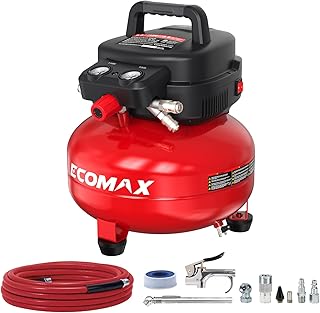
The ECOMAX 6‑Gallon Pancake offers 150 PSI and comes with a full 10‑piece accessory kit including a tire inflator, blow gun, and adapters. With a 4.7‑star rating, it’s a customer favorite for value and performance. It’s oil‑free and runs on standard 120V.
VEVOR 13‑Gallon, 2HP, Oil-Free Quiet

The VEVOR 13‑Gallon Air Compressor hits a rare sweet spot: 4.6 SCFM at 90 PSI with an ultra‑quiet 66 dB noise level. That’s quiet enough to hold a conversation next to it. Ideal for woodworking shops and indoor auto repair where noise matters.
Comparison Table: Best Shop Air Compressors
| Product | Image | Price | Key Features | Rating | Buy Now |
|---|---|---|---|---|---|
| Klutch 29‑Gallon | |
$329.99 | 2.5 HP, 175 PSI, oil‑free, 120V | 4.4 ⭐ | Buy at Amazon |
| Klutch 20‑Gallon | |
$299.99 | 2 HP, 175 PSI, oil‑free, 120V | 4.4 ⭐ | Buy at Amazon |
| DEWALT Pancake 6G | |
$204.99 | 165 PSI, oil‑free, portable, 6 gal | 4.6 ⭐ | Buy at Amazon |
| PORTER-CABLE 6G | |
$164.00 | 150 PSI, oil‑free, 10‑pc accessory kit | 4.6 ⭐ | Buy at Amazon |
| ECOMAX 6G Pancake | |
$169.99 | 150 PSI, 10‑pc kit, 4.7⭐ rating | 4.7 ⭐ | Buy at Amazon |
| VEVOR 13‑Gallon | |
$220.90 | 4.6 SCFM @90 PSI, 66 dB quiet, oil‑free | 4.5 ⭐ | Buy at Amazon |
Don’t Forget the Inflators for Portability
Even a large shop compressor can’t always cover every task. A portable tire inflator is handy for vehicle maintenance on the go. Here are three top‑rated models that complement a stationary compressor.
DEWALT 20V MAX Tire Inflator (DCC020IB)
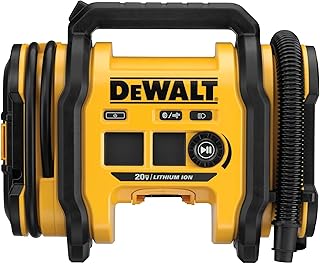
This DEWALT Tire Inflator runs on 20V MAX batteries (sold separately) and features automatic shut‑off and an LED light. With a 4.6‑star rating from over 17,000 reviews, it’s a reliable choice for quick tire top‑ups.
Milwaukee M18 Inflator (2848-20)

The Milwaukee M18 Inflator delivers high‑speed inflation at 4.8 stars. It’s part of the M18 system and offers digital pressure control. Perfect for technicians who already own Milwaukee tools.
AstroAI Tire Inflator with Dual Power

The AstroAI Tire Inflator works with 12V DC and 110V AC and features dual metal motors. It’s a great budget option at $51.28 and still holds a solid 4.3‑star rating.
Final Tips for Choosing Your Compressor
- Always oversize slightly. A compressor that works at 90% capacity will last longer than one at 100%.
- Check the duty cycle. If your shop runs tools continuously, look for a compressor with a 100% duty cycle (usually oil‑lubricated).
- Consider future needs. If you plan to add a paint booth or sandblaster later, buy a larger compressor now.
- Don’t ignore noise. A quiet compressor (under 75 dB) will make your shop more pleasant and safe.
- Use the right accessories. Hoses, fittings, and filters are just as important as the compressor itself.
For more detailed advice, read Best Air Compressors for Construction Sites and Heavy Use.
Conclusion
Choosing an industrial air compressor for your shop comes down to matching CFM, tank size, sound level, and maintenance style to your actual workload. The Klutch 29‑Gallon and VEVOR 13‑Gallon are excellent for permanent installation, while the DEWALT and ECOMAX pancake models offer portability for lighter jobs.
Remember to factor in your future tool list and duty cycle requirements. A well‑planned purchase will run reliably for years and keep your shop productive every single day.