

Setting up a compressed air system that serves multiple workstations is a challenge that goes beyond picking a single compressor. Whether you are running an automotive shop, a woodworking studio, or a small manufacturing line, the goal is to deliver clean, consistent air pressure to every station without bottlenecks.
A well-planned system saves time, reduces energy waste, and protects your tools. In this guide, you’ll learn the essential steps to design a reliable layout, choose the right compressor, and avoid common pitfalls.
Understanding Your Air Demand
The first step is to calculate the total CFM (cubic feet per minute) your operation requires. Every pneumatic tool has a rated CFM at a given pressure, usually 90 PSI. Add up the CFM of all tools that will run simultaneously, then add a 20–30% safety margin.
Key factors to consider:
- Duty cycle of each tool (e.g., a nail gun runs intermittently, but a sandblaster runs continuously).
- Future expansion – plan for extra capacity now.
- Pressure drop across pipes, fittings, and hoses.
For a deeper look at how long your compressor can run safely, read our article on Commercial Air Compressor Duty Cycle Explained.
Choosing the Right Compressor Size and Type
Once you know your total CFM demand, match it with a compressor that can deliver that flow at the required pressure. For multiple workstations, a larger tank (20 to 60 gallons) acts as a buffer, preventing the motor from cycling on and off constantly.
Tank size guidelines:
- 6–10 gallons for light intermittent use (one or two nailers).
- 20–30 gallons for moderate use with several tools (automotive repair, framing).
- 60+ gallons for continuous heavy use (spray painting, sandblasting).
Oil-free compressors require less maintenance and are cleaner for painting. Lubricated units last longer and run quieter. For help with this decision, check out How to Choose an Industrial Air Compressor for Your Shop?.
Designing the Piping and Distribution System
The pipes that carry air from the compressor to each workstation are often overlooked, but they directly affect performance. A poorly sized or arranged pipe system can cause significant pressure drops.
Best practices for piping:
- Use copper, aluminum, or stainless steel – never standard PVC, which can shatter.
- Run a main loop around the shop with drop legs at each station.
- Slope pipes slightly downward toward a drain point to remove condensation.
- Install ball valves at each drop to isolate stations without shutting down the whole system.
For a complete breakdown, read Air Delivery and Reliability in Factory Air Compressor Systems.
Managing Moisture and Filtration
Compressed air naturally contains water vapor that condenses as it cools. In a multi-station system, moisture can rust pipes, ruin paint jobs, and damage air tools. A good water separator or refrigerated dryer at the compressor outlet is essential.
Options for moisture control:
- Aftercoolers to drop air temperature and condense water before it enters the pipes.
- Refrigerated dryers for consistent dry air in humid climates.
- Particulate filters and coalescing filters at each workstation for sensitive tools.
Adding a simple auto-drain valve at the bottom of the tank also prevents water buildup.
Product Recommendations for Multi-Workstation Systems
Now let’s look at some excellent compressors that can serve multiple workstations. We’ve selected models that balance tank size, portability, and reliability.
Klutch 20‑Gallon Air Compressor, 2 HP, 175 PSI
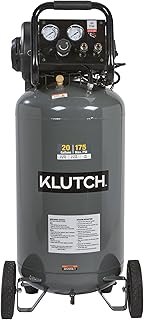
This Klutch 20‑Gallon unit offers 2 HP and 175 PSI maximum pressure. It runs on 120V, making it easy to plug into standard outlets. The 20‑gallon tank handles multiple nailers or impact wrenches without constant cycling. A great mid‑range option for small to medium shops.
Klutch 29‑Gallon Air Compressor, 2.5 HP, 175 PSI

If you need extra capacity, the Klutch 29‑Gallon steps up to 2.5 HP and the same 175 PSI. The larger tank provides a bigger air reserve, ideal for running a plasma cutter or sandblaster while other stations are active. Its no‑maintenance pump reduces downtime.
DEWALT Pancake Air Compressor, 6 Gallon, 165 PSI

The DEWALT DWFP55126 is a portable 6‑gallon pancake compressor with 165 PSI max pressure. It’s oil‑free and lightweight, making it easy to move between workstations. While it won’t power a whole shop alone, it’s perfect as a supplemental unit for trim work or tire inflation. Rated 4.6 stars from over 7,000 reviews.
PORTER‑CABLE Air Compressor, 6‑Gallon, Oil‑Free
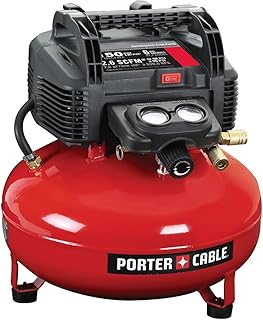
The PORTER‑CABLE C2002‑ECOM is another popular 6‑gallon pancake compressor. It runs at 150 PSI and delivers 2.6 SCFM at 90 PSI. Its oil‑free pump requires no lubrication, and the compact footprint saves space. Ideal for finish carpenters and DIYers with two or three stations.
Comparison Table
| Product | Image | Tank Size | Max PSI | Horsepower | Price | Rating | Buy at Amazon |
|---|---|---|---|---|---|---|---|
| Klutch 20‑Gallon | |
20 gal | 175 | 2 HP | $299.99 | 4.4 | Buy Now |
| Klutch 29‑Gallon | |
29 gal | 175 | 2.5 HP | $329.99 | 4.4 | Buy Now |
| DEWALT 6‑Gal Pancake | |
6 gal | 165 | 1.2 HP* | $204.99 | 4.6 | Buy Now |
| PORTER‑CABLE 6‑Gal Pancake | |
6 gal | 150 | 1.0 HP* | $164.00 | 4.6 | Buy Now |
*Small pancake compressors typically use “peak HP” ratings; actual continuous HP is lower. Both are suitable for intermittent multi‑station use.
Final Thoughts
Planning a compressed air system for multiple workstations doesn’t have to be overwhelming. Start by calculating your total CFM demand, choose a compressor with enough tank capacity to buffer surges, and design a pipe layout that minimizes pressure drop and moisture.
For heavy‑duty shops, the Klutch 29‑Gallon provides the reserve you need. For lighter or portable setups, the DEWALT or PORTER‑CABLE pancake compressors offer proven reliability. And don’t forget to budget for a good filter and dryer – your tools will thank you.
Ready to expand your knowledge? Learn more about Best Air Compressors for Construction Sites and Heavy Use or Automotive Shop Air Compressors: What Professionals Look for.