

Air compressors are incredibly useful, but they can also be loud enough to disturb neighbors, wake the kids, or damage your hearing over time. Whether you run a small workshop or need a unit for indoor home tasks, reducing noise is a top priority. The good news is that you don’t have to invest in an expensive silent model right away—simple tweaks and smart product choices can dramatically lower decibel levels.
In this guide, we’ll walk you through proven noise reduction tips for air compressor setups. We’ll also highlight some of the quietest models available today, including the VEVOR 13-Gallon Quiet Air Compressor and the ECOMAX 6-Gallon Pancake, so you can make an informed upgrade.
Understanding Where the Noise Comes From
Before you can reduce noise, you need to know its sources. Most air compressor noise stems from three areas:
- The motor and pump – these produce mechanical vibration and intake sounds.
- The intake valve – when air rushes in, it creates a sharp hiss.
- Vibration against the floor – even a small compressor can rattle through concrete.
Focusing on these weak points will give you the biggest decibel drop for your effort. For a deeper dive into decibel ratings, read our article on How Many Decibels Is a Quiet Air Compressor?
1. Use Isolation Pads or Rubber Feet
Vibration transfer to the floor is one of the easiest problems to fix. Place your compressor on a thick rubber mat, horse stall mat, or even a stack of old tires. This decouples the machine from the ground and reduces structure‑borne noise.
Quick DIY solutions:
- Cut a ¾‑inch plywood panel and glue dense foam underneath.
- Use commercial vibration damping feet (available at hardware stores).
- For larger units like the Klutch 20-Gallon Air Compressor, consider a dedicated anti‑vibration pad.
2. Build a Sound‑Reducing Enclosure
A properly designed enclosure can lower noise by 10–20 decibels. The key is to allow airflow while blocking sound paths.
Enclosure essentials:
- Use materials like MDF, drywall, or acoustic foam panels.
- Leave a gap of at least 6 inches around the compressor for cooling.
- Install a ducted intake and exhaust with baffles to muffle sound.
Never fully enclose an oil‑lubricated compressor because overheating can occur. Oil‑free models, such as the PORTER-CABLE 6-Gallon Pancake, run cooler and are safer for tight spaces. For more tips on selecting the right type, see Oil-free vs Oil-lubricated Quiet Air Compressors.
3. Replace or Extend the Intake Filter
The intake is often the loudest part of an air compressor. A standard foam filter does little to muffle sound. Upgrading to a larger, high‑quality filter element or adding a pre‑filter can significantly quiet the hiss.
What to try:
- Install a long rubber hose on the intake and route it to a separate sound trap.
- Use a universal automotive air filter (cone style) for smoother airflow.
- For portable units like the DEWALT Pancake Air Compressor, a simple intake muffler kit can drop noise by 3–5 dB.
4. Choose a Naturally Quiet Compressor
Sometimes the best noise reduction tip is to start with a quieter machine. Many modern oil‑free models run at 65–70 dB, which is conversational level. For comparison, a standard compressor can hit 85 dB or more.
Quiet performers worth considering:
-
VEVOR 13-Gallon, 2HP – rated at 66 dB, oil‑free, and built for continuous use. Perfect for woodworking and auto repair.

-
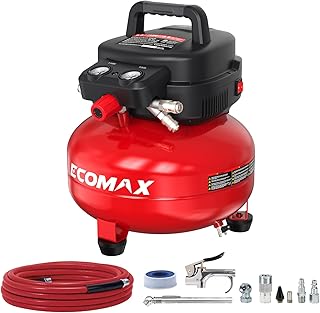
ECOMAX 6-Gallon Pancake – 150 PSI, oil‑free, and includes a 10‑piece accessory kit. At $169.99 it’s one of the best values.
-
DEWALT Pancake (DWFP55126) – a classic, 6‑gallon, 165 PSI, and widely trusted. It runs at a moderate noise level but benefits from the tips above.

-
CRAFTSMAN 2-Gallon Portable – ultra‑lightweight (1/3 HP) and oil‑free, ideal for light indoor tasks like nail guns.

If you need a very low‑noise model for an apartment or shared space, check out Quiet Air Compressors for Garages and Home Workshops and Lowest-noise Air Compressors for Apartments and Indoor Use.
5. Position the Unit Far from Your Workspace
Distance is the simplest acoustic trick. Moving the compressor to a separate room, a closet, or outside the building (with a long hose) eliminates nearly all noise. Even placing it behind a wall or around a corner helps.
Best practices:
- Use a quality air hose of at least 25 feet to reach your tools.
- If running outdoors, protect the compressor from rain with a small shelter.
- For cordless portability, consider the DEWALT 20V MAX Tire Inflator – it’s quiet enough for in‑trunk use.
6. Add a Muffler to the Exhaust
While most compressors have a built‑in exhaust muffler, aftermarket options can further reduce sound. A simple brass or rubber muffler installed on the discharge line can cut high‑frequency noise.
Warnings:
- Never block the exhaust entirely.
- Use only mufflers rated for compressed air (oil‑resistant).
- Test with a cheap inline filter first to see if it helps.
Comparison of Recommended Quiet & Low‑Noise Air Compressors
To help you choose the best model for your noise reduction needs, here’s a side‑by‑side look at four popular options from our list:
| Product | Image | Price | Rating | Key Features | Buy at Amazon |
|---|---|---|---|---|---|
| VEVOR 13-Gallon Quiet | |
$220.90 | 4.5 ⭐ | 2 HP, oil‑free, 66 dB, 4.6 CFM@90 PSI, vertical tank, wheels | Buy Now |
| ECOMAX 6-Gallon Pancake | |
$169.99 | 4.7 ⭐ | 150 PSI, oil‑free, pancake style, 10‑pc accessory kit, lightweight | Buy Now |
| DEWALT Pancake (DWFP55126) | |
$204.99 | 4.6 ⭐ | 6 gallon, 165 PSI, oil‑free, high flow regulator, portable handle | Buy Now |
| CRAFTSMAN 2-Gallon Portable | |
$149.99 | 4.1 ⭐ | 1/3 HP, 125 PSI, oil‑free, ultra‑light (28 lbs), 10‑pc kit | Buy Now |
When choosing, also consider tank size and CFM. For noise‑sensitive spaces, the VEVOR at 66 dB is a standout. If portability is more important, the ECOMAX and DEWALT Pancake offer excellent balance.
Final Thoughts
Reducing air compressor noise doesn’t have to be expensive or complicated. Start with simple fixes like rubber pads and enclosure boxes. If you still need more silence, upgrade to a purpose‑built quiet model like the VEVOR 13-Gallon or ECOMAX. The tips in this article will keep your workspace comfortable and your ears safe.
For more on achieving whisper‑quiet operation, don’t miss Best Low-noise Air Compressors for Noise-sensitive Spaces. Now go enjoy a quieter shop!