

When you start researching air compressors for a workshop, factory, or even a home garage, two main technologies dominate the conversation: piston (reciprocating) and rotary screw. While piston compressors are familiar to most DIYers, rotary screw units bring a whole new level of performance. They are quieter, more efficient, and built to run continuously—making them the go-to choice for industrial environments.
However, rotary screw compressors aren’t cheap or portable. For lighter tasks like tire inflation, nail guns, or small-scale painting, a reliable piston or pancake compressor often makes more sense. That’s where products like the Klutch 20-Gallon Air Compressor or the DEWALT Pancake Air Compressor shine. In this guide, we’ll explain exactly how rotary screw compressors work and highlight where they outperform every other type—plus offer some excellent alternatives for home and small-shop use.
How Does a Rotary Screw Air Compressor Work?
At the heart of a rotary screw compressor lie two helical rotors—a male rotor and a female rotor—that mesh together inside a sealed chamber. As the rotors turn, air is trapped between them, and the volume of that trapped pocket decreases, raising the pressure.
Here’s the process in simple steps:
- Air intake: Ambient air is pulled into the compression chamber through an inlet valve.
- Compression: The rotating screws reduce the space between the flutes, effectively squeezing the air to a higher pressure.
- Oil injection (in most models): Oil is sprayed into the chamber to seal gaps, absorb heat, and lubricate the rotors.
- Separation: The air-oil mixture passes through a separator tank, where oil is removed and recirculated.
- Cooling and delivery: The compressed air is cooled, dried (if needed), and sent to a receiver tank or directly to tools.
Unlike piston compressors that rely on a crankshaft and valves, rotary screw units have no reciprocating parts. This design allows for smooth, continuous operation with minimal vibration.
Key Advantages of Rotary Screw Compressors
Rotary screw compressors offer several benefits that make them ideal for demanding applications:
- Continuous duty cycle: They can run 100% of the time without overheating or needing a cooldown period.
- Energy efficiency: Less energy is wasted as heat compared to piston compressors, especially when running for hours.
- Lower noise: Although not silent, they operate at much lower decibel levels than reciprocating units.
- Longer lifespan: With proper maintenance, a rotary screw compressor can last 20 years or more.
- Compact footprint: For the same airflow output, a rotary screw unit is often smaller and lighter than a piston equivalent.
These advantages come at a higher upfront cost, but for businesses that rely on compressed air around the clock, the investment pays off quickly.
Where Do Rotary Screw Compressors Shine?
Rotary screw compressors excel in environments where air demand is constant or nearly constant. Typical applications include:
- Automotive manufacturing and repair shops: Continuous painting, sandblasting, and pneumatic tool operation.
- Food and beverage processing: Clean, oil-free air is essential; many screw compressors offer certified oil-free classes.
- Pharmaceuticals and hospitals: Reliable, silent, and stable air supply for ventilators and lab equipment.
- Large-scale construction: Powering multiple jackhammers, impact wrenches, and drilling rigs on site.
- Woodworking shops: Running CNC routers, sanders, and spray booths without interruption.
On the other hand, for light intermittent use—like inflating tires, running a brad nailer, or blowing out dust—a piston or portable compressor is far more cost-effective. For example, the ECOMAX Air Compressor 6 Gallon 150 PSI offers an excellent balance of portability and performance at a fraction of the rotary screw price.
Rotary Screw vs. Piston Air Compressors – A Quick Comparison
Here’s a side-by-side look at the two main compressor types:
| Feature | Rotary Screw | Piston (Reciprocating) |
|---|---|---|
| Duty Cycle | 100% continuous | 50–75% typical (needs cooldown) |
| Noise Level | 60–78 dB (quieter) | 80–100 dB (louder) |
| Maintenance | Low (oil/filter changes) | Moderate (valves, rings, oil) |
| Initial Cost | High ($2,000–$20,000+) | Low ($100–$1,500) |
| Size/Weight | Larger, but compact for capacity | Smaller, portable models available |
| Best For | Industrial, continuous use | DIY, light commercial, intermittent |
For a deeper dive into compressor fundamentals, read How an Air Compressor Works: Pump, Motor, and Tank Basics?.
Top Alternatives for Home and Light Commercial Use
Even if a rotary screw compressor isn’t in your budget or space, many excellent piston and portable compressors can handle most everyday tasks. Below are some of the best-rated models currently available, categorized by their best use case.
Pancake & Small Tank Compressors (Best for Trim, Inflation, Light Nailing)
| Product | Image | Price | Rating | Features |
|---|---|---|---|---|
| DEWALT Pancake 6 Gal, 165 PSI (DWFP55126) |  |
$204.99 | 4.6 | Oil-free pump, high 165 PSI, durable roll cage |
| PORTER-CABLE 6 Gal, Oil-Free (C2002-ECOM) |  |
$164.00 | 4.6 | Low weight, 6 gallon, 150 PSI max |
| ECOMAX 6 Gal Pancake with 10PCS Kit | 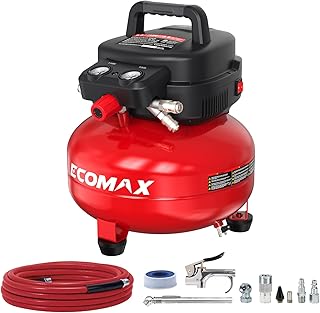 |
$169.99 | 4.7 | 10 accessory kit, oil-free, compact |
| CRAFTSMAN 2 Gal, 125 PSI (B0DLKSR6LD) |  |
$149.99 | 4.1 | Ultra-light, 10pc kit, 1/3 HP |
Larger Portable Tanks (Versatile for Shop & Construction)
| Product | Image | Price | Rating | Features |
|---|---|---|---|---|
| Klutch 20-Gallon, 2 HP, 175 PSI |  |
$299.99 | 4.4 | Oil-free, 175 PSI, no-maintenance operation |
| Klutch 29-Gallon, 2.5 HP, 175 PSI |  |
$329.99 | 4.4 | Larger tank, higher CFM, 558 ratings |
| MZB 6.4 Gal Ultra Quiet, 70dB |  |
$117.99 | 4.0 | Quiet 70dB, oil-free, wheels included |
| VEVOR 13 Gal, 2 HP, Quiet 66dB |  |
$220.90 | 4.5 | Ultra-quiet 66dB, oil-free, vertical tank |
Portable Tire Inflators & Cordless Options
| Product | Image | Price | Rating | Features |
|---|---|---|---|---|
| DEWALT 20V MAX Cordless Inflator (DCC020IB) | 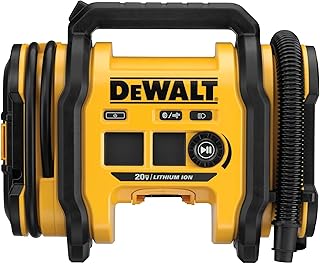 |
$130.22 | 4.6 | 20V cordless, auto shut-off, LED light (tool only) |
| Milwaukee M18 Cordless Inflator 2848-20 |  |
$160.00 | 4.8 | M18 battery platform, digital gauge, 120 psi max |
| AstroAI Dual Motor Tire Inflator 150 PSI |  |
$51.28 | 4.3 | Dual motors, 12V DC/110V AC, LED light |
| Airmoto Cordless Tire Inflator |  |
$59.49 | 4.3 | Cordless, digital gauge, auto shut-off, 27,600 ratings |
| OlarHike Dual Power 6000mAh Inflator | 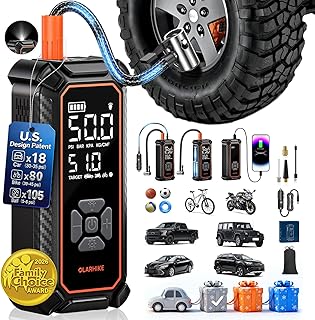 |
$29.99 | 4.5 | Dual power (battery & 12V), compact, auto shut-off |
| ETENWOLF VORTEX S6 Heavy-Duty Cordless | 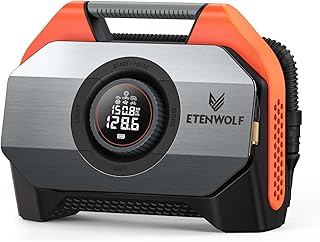 |
$129.99 | 4.7 | Dual cylinder, 19,200 mAh battery, 100% duty cycle |
Making the Right Choice
If your operations demand continuous, high-volume compressed air—like running multiple assembly lines or a full spray booth—a rotary screw compressor is the right investment. For everyone else, the wide world of piston and portable compressors offers incredible value.
Want to learn more about compressor types? Check out Air Compressor Types Explained: Piston, Rotary Screw, and More and Single-stage vs Two-stage Air Compressors: Key Differences. If you’re deciding between a portable or stationary unit, read Portable vs Stationary Air Compressors: Which Type Fits Your Needs?.
No matter which compressor you choose, understanding the technology behind it will help you get the most out of your equipment. Rotary screw machines are the workhorses of industry, but the right piston or pancake unit can be the perfect partner for your next project.