

Angle grinders are one of the most versatile tools in any workshop. Whether you’re cutting metal, grinding welds, or polishing surfaces, a 4-1/2‑inch angle grinder can handle it all. But that power comes with real risk. Every year, beginners get injured because they skip basic safety steps.
This guide covers the essential angle grinder safety tips every beginner should know. You’ll learn about the right personal protective equipment (PPE), how to inspect your tool and wheels, proper grip techniques, dust control, and storage. Plus, we’ll compare a few beginner‑friendly models so you can start safely.
1. Always Wear the Right PPE
Your first line of defense is proper protective gear. Angle grinders throw sparks, dust, and fragments at high speed. Never operate one without:
- Safety glasses or a face shield – Eye injuries are the most common grinder accidents. Use a full face shield over glasses for extra protection.
- Hearing protection – Grinders can exceed 100 dB. Use earplugs or earmuffs.
- Heavy‑duty gloves – Leather or cut‑resistant gloves protect your hands from heat and sharp edges.
- Long sleeves and sturdy pants – Avoid loose clothing that can snag.
- Respiratory protection – When cutting or grinding, fine dust and metal particles are airborne. Use an N95 mask or a respirator.
For a deeper dive into all the gear you need, read our full guide on Best PPE for Angle Grinder Use: Eye, Face, Hand, and Respiratory Protection.
2. Inspect Your Grinder and Wheels Before Each Use
A damaged wheel can explode at high RPM. Always inspect before you power on.
Check the angle grinder itself:
- Look for cracks in the housing, a frayed power cord, or a loose guard.
- Ensure the guard is positioned correctly to deflect sparks away from your body.
Check the grinding or cutting wheel:
- Ring test – Suspend the wheel by its arbor hole and tap it gently with a non‑metal tool. A clear ring means it’s sound; a dull thud means it may be cracked.
- Visual inspection – Look for chips, cracks, or discoloration.
- Match the wheel to the tool’s RPM – Never use a wheel rated for lower speeds than the grinder’s no‑load RPM.
For a step‑by‑step checklist, see Angle Grinder Wheel Safety: How to Inspect Discs Before Use.
3. Master Your Grip and Prevent Kickback
Kickback happens when the wheel binds or pinches. The grinder can suddenly jerk upward or backward, pulling the tool out of your hands. Beginners are especially vulnerable.
Follow these rules:
- Use two hands – One on the main handle, one on the side handle (auxiliary handle). The side handle gives you leverage and control.
- Position the guard between you and the wheel – If kickback occurs, the guard absorbs contact.
- Avoid starting the grinder while the wheel is touching the workpiece – Let it reach full speed first.
- Never force the wheel – Let the tool do the work. Applying excessive pressure increases the chance of binding.
For more techniques, read How to Prevent Kickback When Using an Angle Grinder?.
4. Control Dust and Debris
Grinding and cutting create fine particles that can harm your lungs and cloud your vision. Always work in a well‑ventilated area. If you’re indoors, use a shop vacuum with a HEPA filter connected to the grinder’s dust port (if available).
Tips for dust control:
- Wet the workpiece lightly when grinding concrete or masonry to reduce airborne dust.
- Position yourself so that sparks and debris fly away from you and others.
- Never let debris accumulate around the work area – it can become a fire hazard.
For a full guide, check out Dust Control Best Practices for Angle Grinder Work.
5. Store and Maintain Your Grinder Properly
A well‑maintained grinder is a safer grinder. After each use:
- Unplug the tool (or remove the battery) before changing wheels or cleaning.
- Wipe down the exterior and blow out dust from motor vents with compressed air.
- Store the grinder in a dry place, away from moisture and extreme temperatures.
- Check the power cord regularly for cuts or frays.
Battery‑powered grinders should be stored with batteries at room temperature. Never force a battery into a charger that doesn’t match.
For more storage and maintenance tips, see How to Store and Maintain Angle Grinders for Safer Operation?.
Choosing a Beginner‑Friendly Angle Grinder
Now that you know the safety rules, picking the right tool makes a huge difference. Look for features like a paddle switch (which shuts off when you release it), a tool‑free guard adjustment, and a kickback brake (on some cordless models). Below we compare eight popular models that are great for beginners.
Comparison Table
| Product | Image | Price | Rating | Key Features | Buy at Amazon |
|---|---|---|---|---|---|
| DEWALT DWE402 4.5‑inch, 11‑Amp |  |
$94.00 | 4.8 | Paddle switch, ergonomic compact design, 11,000 RPM, dust‑ejection system | Buy at Amazon |
| DEWALT DWE4011 One‑Touch Guard |  |
$69.00 | 4.7 | One‑touch guard adjustment, paddle switch, 4‑1/2‑inch, compact | Buy at Amazon |
| Bosch GWS8‑45 4‑1/2‑inch |  |
$62.10 | 4.6 | 6.0‑Amp motor, slim grip, two‑position side handle, spindle lock | Buy at Amazon |
| DEWALT DCG413B 20V MAX* Brushless Cordless |  |
$155.99 | 4.8 | Paddle switch, kickback brake, brushless motor, tool‑only | Buy at Amazon |
| CRAFTSMAN V20* 4‑1/2‑inch (CMCG400B) |  |
$53.10 | 4.7 | Brushless motor, battery and charger sold separately, compact, 4‑1/2‑inch | Buy at Amazon |
| Metabo HPT G12SR4 |  |
$59.00 | 4.6 | 6.2‑Amp motor, includes 5 grinding wheels & hard case, compact & lightweight | Buy at Amazon |
| DEWALT DWE402W (Dust Ejection) |  |
$99.00 | 4.7 | Dust ejection system, 11‑Amp, 11,000 RPM, paddle switch | Buy at Amazon |
| AOBEN Cordless 21V Brushless Kit | 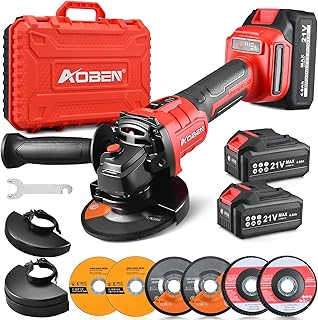 |
$58.48 | 4.5 | 21V brushless motor, 2×4.0Ah batteries & charger, includes cutting/grinding wheels | Buy at Amazon |
Which one is best for you? If you want a corded model that balances power and price, the DEWALT DWE402 (rated 4.8) is a top choice. For a budget cordless option with batteries included, the AOBEN 21V kit is surprisingly capable. If you prefer the reliability of a major brand in a cordless format, the DEWALT DCG413B has a kickback brake – a safety bonus for beginners.
Final Words
Angle grinders are amazing tools, but they demand respect. By following these safety tips – wearing the right PPE, inspecting your equipment, controlling kickback, managing dust, and storing the tool correctly – you’ll dramatically reduce your risk.
Start with a beginner‑friendly model that fits your budget and workspace. Remember: a safe operator is a confident operator. Now you’re ready to grind, cut, and polish with confidence.
Stay safe, and happy building!