

Every angle grinder operator knows the rush of cutting through metal or grinding down welds. But one cracked disc can turn that productivity into a catastrophic accident. Inspecting grinding wheels before each use is the single most important habit you can develop.
A high-quality angle grinder, like the DEWALT DWE402, gives you reliability and control, but no tool can compensate for a damaged disc. Let’s walk through the exact inspection steps that keep you safe on every job.
Why Inspecting Discs Matters
Grinding wheels spin at 10,000+ RPM. A small crack at that speed turns the wheel into a fragmentation grenade. Debris can travel at hundreds of feet per second, causing severe eye injuries, lacerations, or worse.
- Disc explosions are one of the most common angle grinder accidents.
- Spalled abrasive material can hit you or bystanders.
- Loss of control from a disintegrating wheel often leads to kickback.
A two-minute visual and acoustic check drastically reduces these risks. Combine it with proper Angle Grinder Safety Tips Every Beginner Should Know for a complete safety routine.
Step-by-Step Disc Inspection Guide
Follow this checklist every time you mount a new wheel or before resuming work after a break. Never skip a step.
1. Visual Inspection
Hold the disc under good light and examine both faces and the edge. Look for:
- Cracks – even hairline fractures are dangerous.
- Chips or nicks on the outer edge.
- Missing or worn abrasive – bare backing material is a sign of overuse.
- Water or oil stains – moisture weakens resin bonds.
- Expired or missing label – never trust an unmarked disc.
If you see any defect, discard the wheel immediately. Do not try to repair it.
2. The Ring Test
This simple acoustic test works for most vitrified and resin-bonded wheels. Suspend the disc on your finger or a small rod, then tap it gently with a non-metallic tool (like a screwdriver handle).
- Clear, metallic ring – wheel is likely sound.
- Dead, dull thud – the disc may have internal cracks or delamination.
Repeat the test at several points around the wheel. If any spot rings dead, do not use it.
3. Check RPM Rating
Every grinding wheel has a maximum operating speed printed on its label or blotter. Compare it to your angle grinder’s no‑load RPM.
- Never mount a wheel rated lower than your grinder’s RPM.
- Even if the wheel fits physically, overspeeding can cause catastrophic failure.
For example, the Bosch GWS8-45 runs at 11,000 RPM, so only use wheels rated at 11,000 RPM or higher.
4. Check Arbor Hole Fit
The wheel’s arbor hole must match your grinder’s spindle size (usually ⅝″ or 7/8″). Never force a disc onto a spindle or use an arbor reducer that isn’t certified by the manufacturer.
A loose wheel can wobble and shatter. A too-small hole, when forced, creates stress risers.
5. Check for Wear
Even if the wheel looks intact, it may be too worn for safe use.
- Wheel diameter – many discs have a minimum safe size (often 3″ or 3.5″ for a 4‑1/2″ grinder). Running a wheel below that size increases edge speed risk.
- Glazing – a shiny, smooth surface means the abrasive is loaded with metal or debris. This reduces cut efficiency and increases heat, but doesn’t necessarily mean the disc is unsafe. However, glazed discs can load and vibrate more.
6. Storage Condition
Wheels should be stored in a cool, dry place, lying flat, and away from extreme temperatures. If your workshop has high humidity or temperature swings, inspect discs more frequently.
Check our guide on How to Store and Maintain Angle Grinders for Safer Operation? for detailed storage recommendations.
Common Disc Defects to Watch For
Knowing what to look for makes inspection faster. The three most dangerous defects are:
- Side cracks – usually caused by dropping the disc or pinching it during cutting.
- Delamination – layers of abrasive separate from the reinforcement mesh, often visible as a bulge or bubble.
- Wheel wobble – if the disc rocks when mounted, the arbor hole may be damaged or the disc may be warped.
Recommended Angle Grinders That Enhance Safety
A well‑designed angle grinder makes safe operation easier. Features like paddle switches, anti‑kickback brakes, and dust ejection systems reduce the risk of accidents even when you’re focused on the work.
DEWALT DWE402 – The Pro’s Choice

With a paddle switch that requires continuous pressure, the DWE402 prevents accidental startups. Its 11‑amp motor delivers 11,000 RPM, and the compact design makes it easy to control. Rated 4.8 stars from over 5,300 reviews.
Bosch GWS8-45 – Lightweight & Affordable

Weighing only 4.4 lbs, the Bosch is great for overhead work. It includes a two‑position side handle and a spindle lock for quick wheel changes. At $62.10, it’s a budget‑friendly option that doesn’t compromise on safety.
DEWALT DCG413B – Cordless with Kickback Brake

The brushless motor and electronic brake stop the wheel in under two seconds if kickback is detected. This 20V MAX grinder is tool‑only (batteries sold separately) but offers ultimate portability. Rated 4.8 stars with 9,500 reviews.
AOBEN Cordless Angle Grinder – Budget Cordless Option
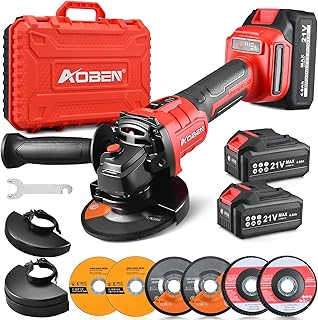
This kit includes two 4.0Ah batteries and a charger for $58.48. The brushless motor runs at 8,500 RPM – slightly slower than corded models, which helps reduce wheel stress. It’s a solid choice for DIYers on a budget.
Comparison Table: Top Angle Grinders for Safe Operation
| Product | Image | Power / Battery | RPM | Safety Features | Price | Rating | Buy at Amazon |
|---|---|---|---|---|---|---|---|
| DEWALT DWE402 | |
11 Amp Corded | 11,000 | Paddle switch, dust ejection | $94.00 | 4.8 | Buy Now |
| Bosch GWS8-45 | |
7.5 Amp Corded | 11,000 | Two‑position side handle | $62.10 | 4.6 | Buy Now |
| DEWALT DCG413B | |
20V Max Brushless (tool only) | 9,000 | Kickback brake, paddle switch | $155.99 | 4.8 | Buy Now |
| AOBEN Cordless | |
21V 4.0Ah (2 batteries) | 8,500 | Brushless motor, soft start | $58.48 | 4.5 | Buy Now |
Additional Safety Best Practices
Inspection is just one layer of protection. Always pair it with:
- Proper PPE – safety glasses, face shield, gloves, and hearing protection. Read our full guide on Best Ppe for Angle Grinder Use: Eye, Face, Hand, and Respiratory Protection.
- Kickback prevention – learn the techniques in How to Prevent Kickback When Using an Angle Grinder?.
- Dust control – fine particles from grinding can damage your lungs. See Dust Control Best Practices for Angle Grinder Work.
Final Thoughts
Inspecting a grinding wheel takes less than a minute but can save you from life‑altering injuries. Make it a non‑negotiable part of your workflow, right after putting on your safety gear.
Remember: a well‑maintained angle grinder with a quality disc is only safe if you check the disc first. Whether you choose the robust DEWALT DWE402 or the cordless freedom of the DEWALT DCG413B, your safety ultimately comes down to your own eyes and hands. Inspect every time – and work with confidence.