

Air compressors are the unsung heroes of workshops, construction sites, and even home garages. They power nail guns, inflate tires, spray paint, and run a multitude of pneumatic tools. But have you ever wondered what actually happens inside that metal tank? Understanding the three core components—motor, pump, and tank—will help you choose the right compressor and maintain it for years.
Whether you’re a DIY enthusiast or a professional, knowing the basics can save you time and money. In this guide, we’ll break down each part and show you how they work together to deliver compressed air on demand.
The Motor: The Heart That Drives Everything
The motor is the powerhouse of any air compressor. It converts electrical energy (or fuel in gas-powered models) into mechanical rotation. This rotation is what drives the pump.
Most smaller compressors use electric motors ranging from 1/3 HP to over 5 HP. The horsepower (HP) rating directly affects how fast the pump can fill the tank. For example, the Klutch 29-Gallon Air Compressor features a 2.5 HP motor that delivers up to 175 PSI, making it a great choice for heavy-duty tasks like running impact wrenches and sanders.
Key motor factors to consider:
- Voltage: Most home compressors run on 120V, while larger units may require 240V.
- Duty cycle: The percentage of time a motor can run without overheating. Continuous-duty motors are common in industrial models.
- Oil‑free vs. lubricated: Oil‑free motors require less maintenance, while lubricated motors last longer but need regular oil changes.
If you need a portable solution for light tasks, a smaller motor like the 1/3 HP unit in the CRAFTSMAN 2‑Gallon Portable Air Compressor works well for brad nailers and inflating sports equipment.
The Pump: Where Air Gets Compressed
The pump is the true workhorse. It draws in atmospheric air and squeezes it into a smaller volume, raising its pressure. There are two main types of pumps:
- Piston (reciprocating) pumps: Common in most small to medium compressors. A piston moves up and down inside a cylinder, compressing air on each stroke.
- Rotary screw pumps: Used in larger industrial units. Two intermeshing screws trap and compress air continuously. Learn more about these in our guide on Rotary Screw Air Compressors: How They Work and Where They Shine.
Piston pumps come in single-stage and two-stage designs. Single‑stage compressors compress air in one stroke, typically reaching 90–125 PSI. Two‑stage models compress air twice, achieving higher pressures (up to 175 PSI or more) and are more efficient. For a deeper dive, check out Single‑stage vs Two‑stage Air Compressors: Key Differences.
The pump you choose affects CFM (cubic feet per minute)—the volume of air delivered at a given pressure. Higher CFM means you can run more demanding tools. The PORTER‑CABLE 6‑Gallon Pancake Air Compressor is an excellent oil‑free pump that delivers reliable CFM for brad nailers and staplers, all while staying lightweight.
The Tank: Your Compressed Air Reservoir
The tank stores compressed air so you have a steady supply even when the motor cycles off. Tank sizes range from 1 gallon for portable tire inflators to 80+ gallons for workshop stationary units.
The tank’s pressure rating (PSI) determines how much air it can hold safely. Most compressors have a maximum PSI between 125 and 175. When the tank reaches the cut‑off pressure, the motor stops; when pressure drops to the cut‑in setting, the motor restarts.
Tank orientation matters too:
- Pancake tanks: Wide and flat, very stable, ideal for job sites. Example: the ECOMAX 6‑Gallon 150 PSI Pancake Compressor comes with a 10‑piece accessory kit, making it a complete starter package.
- Vertical tanks: Take up less floor space, common in garages.
- Horizontal tanks: Often used on portable “wheelbarrow” style compressors.
For workshops where noise is a concern, consider an ultra‑quiet model like the MZB 6.4‑Gallon Ultra Quiet Air Compressor (70 dB) with steel tanks, ideal for indoor painting and carpentry.
If you’re debating between a cart‑mounted unit and a small tank, read our comparison of Portable vs Stationary Air Compressors: Which Type Fits Your Needs?.
How They Work Together: The Complete Cycle
Understanding how the trio functions as a system is crucial. Here’s a simple step‑by‑step:
- Motor starts – Powered by electricity, the motor spins the pump’s crankshaft.
- Pump draws air in – Intake valves open, allowing atmospheric air into the cylinder.
- Compression happens – The piston moves upward, reducing the volume and increasing pressure. Discharge valves open to release compressed air into the tank.
- Tank fills – Air accumulates until the pressure reaches the preset cut‑off (e.g., 150 PSI). The motor then shuts off.
- Air is used – When you connect a tool, the tank pressure drops. Once it hits the cut‑in pressure (e.g., 100 PSI), the motor restarts and the cycle repeats.
This intermittent operation saves energy and extends the life of the compressor. The pressure switch and unloader valve work together to release trapped pressure from the pump head when the motor stops, making the next start easier.
For beginners, we recommend starting with a fixed‑speed compressor rather than variable‑speed, unless you need precision for spray painting. Our article on Piston Air Compressors Explained for Beginners covers the pros and cons of various pump designs.
Choosing the Right Compressor: Key Specifications
When selecting an air compressor, match these specs to your tools:
| Specification | What It Means |
|---|---|
| PSI | Maximum pressure the tank can hold. Most tools need 90–125 PSI. |
| CFM @ 90 PSI | Air flow at standard working pressure. Check your most demanding tool. |
| Tank Size (gallons) | Determines runtime before the motor kicks in. Larger tanks allow longer tool operation. |
| HP | Motor power – affects pump speed and max pressure. |
| Noise Level | Measured in dB. Oil‑free tend to be louder; quiet models like 66–70 dB are available. |
For a small workshop, a 6‑gallon pancake compressor is versatile and easy to store. For professional use, the Klutch 20‑Gallon Air Compressor (2 HP, 175 PSI) provides a great balance of portability and capacity.
Comparison of Top Air Compressors
Below are four excellent compressors spanning different needs. Click on the image or “Buy at Amazon” to check current pricing.
| Product | Image | Price | Rating | Key Features | Buy |
|---|---|---|---|---|---|
| Klutch 29-Gallon, 2.5 HP, 175 PSI |  |
$329.99 | 4.4 | Large tank, high PSI, wheeled portable | Buy at Amazon |
| DEWALT Pancake 6-Gallon, 165 PSI |  |
$204.99 | 4.6 | Oil-free, high flow, rugged design | Buy at Amazon |
| ECOMAX 6-Gallon, 150 PSI Pancake | 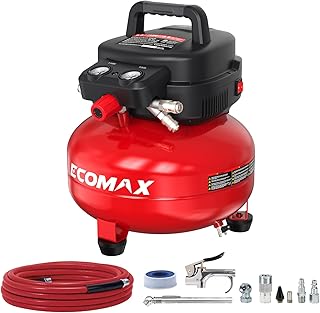 |
$169.99 | 4.7 | 10‑piece accessory kit, ultra quiet, oil-free | Buy at Amazon |
| PORTER-CABLE 6-Gallon, Pancake |  |
$164.00 | 4.6 | Low maintenance, lightweight, 150 PSI max | Buy at Amazon |
Final Thoughts
The motor, pump, and tank form a simple but elegant system that turns free air into a powerful utility. Whether you’re running a finish nailer or inflating truck tires, understanding these basics will help you choose the right compressor and use it efficiently.
For those who want to explore more advanced designs, don’t miss our complete guide on Air Compressor Types Explained: Piston, Rotary Screw, and More. And if you’re still deciding between a quiet oil‑free unit and a heavy‑duty lubricated model, remember that maintenance routine matters more than initial price.
Now you know exactly how an air compressor works—from the first spark in the motor to the hiss of air leaving the tank. Choose wisely, maintain regularly, and your compressor will serve you for many projects to come.