

Choosing the right air compressor can feel overwhelming with so many options on the market. From small pancake units for DIY projects to heavy-duty rotary screw machines for industrial use, each type serves a unique purpose. Understanding how piston, rotary screw, and other compressors work will help you make a smarter, more cost-effective purchase.
Whether you are a weekend woodworker, an auto mechanic, or a contractor, matching the compressor type to your task saves time and money. In this guide, we break down every major air compressor type, explain their strengths, and recommend top-rated models you can trust.
Piston (Reciprocating) Air Compressors
The piston air compressor is the most common type for home workshops and small businesses. It uses a piston driven by a crankshaft to compress air inside a cylinder. When the piston moves down, it draws air in; when it moves up, it forces that air into a storage tank.
These compressors are durable, easy to maintain, and available in a wide range of tank sizes and horsepower ratings. They are ideal for intermittent use, such as powering nail guns, impact wrenches, and spray guns.
If you are new to compressors, reading Piston Air Compressors Explained for Beginners will give you a solid foundation.
Single‑Stage vs. Two‑Stage Piston Compressors
The difference lies in how many times the air is compressed before it reaches the tank.
- Single‑stage: Air is compressed once and sent directly to the tank. Best for light‑duty tasks like inflation and brad nailing.
- Two‑stage: Air is compressed in one cylinder, then passed to a smaller cylinder for a second compression. This produces higher pressure and is more efficient for continuous use.
For a deeper comparison, check out Single‑stage vs Two‑stage Air Compressors: Key Differences.
Popular Piston Compressors
Pancake compressors are a compact, lightweight subset of piston compressors. They have a wide, flat tank that makes them stable and easy to carry. Great for jobsite mobility.
The ECOMAX Air Compressor 6 Gallon is a top‑rated pancake model. It delivers 150 PSI and comes with a 10‑piece accessory kit — perfect for trim carpentry and roofing.
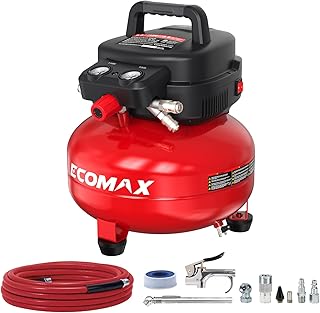
Another excellent choice is the DEWALT Pancake Air Compressor, 6 Gallon, 165 PSI (DWFP55126). It has a high‑flow regulator and a durable roll‑cage frame, making it a favorite among pros.

For a reliable, oil‑free compact unit, the PORTER-CABLE Air Compressor, 6‑Gallon, Pancake (C2002-ECOM) offers 150 PSI and a low‑amp motor that won’t trip breakers on typical 15‑amp circuits.
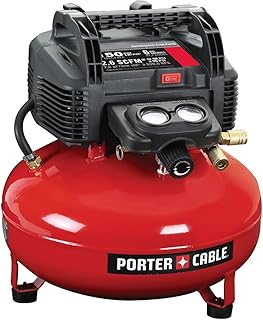
If you need something smaller for quick tasks, the CRAFTSMAN Air Compressor, 2 Gallon Portable is ultra‑lightweight and includes a handy 10‑piece accessory kit. It’s ideal for brad nails and tire top‑offs.

For heavier shop work, consider the Klutch series. The Klutch 20‑Gallon Air Compressor, 2 HP, 175 PSI provides plenty of reserve air for impact wrenches and grinders. It runs on 120V standard household power.
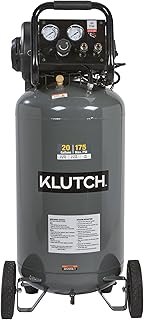
Stepping up, the Klutch 29‑Gallon Air Compressor, 2.5 HP, 175 PSI offers a larger tank for longer run times before the motor kicks in. Both models are oil‑free and virtually maintenance‑free.

Rotary Screw Air Compressors
Unlike piston compressors, rotary screw compressors use two interlocking helical rotors to trap and compress air continuously. They produce a smooth, pulse‑free airflow and are built for continuous duty cycles.
These are the workhorses of factories, auto body shops, and any operation that demands air 8+ hours a day. They are quieter, more efficient, and last longer than piston compressors in high‑use environments.
To understand why rotary screw is superior for industrial settings, read Rotary Screw Air Compressors: How They Work and Where They Shine.
Oil‑Flooded vs. Oil‑Free Rotary Screw
- Oil‑flooded: Uses oil for lubrication, cooling, and sealing. Most common in industrial applications.
- Oil‑free: Uses coated rotors and seals to avoid oil contamination. Essential for food, pharmaceutical, and painting applications.
Most home users won’t need a rotary screw compressor unless they operate a commercial workshop. For DIY and light professional use, piston compressors remain the most cost‑effective choice.
Centrifugal Air Compressors
Centrifugal compressors use a rotating impeller to accelerate air and then decelerate it in a diffuser to create pressure. They are primarily used in very large industrial applications — think power plants, chemical processing, and large‑scale manufacturing.
They are rarely found in home workshops because they require high horsepower and produce enormous volumes of air. If you are exploring compressors for personal use, you can safely skip this type.
Tire Inflators: Portable Air Compressors
Tire inflators are small, portable air compressors designed specifically for topping off tires, inflating sports equipment, and air mattresses. They are not meant to run air tools but are incredibly handy for automotive emergencies.
The DEWALT Tire Inflator Portable Air Compressor 20V MAX (DCC020IB) is a cordless powerhouse. It features automatic shut‑off, a bright LED light, and a digital gauge. It’s tool‑only, so you need a DEWALT 20V battery.
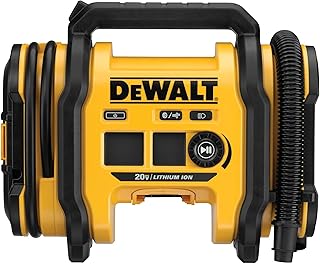
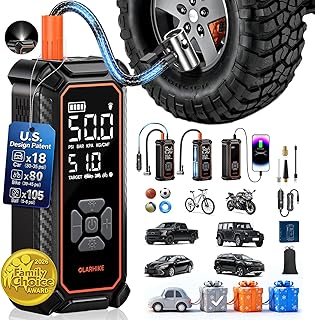
For an ultra‑compact dual‑power option, the OlarHike Tire Inflator Portable Air Compressor runs on both a built‑in 6000mAh battery and 12V DC. It’s affordable, lightweight, and perfect for keeping in your trunk.
Oil‑Free vs. Oil‑Lubricated Compressors
A critical decision when choosing a piston compressor is whether to go oil‑free or oil‑lubricated.
- Oil‑free: No need for oil changes, lighter, and cleaner exhaust air. Best for hobbyists and light use. Most portable pancake compressors are oil‑free.
- Oil‑lubricated: Quieter, longer lifespan, and better suited for heavy or continuous use. Requires periodic oil changes.
Most of the recommended models above (ECOMAX, DEWALT pancake, PORTER‑CABLE, Klutch, CRAFTSMAN) are oil‑free for low maintenance.
Portable vs. Stationary Air Compressors
Another key classification is portability. Portable vs Stationary Air Compressors: Which Type Fits Your Needs? covers this in detail, but here is a quick summary:
- Portable: Small tank (1–30 gallons), wheels or lightweight design. Ideal for worksites and home use.
- Stationary: Large tank (30–80+ gallons), heavy, bolted in place. Used in shops with central compressed air lines.
For most homeowners, a portable compressor from 2 to 20 gallons is perfect. If you run a professional shop, a stationary unit with a larger tank reduces motor cycling.
Comparison Table: Top Air Compressors
Below is a side‑by‑side comparison of the most popular models from our real data. Click any image or “Buy at Amazon” button to check current pricing.
| Product | Image | Price | Rating | Key Features | Buy at Amazon |
|---|---|---|---|---|---|
| Klutch 20‑Gallon | |
$299.99 | 4.4 ★ | 2 HP, 175 PSI, oil‑free, 120V | Buy on Amazon |
| Klutch 29‑Gallon | |
$329.99 | 4.4 ★ | 2.5 HP, 175 PSI, oil‑free, low amp draw | Buy on Amazon |
| ECOMAX 6‑Gallon Pancake |  |
$169.99 | 4.7 ★ | 150 PSI, oil‑free, includes 10‑pc kit | Buy on Amazon |
| DEWALT Pancake 6‑Gallon |  |
$204.99 | 4.6 ★ | 165 PSI, high flow, roll‑cage | Buy on Amazon |
| PORTER‑CABLE 6‑Gallon Pancake | |
$164.00 | 4.6 ★ | 150 PSI, oil‑free, low amp | Buy on Amazon |
| CRAFTSMAN 2‑Gallon Portable | |
$149.99 | 4.1 ★ | 125 PSI, 1/3 HP, lightweight, 10‑pc kit | Buy on Amazon |
| DEWALT Tire Inflator 20V | |
$130.22 | 4.6 ★ | Cordless, auto shut‑off, LED, tool only | Buy on Amazon |
Which Air Compressor Type Is Right for You?
Start by thinking about your main tasks and duty cycle.
- Occasional DIY / inflation: A small pancake compressor (2–6 gallons, oil‑free) is plenty. The ECOMAX or PORTER‑CABLE models offer excellent value.
- Frequent auto work / framing: Step up to a 20–29 gallon piston compressor like the Klutch series. The larger tank provides steady air for impact guns and grinders.
- Professional continuous use: Consider a rotary screw compressor or a two‑stage piston unit (see Single‑stage vs Two‑stage).
- On‑the‑go tire inflation: A cordless tire inflator from DEWALT, Milwaukee, or OlarHike fits in your trunk.
Still unsure? Read How an Air Compressor Works: Pump, Motor, and Tank Basics to understand the core components that affect performance.
Final Thoughts
No single air compressor type is perfect for everyone. Piston compressors dominate the home and small‑shop market because they balance cost, versatility, and ease of use. Rotary screw machines shine in industrial settings where air is needed around the clock. And portable tire inflators fill a niche for vehicle owners.
By matching the compressor type to your actual workload, you avoid overspending on power you don’t need — or underspending and ending up with a unit that can’t keep up.
Check the table above for our top picks, and click through to Amazon for the most current prices and deals.