

You’re standing in the middle of your garage, staring at a pile of tools, and the same question keeps coming up: Should I buy a pressure washer or an air compressor? Both are powered by air, but they serve radically different purposes. One blasts water at high pressure to clean surfaces. The other stores compressed air to run tools, inflate tires, and power everything from nail guns to paint sprayers.
In this deep-dive guide, we’ll break down the differences, the use cases, and the real-world scenarios where each machine earns its place. We’ll also look at top-rated air compressors like the DEWALT Pancake Air Compressor, 6 Gallon, 165 PSI and the versatile CRAFTSMAN V20 Tire Inflator to help you make the right choice. By the end, you’ll know exactly when to reach for an air compressor and when a pressure washer is the only tool for the job.
Understanding the Basics: What Is an Air Compressor?
An air compressor is a mechanical device that converts power (electric, gas, or battery) into potential energy stored in pressurized air. That stored air is then released in controlled bursts to power pneumatic tools, inflate tires, clean debris, or even spray paint.
Common types:
- Pancake compressors – Small, portable, ideal for trim work and brad nailers.
- Hot dog and twin-stack compressors – Slightly larger, better for continuous use.
- Portable tire inflators – Often cordless, designed specifically for vehicle tires.
- Stationary units – Large tanks for workshops with multiple tools.
Typical PSI range: 90–175 PSI. Most air tools require 90 PSI at the tool inlet.
Key specs to consider: Tank size (gallons), CFM (cubic feet per minute) at a given PSI, horsepower, and noise level.
Learn more about choosing the right size in our guide: How to Choose the Right Air Compressor Size for a Home Garage.
Understanding the Basics: What Is a Pressure Washer?
A pressure washer uses an electric motor or gas engine to drive a high-pressure pump that forces water through a nozzle at extreme speeds. The result is a concentrated jet of water that can strip dirt, mildew, old paint, and grime from almost any surface.
Common types:
- Electric pressure washers – Quiet, lightweight, ideal for home use (cars, patios, siding).
- Gas pressure washers – Higher pressure and flow rate for heavy-duty jobs like concrete cleaning or stripping decks.
- Hot water pressure washers – Commercial-grade, used for grease and oil removal.
Typical PSI range: 1,200–4,000 PSI. Home units are usually 1,500–2,000 PSI.
Key specs to consider: PSI (pressure), GPM (gallons per minute), cleaning units (PSI × GPM), and nozzle types.
Pressure washers are not designed to power tools or store compressed air. They are strictly for cleaning with water.
Key Differences at a Glance
| Feature | Air Compressor | Pressure Washer |
|---|---|---|
| Primary function | Stores compressed air to power tools & inflate | Pumps water at high pressure for cleaning |
| Output medium | Air | Water |
| Typical PSI | 90–175 (tool use) | 1,200–4,000 (cleaning) |
| Common uses | Nail guns, impact wrenches, tire inflation, blow guns | Driveways, cars, decks, siding, gutters |
| Portable options | Pancake, tire inflators, cordless models | Electric lightweight, gas wheeled units |
| Maintenance | Drain tank, check oil (if oil-lubed), change filters | Winterize, clean pump, replace nozzles |
| Price range (home) | $39–$250 | $100–$600 |
Both tools fall under the broader “power tool” umbrella, but their overlap is minimal. You wouldn’t use an air compressor to wash your truck, and you wouldn’t use a pressure washer to drive a framing nailer.
When to Use an Air Compressor
An air compressor is the heart of a pneumatic workshop. Here are the top scenarios where you’ll be glad you have one.
Inflating Tires and Sports Equipment
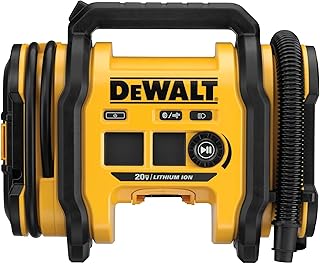
One of the most common uses is inflating car, truck, bicycle, and even pool toys. A dedicated tire inflator like the DEWALT Tire Inflator Portable Air Compressor 20V MAX (tool only) lets you quickly top off tires with an automatic shut-off. The CRAFTSMAN V20 Tire Inflator gives you three power modes—cordless, 120V corded, and 12V car adapter—so you’re never stranded.
Powering Nail Guns and Staplers
Finish carpenters rely on air compressors to run brad nailers, pin nailers, and staple guns. The PORTER-CABLE Air Compressor, 6-Gallon, Pancake, Oil-Free (C2002-ECOM) is a legendary workhorse for trim work. Its lightweight pancake design rolls easily between job sites and provides enough 150 PSI capacity to drive hundreds of nails without cycling constantly.
Blowing Dust and Debris
An air compressor paired with a blow gun is one of the fastest ways to clean sawdust out of tool crevices, computer components, or your garage floor. The JASTIND Industrial Air Blow Gun with Brass Adjustable Air Flow Nozzle (price: $11.99, rating: 4.6) gives you precise control. For larger areas, the High Volume Powerful Industrial Air Blow Gun (price: $12.99) extends up to 26 inches to reach tight spots.
Running Impact Wrenches and Ratchets
Automotive enthusiasts use compressors to drive impact wrenches for lug nuts and air ratchets for fasteners. The DYNAMIC POWER 50 Pieces Air Tool Kit (price: $99.99) includes a 1/2″ impact wrench, 3/8″ ratchet, and air hammer with chisels—everything you need to start a pneumatic tool collection.
Spray Painting and Undercoating
With the right spray gun, an air compressor delivers a smooth, even finish for furniture, cabinets, or auto body work. You need a unit with sufficient CFM (typically 4–6 CFM at 40 PSI). Pancake compressors may struggle with continuous spray painting, so consider a larger tank like the ECOMAX Air Compressor 6 Gallon 150 PSI (price: $169.99, rating: 4.7) for longer run times.
For a deeper dive into compressor types, read Pancake, Hot Dog, and Twin Stack Compressors Explained.
When to Use a Pressure Washer
Now let’s talk about the jobs that demand pressurized water, not pressurized air.
Cleaning Concrete Driveways and Patios
Mold, oil stains, and embedded dirt on concrete require the brute force of a pressure washer. A 2,000–3,000 PSI unit with a turbo nozzle can lift years of grime in minutes. Electric models work fine for small driveways; gas models are better for larger surfaces.
Washing Cars and Trucks
A pressure washer with a foam cannon attachment pre-soaks your vehicle with soap, then rinses off gently with a wide-angle nozzle. The result is a deeper clean than a garden hose can provide, and you use less water overall.
Restoring Decks and Fences
Weather-beaten wood needs a pressure washer to remove old stain or paint before refinishing. Use a low-pressure setting (1,200–1,500 PSI) with a wide fan tip to avoid damaging the wood fibers. Always test a hidden area first.
Cleaning Gutters and Siding
A pressure washer with a telescoping wand attachment lets you clean second-story gutters from the ground. It also blasts mildew off vinyl siding and brick in a fraction of the time it would take with a scrub brush.
Stripping Paint and Rust
For metal surfaces, a pressure washer with a rotating nozzle can remove loose paint and rust. This is especially useful for outdoor furniture, fences, or trailers before repainting.
Important note: Pressure washers do not store compressed air. You cannot use them to power tools or inflate tires.
Can You Use an Air Compressor as a Pressure Washer?
No. Air compressors are designed to hold pressurized air, not water. Running water through an air compressor will damage the tank, internal valves, and pump. There are pressure washer conversion kits that claim to turn an air compressor into a pressure washer, but they are universally underpowered and dangerous. You’ll get a weak stream that can’t match even a budget electric pressure washer.
The two tools operate on completely different principles. An air compressor moves air; a pressure washer moves water. Never try to combine them.
Can You Use a Pressure Washer as an Air Compressor?
Also no. A pressure washer pump is designed to move liquid water, not compress air. Feeding air into a pressure washer pump will cause cavitation, overheating, and eventual failure. There is no safe, practical way to use a pressure washer to inflate tires or run pneumatic tools.
If you need both functions, buy separate machines.
Choosing the Right Tool for Your Workshop
Your choice between an air compressor and a pressure washer (or buying both) comes down to your primary tasks.
You should prioritize an air compressor if:
- You do woodworking or finish carpentry with nail guns.
- You work on cars and need an impact wrench, ratchet, or air hammer.
- You inflate tires, sports balls, or air mattresses regularly.
- You want to blow dust out of electronics or workshop machinery.
- You plan to spray paint or apply undercoating.
You should prioritize a pressure washer if:
- You wash your car or truck frequently.
- You have a concrete driveway, patio, or walkway that needs annual cleaning.
- You own a deck or fence that requires stripping and refinishing.
- You want to clean siding, gutters, or windows faster than with a hose.
- You remove paint or rust from metal outdoor items.
You should buy both if:
You have a dedicated home workshop and outdoor maintenance needs. Many homeowners find that a small pancake air compressor and a mid-range electric pressure washer cover 90% of their tasks. The total investment of around $250–$400 is well worth it.
For setting up your workshop, check out Setting Up Your First Workshop: Tools Every Beginner Needs.
Top Air Compressor Recommendations
We’ve gathered data from Amazon to give you real prices and ratings. Here are the best options for home and professional use.
Portable Tire Inflators
| Product | Price | Rating | Key Feature |
|---|---|---|---|
| CRAFTSMAN V20 Air Compressor Portable, Cordless Tire Inflator, Up To 150 PSI | $39.00 | 4.6 | Digital gauge, battery sold separately |
| CRAFTSMAN V20 Tire Inflator Portable Air Compressor, 3 Modes Cordless/Corded/12V | $49.00 | 4.4 | Multi-power, automatic shut-off |
| DEWALT Tire Inflator Portable Air Compressor 20V MAX | $130.22 | 4.6 | LED light, compact, bare tool |
Pancake Compressors for Workshops
| Product | Price | Rating | Tank Size | PSI |
|---|---|---|---|---|
| CRAFTSMAN Air Compressor, 2 Gallon, 1/3HP, 125 PSI | $129.99 | 4.0 | 2 gal | 125 |
| ECOMAX Air Compressor 6 Gallon, 150 PSI, Pancake | $169.99 | 4.7 | 6 gal | 150 |
| PORTER-CABLE Air Compressor, 6-Gallon, Oil-Free (C2002-ECOM) | $164.00 | 4.6 | 6 gal | 150 |
| DEWALT Pancake Air Compressor, 6 Gallon, 165 PSI (DWFP55126) | $204.99 | 4.6 | 6 gal | 165 |

The DEWALT DWFP55126 is the premium choice for heavy DIY use. The ECOMAX offers the best value with a 4.7-star rating and includes a 10-piece accessory kit.
Accessories: Blow Guns and Tool Kits
- JASTIND Industrial Air Blow Gun – $11.99, 4.6 stars. Brass nozzle, adjustable flow.
- High Volume Industrial Air Blow Gun – $12.99, 4.6 stars. Extends 17–26 inches, 360° swivel hook.
- DYNAMIC POWER 50 Pieces Air Tool Kit – $99.99, 4.4 stars. Impact wrench, ratchet, air hammer, and more.

These accessories turn a basic air compressor into a versatile workshop helper. Pair any 6-gallon pancake compressor with the Dynamic Power kit and you’ll be ready for automotive repairs, framing, and cleaning.
For understanding air hose sizing, see our Air Hose Size Guide: Picking the Right Diameter for Your Tools.
Essential Accessories for Your Air Compressor
Beyond the compressor itself, you’ll need quality accessories to get the most out of your investment.
Air Blow Guns
The two JASTIND and High Volume blow guns we listed above are top-rated for good reason. They let you direct a focused stream of air for cleaning sawdust, leaves, or even drying off wet parts. Always wear safety glasses when using a blow gun.
Air Tool Kits
The DYNAMIC POWER 50 Pieces Kit covers nearly every pneumatic tool a DIYer needs. It includes:
- 1/2″ impact wrench
- 3/8″ ratchet
- Air hammer with 4 chisels
- Air angle die grinder
- Air file
- Couplers, blow gun, and accessories
Air Hoses and Couplers
A quality rubber or hybrid hose resists kinking in cold weather. Look for 1/4″ or 3/8″ diameter depending on your tool’s CFM requirements. Quick-connect couplers make swapping tools fast.
Moisture Traps and Filters
Compressed air contains water vapor that can ruin paint jobs or damage tools. Install a water separator between the tank and your hose. For painting, add a desiccant filter.
Tire Inflators
If you didn’t buy a dedicated inflator, a simple tire chuck with a pressure gauge works fine. The CRAFTSMAN V20 cordless inflator is an excellent standalone tool that also integrates with your compressor for fast top-offs.
Don’t forget basic maintenance. Read Air Compressor Maintenance Schedule: A Monthly Checklist to extend the life of your equipment.
Conclusion: Which One Should You Buy?
The decision between a pressure washer and an air compressor comes down to what you do most often. If you spend weekends building furniture, repairing cars, or hanging trim, an air compressor is non-negotiable. If you battle mud, mildew, and peeling paint on outdoor surfaces, a pressure washer will save you hours of scrubbing.
For most homeowners, the smartest move is to invest in a 6-gallon pancake air compressor like the DEWALT DWFP55126 and then add an electric pressure washer later. The compressor handles your indoor and automotive tasks, while the pressure washer tackles everything outside.
Still unsure? Check out these related guides to refine your choice:
- Oil-Free vs Oil-Lubricated Air Compressors: Which One Fits Your Workshop
- Cordless vs Corded Tools: Where Each One Still Wins
- How to Build a Workbench in a Weekend
No matter which tool you choose, understanding the difference between a pressure washer and an air compressor ensures you buy the right machine for the job—and never try to use one for the other.
The bottom line: Compressors power your tools. Pressure washers power your cleaning. Own both, and your workshop and your driveway will never look better.