

An air compressor transforms your garage into a serious workspace. Whether you’re inflating tires, running a nail gun, or powering an impact wrench, the wrong compressor size leads to constant cycling, long wait times, and tools that simply won’t work. Getting the size right means your compressor keeps up with every job.
This guide walks you through the critical specs—CFM (cubic feet per minute), tank size, PSI, and duty cycle—and matches them to real tools. We’ll also look at top-rated models like the DEWALT Pancake Air Compressor, 6 Gallon, 165 PSI (DWFP55126) and the ECOMAX Air Compressor 6 Gallon 150 PSI Pancake. By the end, you’ll know exactly what to buy for your home garage.
Why Size Matters – CFM, Tank, and PSI Explained
Three numbers define compressor capability: CFM, PSI, and tank size. Most buyers focus on horsepower or tank gallons, but CFM is the real decider.
CFM (Cubic Feet per Minute) measures how much air the pump delivers at a given pressure. Tools need a specific CFM to run properly. For example, a 1/2-inch impact wrench typically requires 5 CFM at 90 PSI. If your compressor only delivers 4 CFM, the tool will stall or operate weakly.
PSI (Pounds per Square Inch) is the pressure the compressor can build. Most air tools work best at 90 PSI, but some (like paint sprayers) need 40–60 PSI. A compressor rated for 150 PSI gives you headroom.
Tank size acts as a reservoir. A larger tank stores more air, letting you run tools for longer bursts before the motor kicks in. But tank size alone doesn’t guarantee performance—if the pump can’t refill fast enough, you’ll still run out of air.
Duty cycle tells you how long the compressor can run in a given period. An oil-free unit might have a 50% duty cycle, meaning it runs for 10 minutes then needs 10 minutes to cool. Oil-lubricated models often have 100% duty cycles for continuous use.
Matching Air Compressor Size to Your Tools
Before picking a compressor, list the tools you own—or plan to own. Here are typical CFM requirements for common garage tools at 90 PSI:
| Tool | Average CFM @ 90 PSI | Typical PSI |
|---|---|---|
| Tire inflator (pneumatic) | 1–2 | 120–150 |
| Brad nailer / stapler | 0.5–1 | 70–100 |
| Framing nailer | 2–3 | 100–130 |
| Impact wrench (1/2″) | 4–6 | 90 |
| Air ratchet (3/8″) | 3–5 | 90 |
| Air hammer | 4–8 | 90 |
| Die grinder | 5–8 | 90 |
| Blow gun | 2–4 | 90 |
| Paint sprayer (HVLP) | 7–10 | 40–60 |
Example: If you plan to use an impact wrench and an air ratchet simultaneously, you need a compressor that delivers at least 8 CFM at 90 PSI. A small 2-gallon unit won’t cut it.
Rule of thumb: Add up the CFM of the tool with the highest requirement, then add 30% as a buffer. That’s your target compressor CFM rating.
Tank Size: How Much Reserve Do You Need?
Tank size affects how long you can work before the compressor cycles. For intermittent tools like nail guns and tire inflators, a 2–6 gallon tank is sufficient. The compressor refills quickly while you reposition.
For continuous tools like sanders, grinders, or impact wrenches on a job, go with 6–20 gallons. A 6-gallon pancake compressor is the sweet spot for most home garages.
Consider these popular models:
- CRAFTSMAN 2-Gallon – Best for light inflation and brad nailing.
- ECOMAX 6-Gallon – Great all-around for impact wrenches and ratchets.
- DEWALT 6-Gallon (DWFP55126) – Higher CFM (2.6 CFM @ 90 PSI) and 165 PSI max for extra reserve.
- PORTER-CABLE 6-Gallon (C2002-ECOM) – Reliable pancake with 150 PSI.

A 2-gallon model like the CRAFTSMAN Air Compressor, 2 Gallon Portable 1/3HP Max 125 PSI is compact and cheap, but its low CFM (around 2.3 @ 90 PSI) limits tool use. Perfect for topping off tires and running a finish nailer.
A 6-gallon pancake such as the ECOMAX Air Compressor 6 Gallon 150 PSI delivers 3.0 CFM @ 90 PSI—enough for impact wrenches in short bursts. It’s the most popular choice for DIYers.
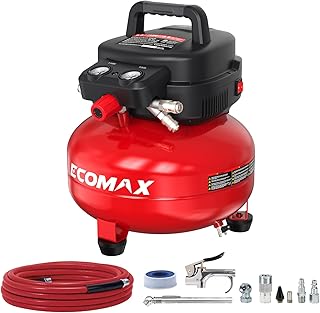
For heavy use, the DEWALT Pancake Air Compressor, 6 Gallon, 165 PSI (DWFP55126) offers 2.6 CFM @ 90 PSI but a higher 165 PSI max, which gives you extra stored air. The PORTER-CABLE 6-Gallon (C2002-ECOM) is identical in specs but often priced lower.

Oil-Free vs Oil-Lubricated: Impact on Size Choice
This decision affects maintenance, noise, and duty cycle—and therefore your size choice.
Oil-free compressors are lighter, require zero oil changes, and are quieter. However, they typically have a 50% duty cycle and are less durable for continuous use. Most home garage compressors under $200 are oil-free.
Oil-lubricated compressors have a 100% duty cycle, run cooler, and last longer. They’re better for production work or running tools for extended periods. They are heavier and cost more.
For a home garage doing weekend projects, oil-free is fine—just don’t push it beyond its duty cycle. If you plan to sand, grind, or paint for hours, spring for oil-lubricated.
Learn more: Oil-Free vs Oil-Lubricated Air Compressors: Which One Fits Your Workshop.
Top Air Compressor Models for Home Garages (With Real Data)
Let’s break down the best options from our real Amazon data, focusing on models suited for a home garage.
CRAFTSMAN Air Compressor, 2 Gallon Portable (B0DLKSR6LD)
Price: $129.99 | Rating: 4.0
Ideal for: Light-duty inflation, brad nailers, and small projects.
- Tank: 2 gallons
- Motor: 1/3 HP
- Max PSI: 125
- CFM: ~2.3 @ 90 PSI (estimate)
- Weight: ~30 lbs
Pros: Ultra-portable, includes 10-piece accessory kit for under $130. Oil-free for easy maintenance. Cons: Low CFM limits tool use; not for impact wrenches.
ECOMAX Air Compressor 6 Gallon 150 PSI (B0D7322DB2)
Price: $169.99 | Rating: 4.7
Ideal for: Impact wrenches, ratchets, nail guns, and general workshop use.
- Tank: 6 gallons
- Max PSI: 150
- CFM: 3.0 @ 90 PSI (from specs)
- Oil-free
Pros: Excellent value, high rating, includes accessories. Adequate CFM for most DIY tasks. Cons: No thermal overload protection on some units; duty cycle around 50%.
PORTER-CABLE 6-Gallon Pancake (C2002-ECOM)
Price: $164.00 | Rating: 4.6
Ideal for: Similar use to ECOMAX – a proven workhorse.
- Tank: 6 gallons
- Max PSI: 150
- CFM: 2.6 @ 90 PSI (official spec)
- Weight: 30 lbs
Pros: Trusted brand, reliable pump, low price. Light enough to carry. Cons: Lower CFM than ECOMAX; may struggle with continuous high-draw tools.
DEWALT Pancake Air Compressor, 6 Gallon, 165 PSI (DWFP55126)
Price: $204.99 | Rating: 4.6

Ideal for: Demanding DIY jobs where you need extra pressure reserve.
- Tank: 6 gallons
- Max PSI: 165
- CFM: 2.6 @ 90 PSI
- High-flow regulator
Pros: Higher PSI provides more stored air, thermal overload protection, durable construction. Cons: Price premium.
Cordless Inflators for Emergency Use
Don’t overlook cordless tire inflators. They won’t power tools, but they’re invaluable for topping off tires on the go.
- DEWALT Tire Inflator 20V MAX (DCC020IB) – $130.22 – 4.6 rating. Tool only, uses DEWALT 20V batteries. Automatic shut-off.
- CRAFTSMAN V20 Tire Inflator (CMCE521B) – $39.00 – 4.6 rating. Incredible value, but tool only.
- CRAFTSMAN V20 3-in-1 Inflator (CMCE520B) – $49.00 – 4.4 rating. Works with cordless, 120V, and 12V car adapter.
These are great complements to a larger compressor, but not replacements.
Calculating Your Total CFM Needs – A Step-by-Step Guide
Follow this process to nail your compressor size.
- List all tools you’ll run simultaneously. For example: an impact wrench (5 CFM) and an air ratchet (4 CFM).
- Identify the tool with the highest CFM. That’s the most demanding tool.
- Add 30% for buffer. Multiply highest CFM by 1.3.
- Check compressor CFM at 90 PSI. Many compressors list CFM at 40 and 90 PSI. Use the 90 PSI number.
- Consider duty cycle. If you’ll run the tool continuously for 15 minutes, ensure the compressor can handle that without overheating.
Example: You plan to use a 1/2″ impact wrench (5 CFM) for lug nuts. 5 x 1.3 = 6.5 CFM. You need a compressor delivering at least 6.5 CFM at 90 PSI. Most 6-gallon pancake compressors only give 2.6–3.0 CFM—not enough. You’d need a bigger unit, like a 15–20 gallon twin-stack, or a belt-driven oil-lubricated model.
For occasional impact wrench use (a few seconds per lug nut), the 6-gallon will work because the tank acts as a reserve. But for continuous use, upgrade.
Learn more: Pancake, Hot Dog, and Twin Stack Compressors Explained.
Common Mistakes to Avoid When Sizing an Air Compressor
Ignoring duty cycle. A compressor that runs for 10 minutes then shuts off for 10 minutes might not finish your job. If you need continuous air, buy a unit with 100% duty cycle.
Buying too much HP but not enough CFM. Horsepower is not a reliable measure. Two compressors with identical HP can have different CFM. Always check CFM at 90 PSI.
Not considering future tools. If you plan to buy a paint sprayer (7+ CFM) next year, don’t buy a 2-gallon unit now. Spend a little more upfront.
Overlooking noise. A loud compressor (90+ dB) in a garage attached to your house can be annoying. Consider The Best Quiet Air Compressors for Indoor Use.
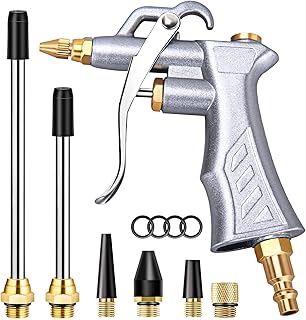
Forgetting accessories. A compressor is useless without hoses, fittings, and tools. Good starter kits include the DYNAMIC POWER 50 Pieces Air Tool Kit ($99.99, rating 4.4) which bundles an impact wrench, ratchet, air hammer, and accessories. Also pick up a quality blow gun, like the JASTIND Industrial Air Blow Gun with Brass Adjustable Nozzle ($11.99, rating 4.6) or the High Volume Powerful Industrial Air Blow Gun with Extensible Nozzle ($12.99, rating 4.6).

Expert Tips for First-Time Buyers
- Start with a 6-gallon pancake if you’re new and do general DIY. The ECOMAX and PORTER-CABLE models are affordable and versatile.
- Buy oil-free for low maintenance. You’ll never worry about oil changes.
- Check CFM at 90 PSI—not the max PSI rating. Some compressors advertise high max PSI but low CFM at working pressure.
- Look for thermal overload protection to prevent motor burnout.
- Consider portability. A 6-gallon pancake weighs ~30 lbs and is easy to carry. Larger vertical tanks are heavier but have wheels.
Related guides you’ll find useful:
- Common Air Compressor Problems and How to Fix Them Yourself
- Air Compressor Maintenance Schedule: A Monthly Checklist
- How to Drain Your Air Compressor Tank the Right Way
- Air Hose Size Guide: Picking the Right Diameter for Your Tools
- How Long Can You Run an Air Compressor Continuously?
Final Thoughts
Choosing the right air compressor size for a home garage comes down to three steps: identify your highest-CFM tool, add 30% buffer, and match that to a compressor’s CFM at 90 PSI. Tank size matters for reserve, but CFM is king.
For most DIYers, a 6-gallon pancake compressor like the ECOMAX 6 Gallon 150 PSI or PORTER-CABLE C2002-ECOM is the perfect balance of price, performance, and portability. If you need more continuous power, step up to a 10–20 gallon vertical unit.
Don’t forget the accessories. A good DYNAMIC POWER 50-Piece Air Tool Kit and a sturdy blow gun will get you started right away.
Measure twice, buy once—and your garage compressor will serve you for years.