

Routers are among the most versatile tools in any workshop, capable of shaping edges, cutting joinery, and creating intricate designs. But their high-speed spinning bits demand respect. A split-second lapse can ruin a workpiece—or worse, cause serious injury.
This guide covers everything a beginner needs to operate a router safely. From selecting the right bit to securing your workpiece and managing dust, you’ll learn the practices that keep you in control. We’ll also look at how air compressors play a role in router use, especially for pneumatic models and cleanup, and highlight some excellent compressors to support your setup.
Understanding Your Router: Key Parts and Types
Before plugging anything in, know what you’re holding. A router consists of a motor, a collet (the chuck that holds the bit), a base (fixed or plunge), and depth adjustment mechanisms.
Fixed-Base Router vs. Plunge Router
| Feature | Fixed-Base Router | Plunge Router |
|---|---|---|
| Best for | Edge profiling, rounding over bits | Dadoes, mortises, inlay work |
| Depth adjustment | Fine-tuned by turning base | Spring-loaded, bit enters workpiece vertically |
| Safety note | Must be turned off to adjust depth | Can adjust depth while running, but requires steady hands |
Both types demand the same core safety habits, but plunge routers introduce extra risk because the bit can grab the wood suddenly if you plunge too fast. Always release the plunge lock gently and let the bit do the work.
Essential Router Bits for Beginners
Start with a basic set: a 1/2-inch straight bit for cutting grooves, a 1/4-inch roundover bit for easing edges, and a flush-trim bit. Bits must be sharp—dull bits overheat, burn wood, and kickback. Never use a cracked or chipped bit.
Gear Up: The Minimum Safety Equipment You Must Wear
Router safety begins before you make a cut. Protect your eyes, ears, and lungs.
- Safety glasses or goggles – Chips fly at 100+ mph. Even a small splinter can blind you.
- Hearing protection – Routers run at 20,000–30,000 RPM. Sustained exposure causes hearing loss.
- Dust mask or respirator – Fine wood dust is carcinogenic. A N95 mask or better is essential.
- Non-slip gloves – Only when handling workpieces, not while the router is running. Loose gloves near a spinning bit are dangerous.
Additionally, keep your hair tied back, remove jewelry, and avoid loose sleeves. A router doesn’t discriminate.
Setting Up a Safe Workstation
Your bench or table is the foundation of safe routing. An unstable workpiece invites disaster.
Clamp Everything
Never hand-hold a small piece while routing. Use at least two clamps to secure the workpiece to a sturdy surface. For larger panels, use bench dogs or a router table.
Dust Collection Matters
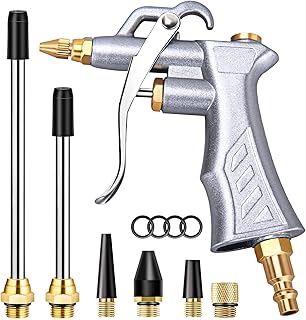
Router bits create mountains of dust that obscure your line and coat your lungs. A shop vacuum with a cyclone separator works well, but connecting to an air compressor with a blow gun lets you clear chips mid‑cut.
For example, the JASTIND Industrial Air Blow Gun with its brass adjustable nozzle and 360° swivel hook is perfect for blowing dust away from the cut line without touching the bit.
Lighting and Visibility
Good overhead lighting and a portable work light eliminate shadows. You must see exactly where the bit is relative to your layout line.
Router Safety Practices: Before You Pull the Trigger
Routers are unforgiving of rushed setups. Always follow this checklist.
1. Disconnect Power When Changing Bits
Unplug the router or remove the battery before touching the collet. Even if the switch is off, a faulty switch can cause the router to start unexpectedly.
2. Tighten the Collet Properly
A loose bit can fly out at high speed. Insert the bit at least 1/2 inch into the collet, then tighten securely with the supplied wrenches. Never overtighten—use only enough force to prevent slippage.
3. Set Depth Incrementally
For a 1/2-inch deep cut, make two or three passes of 1/4 inch each. Removing too much material at once causes the router to bog down, overheat, or grab the wood.
4. Check Feed Direction
This is the most critical rule: always feed the router against the rotation of the bit. For a hand‑held router, that means moving from left to right when the bit is on the left side of the workpiece. For a router table, feed from right to left. Feeding with the rotation (climb cutting) can cause the router to run away from you, leading to loss of control.
Exception: Climb cutting is sometimes used for cleaner edges on end grain, but only with very light passes and extreme caution. Beginners should avoid it entirely.
5. Maintain a Steady Feed Rate
Push too fast and the router bogs down; too slow and the bit burns the wood. Listen to the motor: a steady hum indicates proper speed. Never force the router—let the bit cut.
6. Keep Both Hands on the Router
Hand‑held routers have handles for a reason. One hand on each handle gives you full control. If you must let go, shut off the router first.
7. Never Reach Under the Base
The bit is fully exposed below the base. Always turn the router over with the bit pointing away from you, and never place your hand under the base while it’s spinning.
Pneumatic Routers: When Your Air Compressor Drives the Tool
While most beginner routers are electric, some workshops use pneumatic (air‑powered) routers for repetitive production work or where explosion risks exist (e.g., in wood dust environments). Pneumatic routers require a consistent air supply.
Choosing an Air Compressor for Router Use
A pneumatic router typically needs 5–8 CFM at 90 PSI. For brief intermittent cuts, a small pancake compressor works, but for extended use you’ll want a larger tank and higher CFM.
Here are some reliable compressors that pair well with pneumatic routers (and also serve your air blow gun and other tools):

CRAFTSMAN 2 Gallon Portable – $129.99, 4.0 rating. Lightweight and quiet, ideal for light trim routing and cleaning.
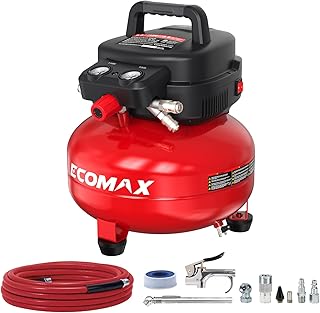
ECOMAX 6 Gallon 150 PSI Pancake – $169.99, 4.7 rating. Higher capacity for longer cuts; includes a 10‑piece accessory kit.

PORTER-CABLE C2002-ECOM – $164.00, 4.6 rating. Oil‑free pancake with excellent reliability for home shops.

DEWALT DWFP55126 – $204.99, 4.6 rating. Higher pressure (165 PSI) for heavy‑duty pneumatic tool use.
For cordless convenience, the CRAFTSMAN V20 Tire Inflator ($39, 4.6 rating) is a great portable air source for topping off tires, but not for continuous router use. Stick with the tanked models above.
Air Hose and Connections
Use a high‑flow hose (3/8‑inch ID minimum) to avoid pressure drop. Keep the hose away from the router’s path to prevent snagging. A swivel fitting on the blow gun or router helps.
Maintenance That Keeps You Safe
A dirty or poorly maintained router is a dangerous router.
Router Bit Care
- Clean resin buildup with bit cleaner or oven cleaner. Resin increases friction and heat.
- Store bits in a protective case, not loose in a drawer.
- Sharpen or replace dull bits. Dull bits require more force and increase kickback risk.
Collet Inspection
Check the collet for cracks or burrs every time you change a bit. A damaged collet can release the bit without warning. Replace collets at the first sign of wear.
Compressor Maintenance (for Pneumatic Users)
If you use an air compressor with your router or blow gun, follow a regular schedule. Learn more in Air Compressor Maintenance Schedule: A Monthly Checklist. A well‑maintained compressor delivers consistent pressure and reduces moisture that can gum up pneumatic routers.
Common Beginner Mistakes (and How to Fix Them)
Even experienced woodworkers mess up. Here are the most frequent safety lapses:
Mistake 1: Cutting Too Deep in One Pass
Result: Router stalls, motor overheats, bit grabs.
Fix: Make multiple passes. For a 1/2‑inch groove, do two passes of 1/4 inch. Use a depth gauge to stay consistent.
Mistake 2: Feeding in the Wrong Direction
Result: Router pulls away from you (“climb cut”) violently.
Fix: Always feed against bit rotation. Mark an arrow on your workbench as a reminder.
Mistake 3: Using a Dull Bit
Result: Burn marks, rough cuts, excessive push force.
Fix: Sharpen or replace bits. Feel the cutting edge—it should grab your fingernail.
Mistake 4: Ignoring Dust and Debris
Result: Chips hide the cut line, causing wandering. Dust clogs the collet.
Fix: Use a vacuum hose or air compressor blow gun between passes. The High Volume Extensible Air Blow Gun ($12.99, 4.6 rating) with its 17–26 inch reach lets you clear dust without moving the workpiece.

Mistake 5: Routing Without a Straightedge or Fence
Result: Wobbly cuts, ruined workpiece.
Fix: Clamp a straight board as a guide. For edge routing, use a router table fence.
When to Use a Router Table vs. Hand‑Held
Both methods are safe with proper technique, but each has strengths.
| Hand‑Held Router | Router Table |
|---|---|
| Best for large panels, edge work | Best for small pieces, repeatable cuts |
| Risk: bit can tip if not balanced | Risk: bit is exposed above table |
| Requires clamping workpiece | Requires push sticks and featherboards |
Table safety tip: Always use a push stick for narrow pieces. Never reach over the spinning bit. Install a guard around the bit.
Integrating Your Air Compressor into the Workflow
Beyond powering pneumatic routers, an air compressor is invaluable for keeping your router station clean and your tools functioning.
Quick Cleaning Between Cuts
Blow dust off the router base and workpiece with a blow gun. This prevents debris from scratching surfaces and keeps the cut line visible.
Inflating Tires on Your Mobile Base
If your router table is on wheels, you’ll appreciate a portable tire inflator. The DEWALT 20V Tire Inflator ($130.22, 4.6 rating) and CRAFTSMAN V20 3‑Mode Inflator ($49, 4.4 rating) are both excellent cordless options for keeping mobile benches aired up.
Lubricating Pneumatic Tools
Oil your pneumatic router regularly with a few drops of air tool oil in the air inlet. This reduces wear and prevents internal rust.
Final Safety Checklist for Every Session
Before you make your first cut, run through this list:
- Workpiece secured – clamped or held with vacuum hold‑down.
- Bit sharp and properly installed – collet tightened, bit inserted at least 1/2 inch.
- Depth set for a pass no deeper than 1/4 inch.
- Feed direction confirmed – against rotation.
- Safety gear on – glasses, hearing, respirator.
- Dust collection or blow gun ready.
- Compressor (if used) drained – moisture in the air line can damage your tool. See How to Drain Your Air Compressor Tank the Right Way.
- Power cord or hose – routed away from the cut path to avoid tripping.
Building Confidence Safely
Mastering a router takes time, but safety habits should be automatic from day one. Start with simple edge profiles on scrap wood. Practice feeding at a steady pace. Add complexity slowly.
As your skills grow, you’ll appreciate a well‑equipped workshop. For a complete beginner’s workshop setup, read Setting Up Your First Workshop: Tools Every Beginner Needs. And if you’re still deciding between cordless and corded routers, check Cordless vs Corded Tools: Where Each One Still Wins.
Remember: the router is a tool, not a toy. Respect its speed and torque. Wear your gear. Clamp everything. And always, always think before you trigger the switch.
Stay safe, and happy routing.