

If you’ve shopped for an angle grinder lately, you’ve probably seen the term brushless plastered across tool boxes and product pages. Brushless motors promise more power, longer runtime, and less maintenance—but they also cost more. Are brushless angle grinders really worth the premium, or is a traditional brushed grinder good enough for most jobs?
In this guide, we’ll break down how brushless motors work, compare them to brushed motors, and help you decide which type fits your workshop and budget. We’ll also look at real-world products like the DEWALT 20V MAX* Brushless Angle Grinder (DCG413B) and the corded DEWALT DWE402 to see if brushless technology makes a difference on the job.
What Is a Brushless Motor?
A brushless motor uses electronic controls instead of physical carbon brushes to transfer power to the rotor. In a brushed motor, the brushes ride against a spinning commutator, creating friction, heat, and wear over time. Brushless motors eliminate those parts entirely.
Key benefits of brushless motors:
- Higher efficiency (less energy lost as heat)
- Longer lifespan (no brushes to replace)
- Compact and lighter design
- Better torque at low speeds
- Quieter operation
Brushless motors are common in cordless tools because they maximize battery runtime. But you’ll also find brushless technology in some high-end corded grinders.
Brushed vs. Brushless: The Core Differences
Here’s a quick side-by-side comparison to see how the two motor types stack up.
| Feature | Brushed Motor | Brushless Motor |
|---|---|---|
| Efficiency | 70–80% | 85–90% |
| Maintenance | Replace brushes every 200–300 hours | Minimal; no brushes to change |
| Torque at low RPM | Lower | Higher; electronic commutation allows full torque |
| Weight | Heavier due to larger windings | Lighter, more compact |
| Noise level | Louder (brush arcing) | Quieter |
| Cost | Lower | Higher (20–40% premium) |
| Battery runtime (cordless) | Shorter | Up to 50% longer |
For corded grinders, the difference is less dramatic because you have unlimited power. But brushless corded models still run cooler and last longer. For cordless grinders, brushless is almost essential if you want serious cutting and grinding without swapping batteries every few minutes.
Brushless Angle Grinders in the Real World
Let’s look at two popular options that illustrate the brushed vs. brushless debate.
Cordless Brushless: DEWALT DCG413B
The DEWALT 20V MAX* Brushless Angle Grinder (DCG413B) is a 4½-inch cordless grinder with a brushless motor. It delivers power comparable to a corded 11-amp tool, according to DEWALT. It also includes Kickback Brake, which stops the wheel instantly if the grinder binds, and a paddle switch for safety.
Price: $155.99 (tool only)
Rating: 4.8 out of 5 (9,500+ reviews)
Users praise its runtime and power. One professional welder said it “cuts through ¼-inch steel like butter.” The brushless motor helps the grinder run longer per charge than older brushed models. If you already own DEWALT 20V batteries, this is a no-brainer upgrade.
Corded Brushed: DEWALT DWE402
The DEWALT DWE402 is a corded 4½-inch grinder with a conventional brushed motor. It runs at 11,000 RPM and features an ergonomic barrel grip, a paddle switch, and a dust ejection system to keep debris out of the motor.
Price: $94.00
Rating: 4.8 out of 5 (5,300+ reviews)
This is one of the most popular angle grinders on the market. It’s tough, reliable, and inexpensive. The brushed motor does a fantastic job for grinding and cutting. The main downside is that the carbon brushes will eventually need replacing—but that’s a cheap fix and only required after many hours of heavy use.
Do You Really Need a Brushless Angle Grinder?
It depends on how and where you work. If you mostly use a corded grinder at a workbench or in a shop, a brushed model like the Bosch GWS8-45 ($62.10) or the DEWALT DWE402 ($94) will serve you perfectly. Brushed motors in corded tools are proven, powerful, and easy to maintain.
Choose brushless if:
- You use a cordless grinder and need maximum battery life
- You grind or cut for long periods without breaks
- You value a lighter tool for overhead or tight spaces
- You want the latest technology with less maintenance
Stick with brushed if:
- You work near an outlet and don’t need cordless freedom
- You’re on a tight budget
- You only use the grinder occasionally
- You already own a battery system and don’t want to switch
For many DIYers, a corded brushed grinder offers the best value. Professionals who use cordless daily will benefit from brushless. If you’re still on the fence, read our guide on Corded vs Cordless Angle Grinders: Which Is Better for Your Needs? for a deeper dive.
Comparing Top Brushless and Brushed Options
To help you decide, here’s a comparison table of several popular angle grinders, including brushless and brushed, corded and cordless.
| Product | Image | Type | Motor | Price | Rating | Buy Now |
|---|---|---|---|---|---|---|
| DEWALT DCG413B |  |
Cordless | Brushless | $155.99 | ⭐4.8 | Buy at Amazon |
| DEWALT DWE402 |  |
Corded | Brushed | $94.00 | ⭐4.8 | Buy at Amazon |
| Bosch GWS8-45 |  |
Corded | Brushed | $62.10 | ⭐4.6 | Buy at Amazon |
| CRAFTSMAN V20 (CMCG400B) |  |
Cordless | Brushed | $53.10 | ⭐4.7 | Buy at Amazon |
| AOBEN Cordless Brushless | 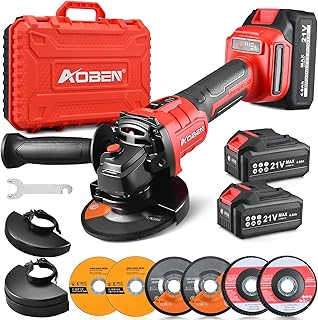 |
Cordless | Brushless | $58.48 | ⭐4.5 | Buy at Amazon |
| Metabo HPT G12SR4 |  |
Corded | Brushed | $59.00 | ⭐4.6 | Buy at Amazon |
As you can see, there’s a wide range of prices and motor types. The AOBEN Cordless Brushless brings brushless technology at a budget-friendly price, making it a great entry point for DIYers who want cordless freedom without spending $150+.
Is Brushless Worth the Extra Money?
Let’s be direct: if you’re buying a corded grinder, you don’t need brushless. Stick with a high-quality brushed model like the DEWALT DWE402 or the Bosch GWS8-45. They’re powerful, reliable, and a fraction of the price of brushless corded options.
If you’re buying a cordless grinder and plan to use it regularly, brushless is worth the investment. The DEWALT DCG413B offers power close to a corded tool with runtime that keeps you working longer. Even the budget AOBEN Cordless Brushless delivers noticeable gains over brushed cordless models.
Consider the total cost of ownership. A brushed tool may need new brushes after a year of heavy use. Brushless tools rarely need motor maintenance. If you value your time and want a tool that lasts, brushless pays off over the long haul.
Other Features to Look For
When shopping for any angle grinder—brushless or brushed—keep these features in mind:
- Paddle switch vs. slide switch: Paddle switches (like on the DEWALT DWE402) are safer because you must hold them to run.
- Kickback brake: Stops the wheel instantly if the tool binds. Available on the DCG413B.
- Dust ejection system: Protects the motor from debris. The DEWALT DWE402W includes it.
- Tool-free guard adjustment: Makes swapping positions quick. Check out our Best Angle Grinder Features to Compare before Buying for a full breakdown.
Also, think about size. Most grinders are 4½-inch, which balances control and cutting depth. Learn more in our guide on How to Choose the Right Angle Grinder Size for Home or Jobsite Use?.
Final Verdict: Are Brushless Angle Grinders Worth It?
Yes, for cordless users and heavy-duty professionals. The efficiency, longevity, and power of brushless motors justify the higher price tag, especially if you work away from outlets or use your grinder daily.
No, for casual DIYers and shop users. A corded brushed grinder like the Bosch GWS8-45 or DEWALT DWE402 will handle 95% of tasks. Save your money for other tools or accessories.
If you want to explore more options, read our Angle Grinder Buying Guide: Power, Ergonomics, and Value Factors or compare different power sources in Pneumatic vs Electric Angle Grinders: Key Differences to Know.
Disclaimer: This article contains affiliate links. If you purchase through these links, we may earn a small commission at no extra cost to you. We only recommend products we believe in.