

Choosing between a pneumatic (air-powered) and an electric angle grinder can feel overwhelming. Both tools get the job done, but they serve very different needs. Whether you’re a professional fabricator, a weekend DIYer, or a job site supervisor, understanding the trade-offs will save you time, money, and frustration.
In this guide, we’ll break down the core differences in power, portability, cost, and safety. Plus, we’ll recommend some top-rated electric models that offer the best value for most users. By the end, you’ll know exactly which type fits your workspace and workflow.
What Is a Pneumatic Angle Grinder?
A pneumatic angle grinder runs on compressed air supplied by an air compressor. These tools are common in industrial settings, auto body shops, and assembly lines.
Pros of pneumatic grinders:
- Continuous runtime – no batteries to recharge; as long as the compressor runs, you work.
- Lightweight and compact – typically lighter than electric equivalents.
- Higher power-to-weight ratio – can deliver sustained torque for heavy grinding.
- No risk of electric shock – ideal for wet environments or explosive atmospheres.
Cons of pneumatic grinders:
- Requires a large, expensive compressor – upfront cost and maintenance add up.
- Limited portability – tethered to an air hose and power source.
- Air consumption – high-demand tools need a compressor with enough CFM (cubic feet per minute).
- Noise – both the grinder and compressor are loud.
What Is an Electric Angle Grinder?
Electric angle grinders are the most common type for home workshops, construction sites, and general metalworking. They come in two flavors: corded and cordless.
Pros of electric grinders:
- Plug-and-play – corded models work as long as you have an outlet; cordless models offer job site freedom.
- Lower total cost – no need for a compressor.
- Wide availability – accessories, parts, and brand options are abundant.
- User-friendly – easier to learn and maintain.
Cons of electric grinders:
- Corded models limit mobility – can be a tripping hazard.
- Cordless models have runtime limits – battery capacity fades over time.
- Heavier – corded motors and batteries add weight.
- Electrical safety – not suitable for wet or flammable conditions.
Key Differences Between Pneumatic and Electric Angle Grinders
Let’s put the two side by side.
| Factor | Pneumatic | Electric |
|---|---|---|
| Power source | Compressed air | Electrical outlet or battery |
| Typical RPM | 12,000–25,000 | 8,000–11,000 (corded) / 7,000–9,000 (cordless) |
| Weight | Lighter (2–3 lbs) | Heavier (4–6 lbs for corded, 3–5 lbs for cordless + battery) |
| Runtime | Continuous (with compressor) | Limited by cord length or battery charge |
| Upfront cost | $100–$200 (grinder) + $300–$2,000 (compressor) | $25–$160 (grinder) |
| Maintenance | Lubrication, water trap, compressor care | Motor brushes (older models), battery care |
| Noise level | Very loud (90+ dB grinder + compressor) | Loud (80–90 dB) |
| Best for | Production environments, continuous use, wet/explosive areas | DIY, general construction, job site portability |
In short: Pneumatic shines in high-volume, stationary settings. Electric wins for versatility, cost, and ease of use.
Which One Should You Choose?
Choose pneumatic if:
- You already own a large air compressor with sufficient CFM.
- You work in a production environment where the grinder runs for hours.
- You need the lightest possible tool for overhead or repetitive work.
- Safety regulations require non‑sparking or water‑safe tools.
Choose electric if:
- You’re a DIYer, hobbyist, or general contractor.
- You need portability across job sites.
- You want the best value per dollar.
- You prefer to own one tool that handles most tasks.
For 95% of users, an electric angle grinder is the right choice. Within the electric category, the debate often becomes corded vs. cordless. If you’re torn, check our full guide: Corded vs Cordless Angle Grinders: Which Is Better for Your Needs?.
Top Electric Angle Grinders to Consider
We’ve selected a handful of the best‑selling, highest‑rated electric grinders that suit different budgets and use cases. These are all excellent alternatives to pneumatic tools.
1. DEWALT DWE402 – Power and Durability

The DEWALT DWE402 is a 4.5‑inch corded grinder with an 11‑amp motor and 11,000 RPM. Its ergonomic design and paddle switch make it a favorite among pros. At $94.00 and a 4.8‑star rating, it’s a workhorse for heavy cutting and grinding.
2. Bosch GWS8-45 – Compact and Affordable

The Bosch GWS8-45 offers a slim grip and powerful 7.5‑amp motor. At $62.10, it’s a top value pick for light to medium work. Rated 4.6 stars, it’s ideal for home workshops.
3. DEWALT DCG413B – Cordless Brushless Power

For cordless freedom, the DEWALT DCG413B delivers brushless efficiency and a kickback brake. It’s a 20V MAX (tool only) grinder with a 4.8 rating. At $155.99, it’s a premium choice for job sites.
4. AOBEN Cordless Angle Grinder – Budget Cordless Kit
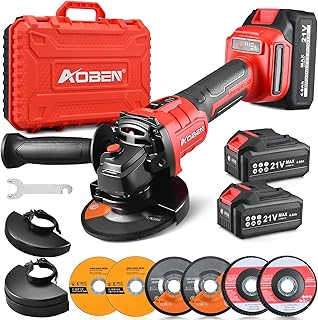
The AOBEN Cordless Angle Grinder comes with two 4.0Ah batteries and a charger. It’s brushless, lightweight, and priced at $58.48. With 4.5 stars, it’s a great entry‑level cordless option.
5. Metabo HPT G12SR4 – Value Pack with Accessories

The Metabo HPT G12SR4 includes five grinding wheels and a hard case. Its 6.2‑amp motor is compact and reliable. At $59.00 and 4.6 stars, it’s a solid mix of performance and value.
Comparison Table: Best Electric Angle Grinders
| Product | Image | Price | Rating | Key Features | Buy at Amazon |
|---|---|---|---|---|---|
| DEWALT DWE402 | |
$94.00 | 4.8 | 11 Amp, 11,000 RPM, paddle switch, dust ejection | Buy Now |
| Bosch GWS8-45 | |
$62.10 | 4.6 | 7.5 Amp, slim grip, spindle lock, 2-position handle | Buy Now |
| DEWALT DCG413B | |
$155.99 | 4.8 | 20V MAX, brushless, kickback brake, paddle switch (tool only) | Buy Now |
| AOBEN Cordless 4‑1/2″ | |
$58.48 | 4.5 | 21V brushless, 2×4.0Ah batteries, charger, variable speed | Buy Now |
| Metabo HPT G12SR4 | |
$59.00 | 4.6 | 6.2 Amp, 5 grinding wheels, hard case, 1.5‑year warranty | Buy Now |
Making Your Final Decision
Still undecided? Here’s a quick checklist:
- Need continuous duty in a shop? Look at pneumatic, but only if you already have a compressor.
- Working on a job site with no power? A cordless electric grinder (like the DEWALT DCG413B or AOBEN kit) will serve you well. Read more in Brushless Angle Grinders Explained: Are They Worth It?.
- Budget‑conscious and mostly at home? A corded electric model (Bosch GWS8-45, Metabo HPT, or even the DEWALT DWE4011 for $69) gives you unlimited runtime at a low price.
- Need the best safety features? Look for paddle switches, kickback brakes, and anti‑restart protection. Our guide Best Angle Grinder Features to Compare before Buying breaks it down.
If you’re still comparing corded vs. cordless electric grinders, check Angle Grinder Buying Guide: Power, Ergonomics, and Value Factors for a detailed deep dive.
Final Thoughts
Pneumatic angle grinders are niche tools for industrial use. For almost everyone else, electric angle grinders offer better value, convenience, and versatility. The key is choosing the right electric model for your specific tasks.
Whether you grab the powerhouse DEWALT DWE402 or the budget‑friendly Metabo HPT G12SR4, you’ll have a tool that cuts, grinds, and polishes with confidence.
No air compressor required.