

You’ve built a beautiful deck, a sturdy fence, or a garden bench. Now comes the decision that will determine whether your project lasts five years or twenty: stain, paint, or sealer. Each finish has a distinct role, and choosing wrong means extra work, wasted money, and premature wood failure.
The good news is that modern power tools — especially air compressors and spray guns — can turn this chore into a fast, professional-grade job. A reliable air compressor like the CRAFTSMAN Air Compressor, 2 Gallon Portable can power an HVLP sprayer that lays down stain or sealer in minutes.
In this deep-dive guide, you’ll learn the exact differences between stain, paint, and sealer, how to match each finish to your wood and climate, and which air compressors make the application effortless.

Understanding Your Options: Stain, Paint, and Sealer
Wood Stain – The Natural Look
Stain is a penetrating finish that soaks into wood fibers rather than sitting on top. It adds color while letting the grain show through. Stains come in three opacity levels:
- Transparent stain – Minimal pigment, maximum grain visibility. Offers the least UV protection.
- Semi-transparent stain – Light pigment that tones the wood. Good for new wood that you want to keep natural.
- Solid stain – Heavy pigment that hides most grain but still allows texture to show. Closest to paint, but thinner.
Best for: Decks, fences, siding, and any project where you want the wood character to remain visible.
Pros: Breathable, easy to reapply, won’t peel like paint.
Cons: Less UV protection than paint, needs more frequent reapplication (every 1–3 years depending on transparency).
Paint – Full Coverage and Color
Paint creates a film-forming layer on the wood surface. It completely hides the grain and provides a uniform color. Exterior latex paints are the most common; oil-based paints offer harder finishes but require solvents for cleanup.
Best for: Sheds, house trim, furniture, and any surface where you want bold color and maximum protection.
Pros: Excellent UV and moisture barrier, longest lifespan (5–10 years), wide color choice.
Cons: Can peel, crack, or blister if moisture gets trapped underneath. Harder to remove when refinishing.
Wood Sealer – Protection Without Color
A sealer is a clear or lightly tinted finish that protects wood without altering its appearance. Sealers may contain UV blockers, water repellents, and mildewcides. They are often used over stain or as a standalone finish for woods like cedar or redwood.
Best for: Cedar shingles, log homes, outdoor furniture where you want a natural look with enhanced protection.
Pros: Easy to apply, fast drying, doesn’t hide wood.
Cons: Offers the least UV protection of the three, shortest lifespan (1–2 years), can turn milky if applied too thick.
Stain vs Paint vs Sealer: Quick Comparison Table
| Feature | Stain | Paint | Sealer |
|---|---|---|---|
| Appearance | Enhances grain | Hides grain | Natural look |
| UV Protection | Moderate (varies by opacity) | Excellent | Low to moderate |
| Moisture Protection | Good (penetrating) | Excellent (film-forming) | Good (varies by formula) |
| Durability | 2–5 years | 5–10 years | 1–3 years |
| Reapplication Prep | Light cleaning, no stripping | May need stripping if peeling | Light cleaning |
| Breathability | High | Low (can trap moisture) | High |
| Application Method | Brush, roller, spray | Brush, roller, spray | Brush, spray |
| Cost per sq. ft. | $0.15–$0.35 | $0.20–$0.50 | $0.10–$0.25 |
Key Factors to Consider Before Choosing
Wood Type and Condition
New wood accepts stain and sealer beautifully because pores are open. Old or weathered wood may need a brightener or primer before painting. Softwoods like pine soak up stain quickly; hardwoods like teak may require a sealer first.
If your wood has previous paint, you’ll need to strip it before using stain. That’s where an air compressor with a needle scaler or a heavy‑duty blow gun can speed up debris removal. The High Volume Powerful Industrial Air Blow Gun is ideal for blowing sawdust and sanding residue from crevices.
Climate and Weather Exposure
In hot, sunny climates (Arizona, Texas), UV degradation is your biggest enemy. Paint or a high‑UV‑blocking solid stain will last longest. In rainy or humid climates (Pacific Northwest, Florida), moisture resistance matters most. Sealers with water repellents work well, but paint provides the thickest barrier if wood is properly primed.
For cold climates, freeze‑thaw cycles can crack paint films. Penetrating stains and sealers are more forgiving because they don’t trap moisture between the film and wood.
Desired Aesthetic
- Natural, rustic look → Transparent or semi‑transparent stain.
- Match trim or house color → Paint (most color options).
- Preserve high‑end wood → Clear sealer with UV inhibitors.
Maintenance Commitment
If you dislike re‑finishing every year, paint gives the longest interval between coats. But if you enjoy refreshing the look annually, staining or resealing is simpler — no scraping or sanding required.
Application Tools
You can apply any finish with a brush or roller, but for large surfaces like decks or fences, spraying is the only efficient method. HVLP (High Volume Low Pressure) sprayers connected to a pancake or hot‑dog air compressor produce a fine, even coat with minimal overspray.
An air compressor like the ECOMAX Air Compressor 6 Gallon 150 PSI provides enough tank capacity and CFM to run an HVLP gun continuously for a fence or deck. The built‑in oil‑free pump keeps maintenance low.
Why Air Compressors Are Your Secret Weapon for Applying Finishes
Hand‑brushing a 500‑square‑foot deck takes hours. A spray gun powered by an air compressor cuts that time by 75%. You also get a thinner, more uniform coat that soaks into the wood evenly — critical for stain and sealer performance.
Two common spray methods:
- HVLP – Uses high air volume at low pressure (10–20 PSI). Minimal overspray, good for stains and sealers. Requires a compressor with at least 4–6 CFM at 40 PSI.
- Airless – Uses high pressure to atomize paint. Faster but more overspray. Airless sprayers are usually standalone electric units, not compressor‑dependent.
For most DIYers and small contractors, a pancake or twin‑stack compressor with a good HVLP gun will handle all outdoor wood finishing projects.
Choosing the Right Compressor for Spraying
- Small jobs (one deck, fence sections) → 2‑6 gallon tank, 2–4 CFM at 40 PSI.
- Large jobs (full house siding, multiple fences) → 6‑8 gallon tank, 5+ CFM.
The PORTER-CABLE Air Compressor, 6-Gallon Pancake (C2002-ECOM) is a proven workhorse with enough volume for most paint sprayers. Its oil‑free pump never needs oil changes.
Best Air Compressors for Spraying Outdoor Wood Finishes
We’ve curated the top air compressors and accessories that pair perfectly with spray guns for stain, paint, and sealer. Each product is linked to its Amazon page for easy purchase.
1. CRAFTSMAN 2‑Gallon Portable Air Compressor
- Price: $129.99 | Rating: 4.0 out of 5
- Type: Oil‑free, 1/3 HP, Max 125 PSI
- Includes: 10‑piece accessory kit
- Best for: Small touch‑ups, furniture, and small stain projects. Lightweight (under 30 lbs) and easy to carry around the yard.
Its small tank limits continuous spray time, but for one‑coat sealer jobs on a pergola or bench, it’s more than adequate.
2. ECOMAX 6‑Gallon Pancake Air Compressor
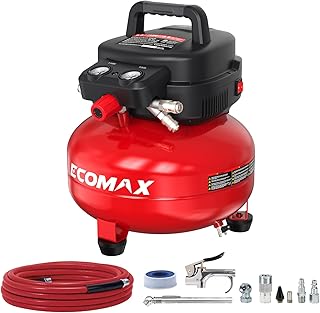
- Price: $169.99 | Rating: 4.7
- Type: Oil‑free, 150 PSI, 6‑gallon tank
- Includes: 10‑piece accessory kit
- Best for: Medium‑large decks and fences. High CFM rating supports standard HVLP guns without frequent cycling.
Users praise its quiet operation and rapid recovery time — you won’t wait long between spray passes.
3. DEWALT 20V Cordless Tire Inflator

- Price: $130.22 | Rating: 4.6
- Type: Cordless (tool only), up to 160 PSI
- Best for: Topping off tires on your compressor cart or inflating nail‑gun hoses. Not for spray guns — but essential for a well‑rounded workshop.
Note: This inflator won’t power a spray gun. It’s included here because any finishing project requires a portable air source for cleaning and inflation.
4. PORTER‑CABLE 6‑Gallon Pancake Air Compressor

- Price: $164.00 | Rating: 4.6
- Type: Oil‑free, 6‑gallon, 150 PSI
- Best for: All‑around workshop use. Reliable, easy to transport, and pairs well with a quality HVLP sprayer.
The C2002 has been a staple for years because it balances price, performance, and durability.
5. CRAFTSMAN V20 Cordless Tire Inflator

- Price: $39.00 | Rating: 4.6
- Type: Cordless (tool only), up to 150 PSI
- Best for: Budget‑friendly backup; uses the same battery platform as other Craftsman V20 tools.
6. DEWALT 6‑Gallon 165 PSI Pancake Compressor

- Price: $204.99 | Rating: 4.6
- Type: Oil‑free, 6‑gallon, 165 PSI
- Best for: High‑volume spray jobs. The extra 15 PSI over standard pancake compressors means you can run sprayers at higher pressures without the pump cycling constantly.
7. JASTIND Industrial Air Blow Gun
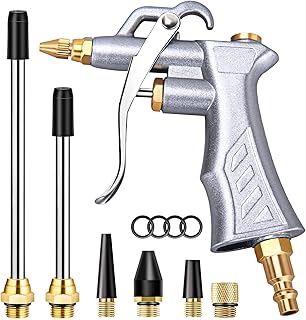
- Price: $11.99 | Rating: 4.6
- Type: Pneumatic blow gun with brass adjustable nozzle and steel extensions
- Best for: Cleaning dust and debris from wood surfaces before finishing. A quick blast from this blow gun removes every speck so your stain or paint adheres perfectly.
8. DYNAMIC POWER 50‑Piece Air Tool Kit

- Price: $99.99 | Rating: 4.4
- Type: Includes impact wrench, ratchet, air hammer, chisels, and more
- Best for: A comprehensive starter set for any compressor owner. The air hammer can be used with a chisel to remove old paint or peeling varnish.
9. High Volume Powerful Industrial Air Blow Gun (Extensible)

- Price: $12.99 | Rating: 4.6
- Type: 17‑26 inch extensible stainless steel nozzle with 360° swivel hook
- Best for: Reaching into corners and between deck boards to blow out dust and cobwebs before staining.
10. CRAFTSMAN V20 3‑Mode Tire Inflator
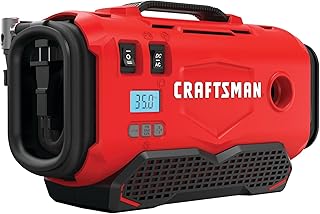
- Price: $49.00 | Rating: 4.4
- Type: Cordless with 120V and 12V adapters (tool only)
- Best for: Multi‑purpose inflation — keep your pram tires and hose tires topped off while working.
Step‑by‑Step Guide to Finishing Outdoor Wood
Step 1: Prep the Surface
- Remove all furniture, planters, and hardware.
- Clean with a deck brightener or oxygen‑based bleach to kill mildew.
- Sand any rough spots with 80–120 grit paper.
- Blow away dust using the JASTIND Air Blow Gun connected to your compressor. Don’t skip this — dust is the #1 cause of finish failure.
Step 2: Choose Your Finish
Refer to the comparison table above. For most decks, a semi‑transparent stain offers the best balance of appearance and protection. If you live in a region with harsh sun, opt for a solid stain or paint with UV‑blocking pigments.
Step 3: Apply with the Right Tool
- Brush: Best for edges, corners, and intricate railings.
- Roller: Good for flat deck boards but slower than spraying.
- Sprayer (HVLP): Fastest and most even application. Use an HVLP gun with a 1.3–1.5mm tip for stain or sealer, and a 1.5–2.0mm tip for thin latex paint.
Set your compressor to 25–35 PSI at the gun inlet. A 6‑gallon tank like the ECOMAX 6‑Gallon provides enough reserve to spray continuously without waiting for the pump.
Step 4: Allow Proper Drying and Curing
- Stain: Usually recoatable in 2–4 hours. Full cure in 24 hours.
- Paint: Dry to touch in 1 hour, recoat after 4 hours. Full cure in 7 days.
- Sealer: Dry in 1–2 hours. Avoid foot traffic for 24 hours.
Check the weather forecast — no rain for at least 24 hours after application.
Expert Tips for a Long‑Lasting Outdoor Wood Finish
- Use a conditioner on softwoods like pine before staining. It prevents blotchy absorption.
- Apply stain on a dry, warm day (60–85°F). Too hot and the stain dries before penetrating; too cold and it won’t cure properly.
- Back‑brush after spraying. Even with an HVLP gun, a quick pass with a brush ensures even penetration and avoids lap marks.
- Maintain your compressor. Follow the Air Compressor Maintenance Schedule: A Monthly Checklist. A clean, oil‑free pump lasts longer and delivers consistent pressure.
- Match hose size to air needs. For spray guns, a 3/8” hose reduces pressure drop. Check out the Air Hose Size Guide: Picking the Right Diameter for Your Tools.
- If you’re painting, prime bare wood with a stain‑blocking primer. This prevents tannin bleed in woods like cedar and redwood.
- For a natural look, test sealer on a scrap piece first. Some sealers can darken wood more than expected.
Frequently Asked Questions
Can I use stain over paint?
No. Stain is designed to penetrate wood, not adhere to paint. You must strip or sand down to bare wood.
Do I need to seal after staining?
Most exterior stains contain sealers already. If you used a transparent stain, a separate UV sealer adds extra life.
What’s the difference between a sealer and a topcoat?
A sealer soaks into the wood. A topcoat (like varnish) sits on top. For outdoor wood, a penetrating sealer is usually more durable because it doesn’t peel.
Can I use an airless sprayer instead of HVLP?
Yes, airless sprayers work great for paint, but they produce more overspray. For stain and sealer, HVLP is more efficient and leaves a thinner film.
Final Thoughts
Choosing between stain, paint, and sealer doesn’t have to be confusing. Think about the look you want, the climate you live in, and how much time you’re willing to spend on maintenance. Stain keeps the natural wood vibe, paint delivers bold color and maximum durability, and sealer protects without hiding the grain.
The right air compressor makes the application fast and professional. Whether it’s a lightweight CRAFTSMAN 2‑Gallon for small jobs or a workhorse DEWALT 6‑Gallon for full house projects, investing in quality power tools pays off in time saved and finishes that last.
Remember, preparation is everything. Clean, sand, and blow away every dust speck before you spray. Follow the manufacturer’s recommended dry times, and your outdoor wood will reward you with years of beauty.