

Moisture buildup inside an air compressor tank is a natural result of compressing air. If left unchecked, that water can lead to rust, corrosion, and even catastrophic tank failure. Draining the tank regularly is one of the simplest yet most critical maintenance tasks you can perform. In this guide, you’ll learn exactly how to do it safely, how often it should be done, and which compressors make the job easier.
Why Does Moisture Accumulate in an Air Compressor Tank?
When air is compressed, its ability to hold moisture decreases. The water vapor condenses into liquid inside the tank. Every time you run your compressor, you’re essentially squeezing water out of the air. That water pools at the bottom of the tank, where it sits against the steel walls.
Over time, this trapped moisture causes rust, scale buildup, and contamination of the air lines. Tools and pneumatic equipment can suffer from water damage, and the tank itself can weaken. Regular draining prevents these problems and extends the life of your compressor.
The Right Way to Drain Moisture: Step by Step
Before you begin, always disconnect the compressor from power and release all air pressure from the tank. Safety first.
Step 1: Gather Your Tools
You’ll need a few basic items:
- Safety glasses (protect eyes from debris)
- A bucket or drain pan to catch water
- Gloves (optional, but helpful)
- A wrench or pliers if the drain valve is stiff
Step 2: Locate the Drain Valve
The drain valve is almost always at the lowest point of the tank. It may be a petcock valve (twist handle), a ball valve, or a threaded plug.
Step 3: Open the Valve Slowly
Turn the valve counterclockwise to open. Open it slowly at first to control the flow. Water and any sediment will rush out. Allow the tank to empty completely—you may hear sputtering as air and water escape.
Step 4: Tilt the Compressor (If Necessary)
On smaller portable units, tilting the compressor toward the drain can help remove every last drop. On stationary models, ensure the drain is at the lowest point by checking the feet.
Step 5: Close the Valve and Secure It
Once the water stops flowing, close the valve tightly by turning clockwise. Wipe away any moisture around the valve threads to prevent rust.
How Often Should You Drain the Tank?
Frequency depends on usage and humidity. Here’s a general guideline:
- Daily use in a humid environment: Drain after every use
- Weekly use in average conditions: Drain at the end of each day
- Occasional use: Drain before each use and after the last use of the day
A good rule of thumb: if you see water in your air lines or hear sputtering from your tools, it’s time to drain more often.
Manual vs. Automatic Drain Valves
Most compressors come with a manual drain valve. You’ll need to physically open it each time. For larger shops or frequent users, an automatic drain valve (a simple add‑on) can be a game‑changer. It opens at a set interval to purge water without any effort.
Both types are effective, but automatic drains reduce human forgetfulness. If you often skip draining, consider upgrading.
What Happens if You Don’t Drain the Tank?
Neglecting this simple chore leads to:
- Rust and pitting on the tank interior
- Reduced tank capacity due to sediment buildup
- Premature tank failure – a rusty tank can burst under pressure
- Contaminated air – water and rust particles damage tools and paint jobs
For a deeper look at overall upkeep, check out our Air Compressor Maintenance Checklist for Long-term Reliability (internal link: Air Compressor Maintenance Checklist for Long-term Reliability). It covers filters, belts, and other crucial tasks.
Recommended Air Compressors with Easy Draining
Choosing a compressor with a well‑placed, easy‑to‑use drain valve makes maintenance simpler. Here are some top-rated models that also offer excellent performance.
1. Klutch 20-Gallon Air Compressor

The Klutch 20-Gallon Air Compressor delivers 175 PSI maximum pressure and 2 HP. Its vertical tank design places the drain valve low and accessible. Rated 4.4 stars, it’s a solid choice for home workshops.
2. ECOMAX 6-Gallon Pancake Compressor
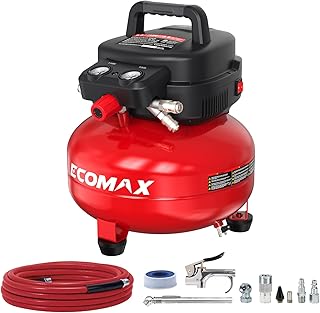
The ECOMAX 6-Gallon 150 PSI Pancake is an oil‑free portable unit with a 4.7 rating. The front‑facing drain valve makes quick work of moisture removal. It also includes a 10‑piece accessory kit.
3. DEWALT 6-Gallon Pancake Air Compressor (DWFP55126)

A DEWALT 6-Gallon Pancake with 165 PSI max pressure has a high‑visibility drain valve at the rear. Rated 4.6 with over 7,000 reviews, it’s a proven workhorse for pros and DIYers alike.
4. PORTER-CABLE 6-Gallon Pancake (C2002-ECOM)

The PORTER-CABLE C2002-ECOM offers 6 gallons and 150 PSI with an oil‑free pump. Its tank drain is positioned for easy access, and the unit weighs only 30 pounds. Another 4.6‑star favorite.
Comparison Table: Best Air Compressors for Easy Moisture Drainage
| Product | Image | Price | Rating | Tank Size | Max PSI | Buy at Amazon |
|---|---|---|---|---|---|---|
| Klutch 20-Gallon | |
$299.99 | 4.4 | 20 gal | 175 PSI | Buy Now |
| ECOMAX 6-Gallon Pancake | |
$169.99 | 4.7 | 6 gal | 150 PSI | Buy Now |
| DEWALT 6-Gallon Pancake (DWFP55126) | |
$204.99 | 4.6 | 6 gal | 165 PSI | Buy Now |
| PORTER-CABLE 6-Gallon (C2002-ECOM) | |
$164.00 | 4.6 | 6 gal | 150 PSI | Buy Now |
Additional Maintenance Tips for Your Air Compressor
- Check the drain valve regularly for leaks or corrosion.
- Replace worn air filters to keep moisture‑laden dust out of the system. Learn more in our guide: When to Replace Air Filter, Belt, and Other Wear Parts?
- Inspect the tank for rust—if you see pitting or flaking, it may be time for a replacement.
- Listen for unusual sounds that could indicate water hammer or sediment. See Common Air Compressor Failure Signs and What They Mean.
Common Mistakes to Avoid When Draining
- Don’t drain while the tank is under pressure – always depressurize first.
- Don’t leave the drain valve open when not in use – it can let dirt in.
- Don’t forget to drain in cold weather – water can freeze and crack the tank.
- Don’t rely solely on automatic drains – check them periodically for clogs.
Final Thoughts
Draining moisture from your air compressor tank is a five‑minute job that saves you hundreds of dollars in repairs and replacements. Make it a habit. Whether you choose a manual valve or upgrade to an automatic drain, the key is consistency.
If your compressor is struggling to build pressure or overheating, moisture may be the culprit. Check out Why Your Air Compressor Is Not Building Pressure? and Air Compressor Overheating: Causes and Fixes for troubleshooting tips.
Keep your tank dry, your tools happy, and your compressor running for years.