

If you work in a small workshop, you already know that dust is more than just a nuisance. It settles on every surface, clogs your tools, and—worst of all—it can damage your lungs over time. For anyone running compressors and power tools, managing airborne particles becomes a daily battle. The good news is that a practical dust collection setup doesn’t require a massive industrial system. With the right planning and a few key purchases, you can keep your air clean and your tools running smoothly.
In this guide, we’ll walk through everything you need to know about dust collection for small workshops. You’ll learn how to use your air compressor strategically, which products actually deliver value, and how to integrate everything into a cohesive system that saves you time and protects your health.
Why Dust Collection Matters More Than You Think
Wood dust, metal filings, and composite particles aren’t just messy. Fine dust (particles smaller than 10 microns) stays airborne for hours and penetrates deep into your lungs. Over time, this can lead to chronic respiratory issues, allergies, and even more serious conditions. A small workshop might feel harmless, but without proper collection, you’re breathing in a cloud of irritants every time you sand, cut, or grind.
Beyond health, dust also shortens tool lifespan. It gets inside motors, clogs vents, and accelerates wear on bearings and switches. Compressors are especially vulnerable—dust can coat the cooling fins and cause overheating. By investing in a practical dust management system, you protect both yourself and your equipment.
The Role of Compressors in Dust Management
Your air compressor isn’t just for powering nail guns and sprayers. In a small workshop, compressed air becomes an essential part of your dust control strategy. Use it to blow out filters, clean hard-to-reach crevices, and even power pneumatic vacuums. The trick is choosing a compressor that provides enough volume (CFM) and pressure (PSI) without breaking your budget.
For example, the CRAFTSMAN Air Compressor, 2 Gallon Portable at $129.99 (4.0 rating) is a great entry-level unit for light cleaning tasks. Its small tank makes it easy to move around, and the included 10-piece accessory kit gives you a blow gun and inflation nozzle right out of the box.
Alternatively, the ECOMAX Air Compressor 6 Gallon 150 PSI Pancake offers a larger tank and higher pressure (4.7 rating). This is ideal if you plan to run a continuous blow gun or power small pneumatic tools that generate dust—like air sanders or die grinders.

Components of a Practical Dust Collection System
A successful small‑workshop setup combines three layers:
- Source capture – collecting dust at the tool with a shop vacuum or dust collector.
- Ambient filtration – a ceiling‑mounted air cleaner or HEPA filter for fine particles.
- Cleaning tools – compressed air blow guns and pneumatic vacuums for final cleanup.
Let’s break each one down.
Source Capture Tools
For most small shops, a high‑efficiency shop vacuum with a cyclone separator (like the Dust Deputy) is the simplest source capture solution. Connect it directly to your saw, sander, or router. If you need more capacity, a dedicated 1‑ or 2‑bag dust collector (1.5 HP to 2 HP) can handle multiple machines through a short duct run.
Remember: smaller duct diameter (4″) is sufficient for small shops. Keep runs short and avoid sharp bends to maintain airflow.
Ambient Air Filtration
Even with good source capture, some dust escapes. A wall‑ or ceiling‑mounted air filter (often a box fan with a MERV‑13 furnace filter) can recirculate the room air several times per hour. For about $50 you can build a DIY version, or buy a commercial unit for $200–$400. This drastically reduces the fine dust you breathe.
Compressed Air for Final Cleanup
After the major dust is collected, the remaining particles settle on beams, outlet covers, and tool handles. This is where your air compressor shines. A quality blow gun with a focused nozzle can clear debris fast.
Two excellent options from our real data:
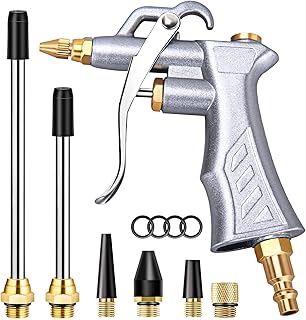
- JASTIND Industrial Air Blow Gun ($11.99, 4.6 rating) – brass adjustable nozzle with two steel extensions.
- High Volume Powerful Industrial Air Blow Gun ($12.99, 4.6 rating) – extendable stainless steel nozzle up to 26 inches with a 360° swivel hook.
Both connect directly to your compressor’s air hose. Use them to blow out tool crevices, filters, and behind workbenches.
Choosing the Right Compressor for Your Dust Needs
Not every compressor works equally well when paired with dust collection accessories. Here are key factors to consider.
CFM and Tank Size
Blow guns and pneumatic vacuums require a steady flow of air. A small 1–2 gallon compressor will run the motor frequently, but can still handle short bursts of cleaning. For longer cleaning sessions, a 6‑gallon pancake (like the PORTER-CABLE C2002-ECOM at $164.00, 4.6 rating) recovers faster and provides more consistent pressure.
Oil-Free vs Oil-Lubricated
Oil-free compressors (like all the models listed in our data) require less maintenance and won’t blow oil mist into your workspace—a big plus when you’re trying to keep air clean. For small workshops, oil-free is almost always the safer choice. Read our deep dive on Oil-Free vs Oil-Lubricated Air Compressors: Which One Fits Your Workshop for more.
Cordless Options for Portability
If you already own a battery platform, a cordless inflator like the DEWALT 20V MAX Tire Inflator ($130.22, 4.6 rating) can double as a portable blow gun. While not as powerful as a corded compressor, it’s perfect for quick cleanups away from your main station.
The CRAFTSMAN V20 Cordless Tire Inflator ($39.00, 4.6 rating) is an even more budget-friendly option—just add your own battery.
Quick Comparison Table
| Compressor Model | Tank Size | Max PSI | Rating | Price | Best For |
|---|---|---|---|---|---|
| CRAFTSMAN 2 Gal | 2 gal | 125 | 4.0 | $129.99 | Light cleaning, portability |
| ECOMAX 6 Gal Pancake | 6 gal | 150 | 4.7 | $169.99 | Continuous blow gun use |
| PORTER-CABLE C2002 | 6 gal | 150 | 4.6 | $164.00 | Balanced power and price |
| DEWALT DWFP55126 | 6 gal | 165 | 4.6 | $204.99 | Higher pressure for tough cleaning |
The DEWALT Pancake 6 Gal 165 PSI is a premium choice if you want maximum recovery and pressure for demanding tasks like sandblasting or operating a pneumatic vacuum.
Integrating Dust Collection with Power Tools
Your power tools generate dust at different rates. Here’s how to pair them with your setup.
Table Saws and Miter Saws
These produce the most fine dust. Connect a shop vacuum with a HEPA filter directly to the saw’s dust port using a 2‑1/2″ or 4″ hose. Add a cyclone separator to keep the vacuum bag from clogging. For miter saws, a dedicated dust hood behind the blade is almost mandatory.
After cutting a batch of material, use an air blow gun to clear sawdust from the saw’s motor vents and the floor around the blade. This prevents buildup that can cause binding.
Sanders and Routers
Orbital sanders produce clouds of dust. Most come with a dust port that fits a 1‑1/4″ vacuum hose. Keep your shop vacuum running while sanding, and wear a respirator for extra protection. Routers create stringy chips—blowing these out with compressed air after use is far easier than sweeping.
Drills and Impact Drivers
Though they generate less dust, drilling into drywall or masonry still produces particles. A compact cordless inflator (like the CRAFTSMAN V20 CMCE520B at $49.00, 4.4 rating) lets you blow out holes instantly without dragging a hose.
Step‑by‑Step Setup for a Small Workshop
Follow this sequence to build your system.
Step 1: Evaluate Your Space
Measure your workshop area (e.g., 12’×20’). Identify where you most often cut, sand, or grind. Place your main dust collector or shop vacuum within 10 feet of those tools. If you use a compressor, position it in a corner with good airflow to keep it cool.
Step 2: Choose Primary Collection
For a small shop under 400 sq ft, a 2‑HP dust collector with a 4″ duct is overkill unless you run several machines simultaneously. Instead, start with a 5‑gallon shop vacuum ($50–$80) and a cyclone separator. That combination handles most tools.
Step 3: Add Compressed Air Cleaning
Pick an air compressor that suits your usage. The ECOMAX 6 Gallon is an excellent all‑rounder. Attach a 25‑foot air hose (1/4″ or 3/8″ diameter) and a blow gun. Our Air Hose Size Guide explains why 3/8″ gives you better flow for cleaning tasks.
Step 4: Install Ambient Filtration
Build or buy a box fan filter. Hang it from the ceiling near the center of the shop. Run it during and after work for at least 30 minutes.
Step 5: Organize Accessories
Keep your blow gun, hose, and vacuum attachments within arm’s reach. A pegboard or tool cart works perfectly. For advice on workshop organization, see Pegboard vs Slatwall: Organizing Your Garage Walls.
Maintenance Tips for Both Dust Collection and Compressors
A clean system performs better. Here’s a seasonal checklist.
Dust Collector Maintenance
- Empty the collection bag or drum when it’s half full to maintain airflow.
- Check filters monthly. Wash or replace them if you notice reduced suction.
- Inspect hoses for cracks or leaks—especially near connections.
Compressor Maintenance
- Drain moisture from the tank after every use (learn How to Drain Your Air Compressor Tank the Right Way).
- Clean the intake filter every few months. A dirty filter restricts airflow and causes the compressor to run hotter.
- Check for oil leaks (if you use an oil‑lubricated model). For oil‑free units, just keep the pump fins dust‑free.
Blow Gun Care
- Disassemble the nozzle occasionally to remove debris.
- Apply a drop of pneumatic tool oil to the trigger mechanism if it feels sticky.
When you keep your equipment in top shape, both dust collection and compressed air systems work reliably for years.
Real‑World Example: Budget Setup Under $400
You don’t need to spend thousands. Here’s a practical starter bundle:
- Compressor: CRAFTSMAN 2 Gallon ($129.99) – portable, oil‑free.
- Blow Gun: JASTIND Industrial ($11.99) – brass, adjustable.
- Shop Vacuum: 5‑gallon from any hardware store (~$60).
- Cyclone Separator: DIY bucket lid (~$20) or store‑bought.
- Air Hose: 25’ 3/8″ rubber hose (~$25).
- Air Filter: Box fan + MERV‑13 filter (~$40).
Total: under $290. For an extra $70, upgrade to the ECOMAX 6 Gallon for longer cleaning runs.
Common Mistakes to Avoid
- Using the wrong hose size. Too narrow a hose restricts airflow on both vacuums and blow guns. Stick to 2‑1/2″ for vacuum hoses and 3/8″ for air hoses.
- Neglecting static buildup. When you blow dust with compressed air, static charges can build on plastic tools. Use anti‑static blow gun nozzles or ground your hose.
- Forgetting about noise. Running a dust collector and compressor simultaneously can be loud. Consider The Best Quiet Air Compressors for Indoor Use if you share walls with neighbors.
- Skipping personal protection. A dust collection system reduces airborne particles but doesn’t eliminate them. Always wear a respirator when sanding or cutting MDF.
Conclusion: Breathe Easier, Work Smarter
Dust collection for small workshops doesn’t have to be complicated. By combining a smart source‑capture vacuum, an ambient air filter, and a reliable air compressor with blow‑gun accessories, you can dramatically reduce dust in your space. The investments pay off in better health, longer tool life, and a more enjoyable workspace.
Start with one solid compressor—like the CRAFTSMAN 2 Gallon or ECOMAX 6 Gallon—and build from there. Add a quality blow gun, keep your filters clean, and always follow the maintenance schedules we’ve outlined. Your lungs (and your power tools) will thank you.
If you’re still deciding on the best compressor for your needs, read How to Choose the Right Air Compressor Size for a Home Garage and Pancake, Hot Dog, and Twin Stack Compressors Explained. Then put this dust collection plan into action—you’ll wonder how you ever worked without it.