
Choosing between a brushed and a brushless motor is one of the most critical decisions when buying cordless power tools. While brushed motors have been the standard for decades, brushless motors now dominate the premium segment—and for good reason. They offer higher efficiency, superior RPM control, and a far more usable torque curve.
In this guide, we’ll break down exactly how brushless technology outperforms brushed motors in three key areas. Along the way, we’ll spotlight top-rated brushless tools like the DEWALT 20V MAX Cordless Drill Driver Set and the Dremel 8150 8V Cordless Rotary Tool to show you exactly what you’re getting.
Efficiency: More Work per Charge
The biggest advantage of a brushless motor is its electrical efficiency. Brushed motors lose a significant amount of energy as heat due to friction between carbon brushes and the commutator. Brushless motors eliminate that friction entirely by using electronic commutation.
- Brushless efficiency: 85–90%
- Brushed efficiency: 75–80%
That 10–15% improvement translates directly into longer runtime on the same battery. For professionals and serious DIYers, this means fewer battery swaps and less downtime.
For example, the DEWALT 20V MAX XR Oscillating Multi-Tool (tool only) boasts a brushless motor that extends runtime significantly compared to earlier brushed models. The same battery lasts noticeably longer when cutting or sanding.
Brushless motors also run cooler. Less heat buildup protects internal components and prolongs tool life. This is especially important in compact rotary tools like the Dremel 8150, where heat dissipation is limited. With its USB-C rechargeable battery and variable speed from 5,000 to 30,000 RPM, it delivers consistent power without overheating.
Key takeaway: If you want the most work per charge, brushless is the clear winner.
RPM Control: Precision Under Load
RPM control—also called speed regulation—is where brushless motors truly shine. Brushed motors rely on a simple variable-speed trigger that adjusts voltage. Under heavy load, the RPM drops significantly because the motor lacks feedback.
Brushless motors use an electronic controller and sensors (usually Hall effect sensors) to monitor rotor position and adjust power in real time. This gives you:
- Consistent speed even when pushing the tool hard
- Better low-speed control for delicate work
- Instant torque response without lag
For example, the DEWALT 20V MAX XR Jig Saw offers a brushless motor that maintains blade speed up to 3,200 SPM even when cutting through thick hardwood. Brushed jigsaws often bog down and leave rough edges.
Similarly, the Dremel 8250-5 12V Rotary Tool features a brushless motor paired with variable-speed dial (5,000–30,000 RPM). Users report that the speed stays accurate regardless of the accessory being used—perfect for engraving, grinding, or polishing.
Brushed tools can still be variable-speed, but they lack closed-loop control. That means when you push harder, the RPM drops—and you lose clean cutting or sanding performance.
Key takeaway: Brushless gives you the RPM you dial in, even when the load changes.
Torque Curve: Flat, Powerful, and Controllable
Torque curve refers to how much rotational force the motor delivers across its RPM range. Brushed motors produce peak torque only at higher RPMs, often near the middle or top of their speed range. That’s why a brushed drill feels weak at low speed until you pull the trigger further.
Brushless motors generate high torque from near zero RPM, and the curve stays relatively flat throughout the usable range. This is a huge advantage for:
- Drilling into dense materials (you need low-speed torque to start the hole)
- Driving screws (no cam-out because the bit doesn’t stall)
- Cutting with saws and oscillating tools (consistent power through the cut)
For a practical example, look at the DEWALT 20V MAX Cordless Drill and Impact Driver 2-Tool Combo Kit. The brushless drill delivers 340 UWO (unit watts out) with excellent low-speed torque. The impact driver provides 1,825 in-lbs of torque—all thanks to brushless motor design.
On the oscillating tool side, the DEWALT 20V MAX XR Oscillating Tool Kit (3-speed brushless) gives full rated OPM (up to 20,000) even when flush-cutting nails. The torque curve stays strong whether you’re using it at 10,000 OPM or 20,000 OPM.
To dig deeper into how torque curves affect drilling and cutting, read our guide: Understanding Torque Curves in Cordless Power Tools with Brushless Motors for Drilling, Driving, and Cutting.
Key takeaway: Brushless delivers usable torque where you need it most—at low and mid RPMs.
Brushless vs Brushed: Comparison Table
Below is a side-by-side look at some of the best brushless tools on the market today. The table compares efficiency ratings, speed control, torque characteristics, and real-world pricing. Click any product image to see the latest price on Amazon.
| Product | Price | Rating | Key Feature | Buy at Amazon |
|---|---|---|---|---|
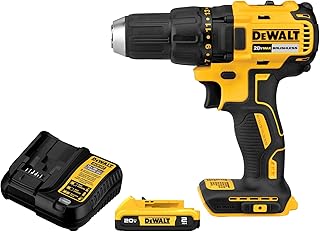 DEWALT 20V Max Drill Driver DEWALT 20V Max Drill Driver |
$99.00 | 4.7 | Brushless motor, 2-speed (0-2000 RPM), 1/2″ keyless chuck | Buy Now |
 DEWALT 2-Tool Combo Kit DEWALT 2-Tool Combo Kit |
$169.00 | 4.8 | Brushless drill (340 UWO) + impact driver (1,825 in-lb), 2 batteries | Buy Now |
 DEWALT XR Oscillating Multi-Tool DEWALT XR Oscillating Multi-Tool |
$104.99 | 4.8 | Variable speed, brushless, LED light, tool only | Buy Now |
 Dremel 8150 Rotary Tool Dremel 8150 Rotary Tool |
$79.99 | 4.6 | Brushless, USB-C rechargeable, 5-30K RPM, 20 accessories | Buy Now |
 Dremel 8250-5 Rotary Tool Kit Dremel 8250-5 Rotary Tool Kit |
$149.00 | 4.7 | Brushless, 12V Li-ion, 3Ah battery, variable speed, tool bag | Buy Now |
 DEWALT XR Oscillating Tool Kit DEWALT XR Oscillating Tool Kit |
$124.50 | 4.8 | 3-speed brushless, up to 20,000 OPM, battery & charger included | Buy Now |
FAQ: Brushless vs Brushed Motors in Cordless Power Tools
Are brushless motors worth the extra cost?
Yes, for most users. The premium price—usually 20–40% higher than comparable brushed tools—is offset by longer battery life, increased torque at low speeds, and better speed control under load. Brushless tools also tend to last longer because there are no brushes to wear out. If you use a tool more than a few times a year, the investment pays off.
What is the main disadvantage of brushed motors?
The biggest downside is maintenance and efficiency loss. Brushes wear down over time and need replacement, and the friction they create wastes energy as heat. Additionally, brushed motors have poor low-speed torque and drop RPM significantly under load, making them less precise for fine work.
Can I use brushed tools for heavy-duty work?
You can, but you’ll need larger batteries and may experience more stalls. Brushed tools can still handle framing, drilling, and cutting, but you’ll get less runtime and less consistent performance compared to brushless tools of the same class. For professional daily use, brushless is strongly recommended.
How does electronic commutation work in brushless motors?
Brushless motors replace the physical brushes and commutator with a controller that electronically switches the current between coils. Sensors detect the rotor’s position and tell the controller when to fire each coil. This allows precise control of speed, torque, and efficiency. Learn more in our article: Cordless Power Tools with Brushless Motors: How Electronic Commutation Really Works Inside the Motor.
What do Kv rating and RPM numbers actually mean?
Kv rating (often seen on brushless motors) indicates the RPM per volt. A higher Kv motor spins faster but with less torque; a lower Kv motor produces more torque but at lower RPM. Combined with battery voltage, this determines the tool’s performance envelope. For a full breakdown, see: Decoding the Specs: What Kv Rating, Rpm, and Efficiency Numbers Mean on Cordless Brushless Power Tools.
Do brushless motors need special batteries?
No. Brushless motors work with standard lithium-ion battery packs, just like brushed motors. However, some brushless tools have higher current draw, so higher-capacity (Ah) batteries may be recommended for maximum performance.