
If you’ve shopped for cordless power tools recently, you’ve seen “brushless motor” plastered on nearly every new drill, saw, or rotary tool. But what does that label actually mean? More importantly, how does electronic commutation work inside the motor to deliver the efficiency, power, and runtime that professionals and DIYers rely on?
Understanding the technology behind brushless motors unlocks the reason these tools outperform their brushed counterparts. By replacing mechanical carbon brushes with an electronic controller, manufacturers like DEWALT and Dremel have revolutionized cordless power tools. Let’s pull back the stator and examine the engineering that makes it all possible.
The Old Way: Brushed Motor Basics
To appreciate brushless motors, you first need to understand the traditional brushed DC motor. In a brushed motor, a rotating armature (rotor) contains electromagnets. Stationary carbon brushes press against a commutator—a segmented copper ring—to deliver current to the rotor coils. As the rotor spins, the commutator segments mechanically flip the current direction, maintaining rotation.
The problem? Friction and sparks. Brushes wear down over time, creating heat and dust. The mechanical switching also limits speed control and efficiency. This is why brushed tools are cheaper but less durable and less powerful per battery charge.
Electronic Commutation: The Heart of Brushless Motors
A brushless DC motor flips the design. The permanent magnets are on the rotor, and the electromagnets are on the stator (the stationary housing). Instead of brushes, an electronic controller—often a microcontroller with software—switches the current to the stator windings in precise sequence.
This is called electronic commutation. The controller monitors the rotor’s position (using Hall effect sensors or sensorless back-EMF), calculates the optimal timing, and energizes the correct stator coils to keep the rotor spinning. No physical contact, no brushes to replace.
How the Controller Communicates with the Motor
The controller is the brain. It receives input from the tool’s trigger (variable speed), battery voltage, and rotor position sensors. Based on that data, it sends pulse-width modulation (PWM) signals to the MOSFET transistors that deliver power to the stator phases. The result is incredibly smooth, efficient torque at any speed.
Most high-end cordless tools, like the DEWALT 20V MAX XR Oscillating Multi-Tool (DCS356B), use a three-phase brushless motor. The controller energizes two of the three stator windings at a time, rotating the magnetic field around the rotor. As the rotor aligns with one field, the controller switches to the next set of windings—perfectly timed to maintain rotation without cogging or hesitation.
Sensored vs. Sensorless Electronic Commutation
Two main methods exist for rotor position feedback:
| Method | How it works | Pros | Examples |
|---|---|---|---|
| Sensored (Hall effect) | Three tiny Hall sensors detect magnet polarity | smooth startups, high torque at low RPM, precise control | Most pro-grade drills & impact drivers |
| Sensorless (back-EMF) | Controller measures voltage induced in non-driven windings | fewer failure points, lower cost | Some rotary tools & saws |
Why Sensored Matters for Drilling & Driving
For tools that require precise starting torque—like drilling into masonry or driving long screws—sensored brushless motors excel. The Hall sensors give the controller rotor position even before motion begins. This allows the motor to generate high starting torque without any hesitation or stall.
The DEWALT 20V MAX Cordless Drill Driver Set (DCD777D1) uses this approach, delivering up to 340 unit watts out (UWO) while maintaining excellent battery life. Users report consistent power even under heavy load—exactly what electronic commutation is designed for.
What About Under Load? Electronic Commutation Adapts
One of the biggest advantages of a brushless system is its ability to adapt to load in real time. In a brushed motor, when you apply heavy pressure, the armature slows down, current spikes, and heat builds. In a brushless motor, the controller can increase the duty cycle (more PWM) or advance the timing to maintain RPM.
This load-adaptive behavior is why brushless tools don’t bog down as easily. For example, the DEWALT 20V MAX XR Jig Saw (DCS334B) maintains blade speed even when cutting through thick hardwood—something a brushed jigsaw would struggle with.
Torque Curve Differences
A brushed motor produces peak torque at a specific RPM (usually mid-range). A brushless motor’s torque curve is flatter, meaning it delivers high torque across a wide RPM band. This is critical for cutting and grinding tools.
Real‑World Performance: Brushed vs. Brushless
Let’s compare key metrics:
| Feature | Brushed Motor | Brushless Motor |
|---|---|---|
| Efficiency | ~60–75% | ~80–90% |
| Torque at low RPM | Limited | High |
| Lifespan | 500–1000 hours (brush wear) | 2000+ hours |
| Battery runtime per charge | Baseline | 30–50% longer |
| Maintenance | Replace brushes | None |
The numbers speak for themselves. A brushless drill like the DEWALT 20V MAX XR Oscillating Tool Kit (DCS356C1) can run nearly twice as long on the same battery compared to a brushed equivalent—thanks to reduced energy waste as heat.
Inside the Controller: PWM and Phase Switching
To truly understand how electronic commutation works, you need to know about PWM. The controller doesn’t simply turn the motor on or off; it sends high‑frequency pulses of voltage to the stator coils. By varying the pulse width, the controller adjusts the average voltage (and thus speed).
When the trigger is pulled halfway, the PWM duty cycle might be 40%. When floored, it reaches 100%. Meanwhile, the controller is also switching which stator phases are energized. For a three‑phase motor, the sequence goes: A‑B, B‑C, C‑A, repeated. This creates a rotating magnetic field that drags the permanent magnet rotor around.
Sensorless Control for Rotary Tools
Some tools, like the Dremel 8150 8V Cordless Rotary Tool, use sensorless control to reduce cost and size. The controller detects the voltage induced in the inactive winding at startup (since the motor acts as a generator) to estimate rotor position. Once spinning, it continuously calculates timing from back‑EMF.
The trade‑off? Sensorless motors can have slightly rough starts under heavy load, but for a hobbyist rotary tool that spends most of its time at constant speed, it’s ideal.
Why Professional Users Choose Brushless
Professionals demand reliability. Brushless motors eliminate brush dust, reduce heat, and deliver consistent power. The DEWALT 20V MAX Cordless Drill and Impact Driver Combo Kit (DCK277D2) is a prime example: two‑tool kit, brushless motors, 4.8‑star rating from over 4,300 reviews. Users praise the smooth power delivery and long runtime.
But it’s not just drills. The Dremel 8250-5 12V Rotary Tool with Brushless Motor brings the same technology to detail work—variable speed from 5,000 to 30,000 RPM, USB‑C rechargeable, and an LED nose cap. Electronic commutation here means no speed drop when you apply pressure while carving or grinding.
Comparison Table: Top Brushless Cordless Tools
| Product | Price | Rating | Key Feature | Picture | Buy |
|---|---|---|---|---|---|
| DEWALT DCD777D1 Drill Driver Set | $99.00 | 4.7 | 2‑speed, 2.0Ah battery, LED | 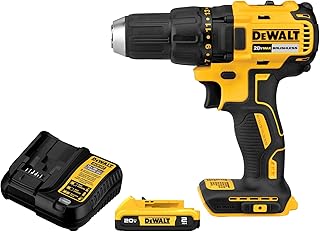 |
Buy at Amazon |
| DEWALT DCK277D2 Drill & Impact Combo | $169.00 | 4.8 | Two brushless tools, 2 batteries, bag |  |
Buy at Amazon |
| DEWALT DCS356B Oscillating Multi‑Tool | $104.99 | 4.8 | Variable speed, brushless, tool only |  |
Buy at Amazon |
| Dremel 8150 8V Rotary Tool Kit | $79.99 | 4.6 | USB‑C, LED, 20 accessories |  |
Buy at Amazon |
| DEWALT DCS356C1 Oscillating Tool Kit | $124.50 | 4.8 | 3‑speed, with battery & charger, blades |  |
Buy at Amazon |
| DEWALT DCS334B Jig Saw | $132.00 | 4.8 | 3,200 spm, LED, brushless |  |
Buy at Amazon |
| Dremel 8250-5 12V Rotary Tool | $149.00 | 4.7 | 3Ah battery, variable speed, bag |  |
Buy at Amazon |
Electronic Commutation and Torque Curves
Brushless motors produce a constant torque curve rather than the peaky curve of brushed motors. This means the tool delivers the same twisting force whether you’re driving a screw slowly or at full speed. The controller can also implement torque limiting—useful for preventing overdriving fasteners.
For a deeper dive into torque curves and how they affect drilling, driving, and cutting, read our guide: Understanding Torque Curves in Cordless Power Tools with Brushless Motors for Drilling, Driving, and Cutting.
Efficiency Numbers and Kv Ratings
Kv rating (RPM per volt) tells you the theoretical speed of a brushless motor under no load. Tools with high Kv (e.g., a jigsaw) prioritize speed, while low Kv tools prioritize torque. The controller can adjust power delivery, but the base winding design sets the character.
Want to decode those specs? Check out our article: Decoding the Specs: What Kv Rating, RPM, and Efficiency Numbers Mean on Cordless Brushless Power Tools.
Frequently Asked Questions
How long do brushless motors last compared to brushed motors?
Brushless motors typically last over 2,000 hours of use—many times longer than brushed motors (around 500–1,000 hours). The lack of friction and brush wear is the primary reason.
Can you use the same battery with brushless and brushed tools?
Yes, most tool manufacturers (like DEWALT, Dremel, CRAFTSMAN) use the same battery platform for both brushed and brushless tools. The voltage and connector are identical—only the motor technology differs.
Do brushless motors need special maintenance?
No. Since there are no brushes to replace, brushless motors are essentially maintenance‑free. The only care required is keeping the tool clean and the battery contacts dry.
Is a brushless motor worth the extra cost?
Absolutely, if you use the tool regularly. The longer runtime, higher torque, and extended lifespan offset the higher upfront price. For one‑time DIY projects, a brushed tool may suffice, but for professionals and serious hobbyists, brushless is the clear choice.
How does the controller prevent overheating?
Brushless controllers monitor motor temperature via thermistors. If the motor gets too hot (e.g., under sustained heavy load), the controller reduces power or shuts off briefly to protect the windings and electronics.
The Future: Even Smarter Commutation
As microcontrollers become cheaper and more powerful, brushless tools are getting smarter. Some now offer Bluetooth connectivity to adjust speed profiles, or “active torque sensing” that automatically slows when the tool binds. The core principle—electronic commutation—remains the same, but the software layer continues to improve.
For a wider comparison of motor types, see: Brushless vs Brushed in Cordless Power Tools: Efficiency, RPM Control, and Torque Curve Compared.
And to understand how sensors and controllers optimize load response: Inside the Electronics: How Sensors and Controllers Optimize Cordless Power Tools with Brushless Motors under Load.