

Starting your first workshop is one of the most empowering decisions you can make as a DIYer or aspiring tradesperson. The right tools transform frustrating repairs into satisfying projects and save you hundreds of dollars over time. But with endless options on the market, knowing where to begin can feel overwhelming.
The single most versatile addition to any beginner workshop is an air compressor. It powers nail guns, impact wrenches, tire inflators, blow guns, and even paint sprayers. Whether you’re building a workbench or maintaining your car, a quality compressor like the CRAFTSMAN Air Compressor, 2 Gallon Portable gives you a solid foundation without breaking the bank. In this guide, we’ll walk through every tool you need — and explain how compressors and power tools fit together to create a workshop that actually works.

Why an Air Compressor is the Heart of Your Workshop
An air compressor isn’t just another tool — it’s the engine that drives dozens of pneumatic attachments. For beginners, a single compressor replaces the need for multiple corded or cordless specialty tools. Need to drive finish nails? Add a nailer. Remove stubborn lug nuts? Grab an impact wrench. Clean dust off a workpiece? Use a blow gun.
The versatility is unmatched. With one investment, you unlock a whole ecosystem of add-ons. Plus, pneumatic tools are often lighter and more durable than their electric counterparts because they have fewer moving parts and no motor windings.
If you’re still deciding on size, check out How to Choose the Right Air Compressor Size for a Home Garage. That guide breaks down tank gallons and CFM requirements for common tools so you avoid buying too much — or too little.
Choosing Your First Air Compressor: Key Factors
Not all compressors are created equal. For a first workshop, you need something portable, reliable, and easy to maintain. Here are the critical specs to evaluate.
Tank Size
Small tanks (1–2 gallons) are great for inflating tires and light cleaning. Medium tanks (6 gallons) handle nail guns and impact wrenches for moderate projects. Larger tanks (8+ gallons) support longer run cycles but are heavier.
For most beginners, a 6-gallon pancake compressor offers the best balance of portability and capacity. It can run a brad nailer continuously for several minutes before the pump kicks in.
PSI and CFM
PSI (pounds per square inch) tells you the maximum pressure the tank can hold. Most pneumatic tools run between 90 and 120 PSI. CFM (cubic feet per minute) is the real measure of performance — it tells you how much air the compressor delivers at a given pressure.
A compressor with 125–150 PSI and at least 2 CFM at 90 PSI covers most beginner tasks.
Oil-Free vs Oil-Lubricated
Oil-free compressors require less maintenance and stay cleaner. They’re ideal for occasional use. Oil-lubricated models are quieter and last longer, but need regular oil changes. For your first workshop, an oil-free unit will save you hassle. Learn more in Oil-Free vs Oil-Lubricated Air Compressors: Which One Fits Your Workshop.
Top Beginner Compressors Compared
Here are three excellent starting points based on real user feedback and price.
| Product | Price | Rating | Tank Size | Max PSI | Key Feature |
|---|---|---|---|---|---|
| CRAFTSMAN 2-Gallon Portable | $129.99 | 4.0 | 2 gal | 125 | Includes 10-piece accessory kit |
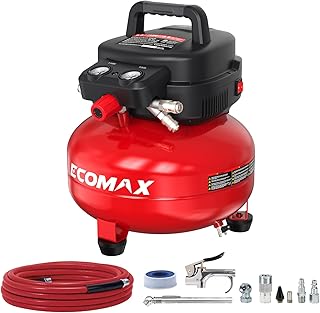
| ECOMAX 6-Gallon Pancake | $169.99 | 4.7 | 6 gal | 150 | Excellent value, high rating |
| PORTER-CABLE 6-Gallon Pancake | $164.00 | 4.6 | 6 gal | 150 | Trusted brand, oil-free pump |
The ECOMAX is our top pick for value — it’s highly rated and includes an accessory kit. For tight spaces, the CRAFTSMAN 2-gallon is ultra-portable and great for inflation tasks.
Pancake, Hot Dog, and Twin Stack Compressors Explained
Pancake compressors have a wide, flat tank that’s very stable. Hot dog compressors are cylindrical and take up less floor space. Twin stacks have two cylinders for higher CFM. For a first workshop, a pancake is easiest to store and move. Dive deeper into the differences in Pancake, Hot Dog, and Twin Stack Compressors Explained.
Cordless vs Corded: The Compressor Debate
You might wonder: should I buy a cordless inflator instead of a plug-in compressor? The answer depends on your primary tasks.
Cordless Tire Inflators
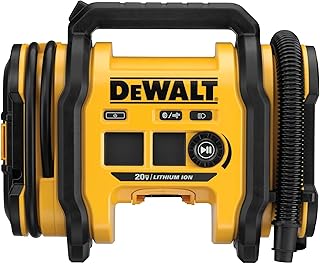
For quick tire top-ups and light inflation, a cordless inflator is incredibly convenient. The DEWALT Tire Inflator 20V MAX (tool only, $130.22, rating 4.6) offers automatic shutoff and an LED light — perfect for emergencies. But it requires a battery and charger, which adds cost if you don’t already have a DEWALT battery platform.
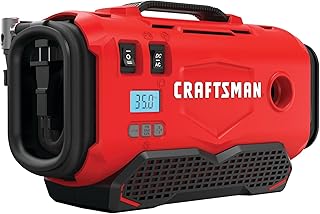
The CRAFTSMAN V20 Tire Inflator ($49.00, rating 4.4) is even more affordable and works with CRAFTSMAN V20 batteries. It can also run on 120V corded or 12V car adapter — three modes in one.
When a Corded Compressor Wins
For running nail guns, impact wrenches, and blow guns, a corded compressor with a tank delivers continuous high-volume air that no battery-powered inflator can match. If you plan to use your workshop for woodworking, auto repair, or home maintenance, a plug-in compressor is the smarter long-term investment.
Still, a cordless inflator is a fantastic backup tool. Many professionals keep both. Understand the trade-offs in Cordless vs Corded Tools: Where Each One Still Wins.
Battery Platform Lock-In
If you go cordless, choose a brand you’ll stick with. Batteries are expensive, and once you own three DEWALT drills and a circular saw, you won’t switch to Milwaukee. Read Battery Platform Lock-In: How to Pick a Tool Brand before buying your first cordless tool.
Essential Air Tool Accessories for Beginners
Your compressor is only as useful as the tools you attach to it. Here are three must-have accessories that cost next to nothing but dramatically expand capability.
Blow Guns
A blow gun is the simplest pneumatic tool — it’s just a nozzle that directs compressed air for cleaning, drying, or even inflating low-pressure items. The JASTIND Industrial Air Blow Gun ($11.99, rating 4.6) features a brass adjustable nozzle and two steel extensions, giving you reach for tight spots.
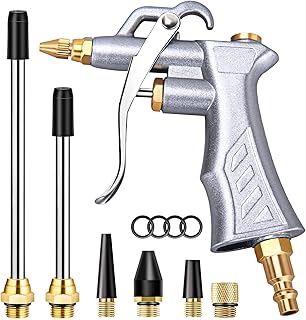
For bigger jobs, the High Volume Powerful Industrial Air Blow Gun ($12.99, rating 4.6) extends from 17 to 26 inches and includes a 360-degree swivel hook. It’s excellent for cleaning garage floors, workbenches, and sawdust after a day of woodworking.

Air Tool Kits
A complete air tool kit saves you from buying each tool separately. The DYNAMIC POWER 50-Piece Air Tool Kit ($99.99, rating 4.4) includes a 1-1/2″ impact wrench, 1-3/8″ ratchet wrench, air hammer with chisels, and various adapters. For under $100, this kit covers most automotive and light demolition tasks.

Pro tip: Buy an air hose reel and a 25-foot polyurethane hose. They resist kinks and make your compressor feel like a professional setup. See Air Hose Size Guide: Picking the Right Diameter for Your Tools to choose the right inner diameter.
Power Tools Beyond Air: Must-Have Picks
While compressors are the backbone, you’ll still need a few electric or cordless tools for tasks that pneumatic versions can’t handle well — like drilling holes in wood or cutting lumber.
Cordless Drill
A quality 20V cordless drill is non‑negotiable. Look for a brushless motor and at least 500 in-lbs of torque. If you’re starting fresh, consider a combo kit with a drill and an impact driver. Read Cordless Drill Buying Guide for DIY Homeowners to compare clutch settings and battery amps.
Circular Saw
For straight cuts on plywood and framing lumber, a circular saw is essential. Corded models give you consistent power; cordless ones offer portability. Pair it with a speed square for accurate 90° and 45° cuts. Learn technique in The Right Way to Use a Circular Saw for Straight Cuts.
Sander
A random orbital sander with variable speed saves hours over hand sanding. If your compressor can handle a DA sander, pneumatic versions are lighter. Corded electric sanders are more common for beginners. Check Sanding Wood: Grit Progression Made Simple for the correct grit sequence.
Workbench and Storage
You can’t work efficiently without a solid surface. Build a simple workbench over a weekend — instructions at How to Build a Workbench in a Weekend. For wall organization, compare Pegboard vs Slatwall: Organizing Your Garage Walls.
Maintenance Tips to Extend Compressor Life
An air compressor that’s well maintained will outlast three cheap replacements. Follow these simple routines:
- Drain the tank after every use. Water builds up inside and causes rust. Never skip this step. See How to Drain Your Air Compressor Tank the Right Way.
- Check the oil (if applicable). Oil-lubricated models need level checks every 10 hours of use. Oil-free units need no oil, but their pumps wear faster.
- Inspect the air filter. Clean or replace it every three months to prevent dust from entering the pump.
- Watch for leaks. Apply soapy water to fittings and listen for hissing. Fix immediately.
- Monitor run time. If your compressor runs non-stop when you’re not using much air, you may have a tank leak or failing check valve. Get help from Common Air Compressor Problems and How to Fix Them Yourself.
Stick to a schedule with Air Compressor Maintenance Schedule: A Monthly Checklist — it takes five minutes and adds years of life.
Why Your Air Compressor Keeps Tripping the Breaker
One of the most common beginner frustrations is a compressor that repeatedly trips the circuit breaker. This usually happens because the compressor draws high inrush current, and the circuit is shared with other tools. Solutions: use a dedicated 15-amp circuit, or upgrade to a 20-amp outlet. Learn more in Why Your Air Compressor Keeps Tripping the Breaker (And What to Do).
Building a Complete Workshop on a Budget
You don’t need to spend thousands. Start with the core tools we’ve discussed, then add as you tackle projects. Here’s a prioritized shopping list for under $500:
- Air compressor — ~$130–$170 (choose from our comparison above)
- Blow gun — ~$12
- Air tool kit — ~$100 (if you plan auto work)
- Cordless drill — ~$80–$150 (budget for a battery and charger)
- Circular saw — ~$50–$100 (corded)
- Workbench lumber — ~$50–$80 (if building from scratch)
- Air hose — ~$20–$30
Total comes to roughly $400–$650, depending on your choices. That’s enough to complete 90% of home repairs and DIY projects.
Workshop Lighting and Organization
A dark workshop is a dangerous workshop. Install LED strip lights or linkable shop lights for even illumination. See Lighting a Workshop: LED Layouts That Actually Work. For dust control, read Dust Collection for Small Workshops: A Practical Setup.
If you’re working in a garage, consider insulating the walls and ceiling to keep temperature swings manageable. Insulating a Detached Garage on a Budget provides cost-effective methods.
Conclusion
Setting up your first workshop doesn’t require buying every tool on the shelf. Focus on a versatile air compressor — like the ECOMAX 6-Gallon or PORTER-CABLE 6-Gallon — and then add a few pneumatic accessories plus a cordless drill and circular saw. With those tools, you can build furniture, repair cars, maintain your home, and take on projects you once paid others to do.
Invest in quality where it matters most: the compressor. A reliable unit like the DEWALT Pancake 6-Gallon 165 PSI ($204.99, rating 4.6) will serve you for a decade with proper care.

Remember to maintain your equipment, keep your workspace organized, and learn one new skill with each project. Your workshop will grow with you, and soon you’ll be the neighbor everyone calls for help.
For more detailed guides on every topic mentioned here, browse our full library at BuildersNirvana.com.