

Good lighting transforms a workshop from a frustrating place to work into a safe, efficient, and enjoyable space. If you’ve ever tried to read a pressure gauge on your CRAFTSMAN Air Compressor in dim light or struggled to see a nail line while using a pneumatic tool, you know exactly what I mean. This guide covers LED layouts that deliver even, shadow-free illumination—specifically designed around the realities of a compressor-and-power-tool workshop.

Why LED? LEDs run cool, last tens of thousands of hours, and produce bright white light. They’re ideal for dusty garages where heat from old fluorescent fixtures could damage electronics on a DEWALT Tire Inflator or a battery charger. Below, we break down actual layouts that work for benchtop detail work, tool storage, and the compressor station.
Understanding Workshop Lighting Zones
Most workshops are multipurpose. You have a woodworking bench, a metalworking area, a tool wall, and often a dedicated corner for the air compressor and hose reel. Each zone needs a different type of light.
- Ambient lighting – Overhead fixtures that fill the room with general light.
- Task lighting – Bright, focused light for the workbench or miter saw station.
- Accent lighting – Light that helps you find tools quickly and reduces eye strain.
Before you buy any fixture, measure your ceiling height. Standard garage ceilings are 8 to 10 feet. For LED strip lights, mounting height affects spacing. A good rule: fixtures should be spaced no more than 1.5 times the mounting height apart. That means for a 10‑foot ceiling, place rows 12 to 15 feet apart—but in a typical two‑car garage workshop you’ll likely want rows every 8 feet for even coverage.
The Compressor Station: Light for Safety and Precision
Your air compressor tank is a pressure vessel. Reading its pressure gauge accurately prevents over‑pressurization and helps you catch leaks early. Place a Pancake, Hot Dog, and Twin Stack Compressors Explained article handy, but first let’s light that corner properly.
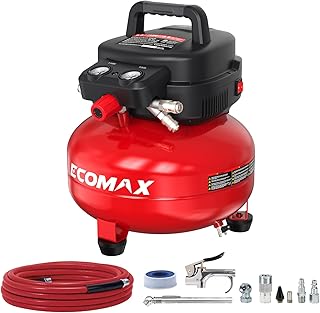
A dedicated task light over the compressor area does wonders. A 4‑foot LED strip mounted just above the tank throws light right on the gauges and drain valve. The ECOMAX Air Compressor 6 Gallon has a clear gauge face, but shadows can still hide small cracks in the drain line. Add a small adjustable LED spotlight if you perform regular maintenance like How to Drain Your Air Compressor Tank the Right Way.
Workbench Lighting: Where Precision Matters
The workbench is the heart of any workshop. It’s where you assemble pneumatic tool kits like the DYNAMIC POWER 50 Pieces Air Tool Kit or repair a stuck chisel. For task lighting, a 2‑foot or 4‑foot LED strip under the upper cabinet or mounted on a swing arm eliminates shadows from your hands.
Color temperature matters. For detail work, 4000K to 5000K (neutral white) gives you the truest color rendering. Warm 3000K is cozy but hides subtle grain defects in wood. Cool 6000K can feel harsh and actually increase eyestrain during long sessions.
If you use a miter saw or table saw, install a dedicated LED floodlight aimed directly at the blade area. Many pros mount a 1‑foot LED strip inside the saw’s guard housing. That keeps the cut line visible without blinding you.
Choosing the Right Fixture Types
Not all LED fixtures are created equal. Here’s a quick comparison:
| Fixture Type | Best For | Pros | Cons |
|---|---|---|---|
| LED Strip (linkable) | Ambient ceiling light | Easy to daisy‑chain, low profile | Can flicker with cheap drivers |
| LED Shop Light (wrap) | Workbench task lighting | Wide beam, no glare | Takes up ceiling space |
| LED Floodlight (PAR) | Compressor station, dark corners | Extremely bright | Narrow beam, can be harsh |
| LED Under‑Cabinet Strip | Benchtop detail work | Shadow‑free, low voltage | Requires hardwiring or plug |
| LED Whip Light | Portable tool cart | Flexible, battery powered | Limited runtime |
For most home garages, a combination of linkable LED strip lights for ambient coverage and under‑cabinet strips for bench tasks creates an ideal layout. You can buy a four‑pack of 4‑foot linkable LEDs for under $100 and cover a two‑car garage with two rows.
Spacing and Layout Examples
A typical two‑car garage workshop (say 20×20 feet) works well with three rows of 4‑foot LED strips running parallel to the garage door. Each row spaced 6 to 8 feet apart. Add one row directly above the workbench area.

For a 10×10 foot single‑car garage used as a workshop, two rows of 4‑foot strips running perpendicular to the bench give you even light. Mount the strips flush to the ceiling or use hanging chains to position them 8 inches below joists for wider coverage.
Don’t forget the corners. Dark corners hide dust, lost screws, and even small oil leaks from your CRAFTSMAN V20 Air Compressor. A 2‑foot LED strip in each corner eliminates shadows.
Powering Your LED Lights with Compressor‑Friendly Circuits
A workshop full of power tools and an air compressor already puts a load on your electrical panel. LED lights draw very little current—a 4‑foot LED strip uses about 20 watts—so you can run lights on a separate 15‑amp circuit without tripping breakers.
That said, if you have a large compressor like the DEWALT Pancake Air Compressor, 6 Gallon, 165 PSI, which can pull 10–12 amps on startup, keep the lighting circuit independent. That way you don’t lose light when the compressor kicks on. This is a common oversight—many folks wire lights and outlets on the same circuit, then wonder Why Your Air Compressor Keeps Tripping the Breaker.

Installing LED Strips: Step‑by‑Step
- Plan your layout. Draw your garage or workshop on graph paper. Mark ceiling joists (usually 16 or 24 inches apart). Decide how many rows and where each strip will hang.
- Choose the right driver. Most linkable LEDs plug into a standard outlet. If you want to wire them to a switch, buy fixtures with a junction box.
- Mount securely. Use self‑tapping screws or strong magnets. For drywall ceilings, use toggle bolts to avoid pull‑out.
- Connect in series. Link strips end‑to‑end following the manufacturer’s instructions. Don’t exceed the wattage limit of the driver.
- Test before finalizing. Turn the lights on while standing at the workbench. Adjust position to eliminate shadows over your JASTIND Industrial Air Blow Gun or other tools.
Task Lighting for Pneumatic Tool Kits
When you use an air hammer or impact wrench, you often need to see into tight spaces. A High Volume Powerful Industrial Air Blow Gun works best when you can clearly see the nozzle tip. A small LED magnetic work light attached to the compressor tank or tool chest solves this.
Consider adding a flexible gooseneck LED to your workbench for quick tasks like changing air chucks on your DYNAMIC POWER 50 Pieces Air Tool Kit. These lights stay cool enough to touch even after hours of use.

Avoiding Common Mistakes
- Too few fixtures. One 4‑foot LED in a 200‑square‑foot shop is not enough. You need at least two for ambient, plus task lights.
- Incandescent bulbs in drop lights. They get hot and can shatter if a tool hits them. Swap for LED drop lights that stay cool.
- Ignoring the white balance. Mixing 3000K and 5000K lights creates weird color bands. Stick to one color temperature across the whole workshop.
- Forgetting the switch location. Install a switch near the main entrance and another near your bench if you have a long garage. You don’t want to walk through dark space to turn on lights.
Maintenance and Upgrades
LED fixtures last 50,000 hours or more, but the drivers can fail. Keep a spare driver on hand. Clean lenses every six months—dust cuts light output by up to 20%. Use a microfiber cloth or compressed air from your compressor (with a JASTIND blow gun is perfect).
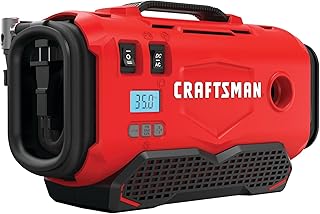
When upgrading, consider smart switches or motion sensors. A sensor near the compressor station saves energy when you’re not in that corner. Pair with a CRAFTSMAN V20 Tire Inflator that runs on battery if you need portable light for roadside repairs.
The Role of Light in Compressor Maintenance
Good light helps you spot leaks. If you see a puddle under your ECOMAX Air Compressor 6 Gallon, you can quickly check the drain valve and tank bottom. Poor light hides condensation, leading to rust. Air Compressor Maintenance Schedule: A Monthly Checklist highlights that visual inspection is key.
Use a bright flashlight or headlamp for tight spaces inside the compressor cabinet. But for the workshop overall, dedicated LED strips above the compressor area are the most effective.
Budgeting Your LED Layout
Go for quality over price. Cheap LEDs flicker and fail within a year. Brands like Hyperikon, Barrina, or Lithonia offer reliable units. A basic layout for a 2‑car garage costs between $150 and $300 for fixtures, plus wiring accessories.
Compare that to the cost of a single DEWALT Tire Inflator—you can light an entire shop for less than the price of a good cordless inflator. That’s a bargain in productivity.
Additional Tips for a Pro Workshop
- Paint walls light gray or white. Light colors reflect 80% of light, while dark walls absorb it. White walls effectively double your light output.
- Install a translucent garage door panel if you have one. Natural daylight reduces eye strain and gives you free ambient light during the day.
- Use pendant drops over high‑ceiling areas. If your ceiling is 12 feet or more, hang lights on chains to bring them closer to work surfaces.
- Add strip lights inside tool cabinets. A small battery‑operated LED puck inside each cabinet makes finding tools easy.
Conclusion
Your workshop deserves lighting that matches the precision of your tools. Whether you’re servicing a PORTER-CABLE Air Compressor or using a DEWALT Pancake Air Compressor, good LED layouts eliminate shadows, improve safety, and make every task easier.
Start with a plan, choose linkable LED strips for ambient coverage, add task lights at every work station, and keep your compressor area well‑lit for safety and maintenance. With the right LED layout, you’ll work faster, make fewer mistakes, and enjoy your time in the shop more. For more guidance, read our related guides on How to Choose the Right Air Compressor Size and Setting Up Your First Workshop.
— End of Article —